
Navigation
Install the app
How to install the app on iOS
Follow along with the video below to see how to install our site as a web app on your home screen.
Note: This feature may not be available in some browsers.
More options
You are using an out of date browser. It may not display this or other websites correctly.
You should upgrade or use an alternative browser.
You should upgrade or use an alternative browser.
Petzl preliminary research
- Thread starter treebing
- Start date


Re: Petal preliminary research
this is a apples and oranges comparison. I love srt, and I see nothing wrong with it.
however, the best way to think about force on the TIP, or crotch of the basel system is what would it "feel" like. to you. these are equal and opposite forces.
here is a model that works pretty well.
in a double system, the force you feel is exactly the same force the TIP experiences. and we all know a long drop on a pair of balanced short ropes would suck. this is a high force situation. you would actually be better off if it was just one rope.
but here is where it gets interesting, in a basel tied system it changes.
in this system, the TIP experiences 100% of the force you do PLUS the other side. the other side is a percent of what you experience, never exceeding 100% .. this is the cool part, its not set. as the force you experience increases so does the PERCENTAGE of the other side.
so a light force may be 100% of that force plus 20% of that same force, given your tie in a total of 120% of the force you feel.
on the exact same system if you take a hard fall it may be 100% for your side, plus 80% of that same force for the other side. this would give your TIP 180% of what you feel, remember in this case what you felt was a big force.. keep in mind what is important is what you would FEEL, because the added rope will reduce the force experienced by increasing the time of negative acceleration. it does this by buying you time though elongation.
the reason this works like this is because of the coefficient of friction, the fact that it takes less force to keep a object moving than it does to over come friction.
these numbers are made up, but the force does work like this, the percentage increases with the experienced force of the load. (you) the rate of increase depends on the crotch. this is the coefficient.
something else to remember is nearly 100% of the time in a basel tie system the force is down the trunk of the tree, trees are very very strong like this. and in some cases you can actually make you tie in stronger.
point being direction of force is at least if not more important that the magnitude.
this is a apples and oranges comparison. I love srt, and I see nothing wrong with it.
however, the best way to think about force on the TIP, or crotch of the basel system is what would it "feel" like. to you. these are equal and opposite forces.
here is a model that works pretty well.
in a double system, the force you feel is exactly the same force the TIP experiences. and we all know a long drop on a pair of balanced short ropes would suck. this is a high force situation. you would actually be better off if it was just one rope.
but here is where it gets interesting, in a basel tied system it changes.
in this system, the TIP experiences 100% of the force you do PLUS the other side. the other side is a percent of what you experience, never exceeding 100% .. this is the cool part, its not set. as the force you experience increases so does the PERCENTAGE of the other side.
so a light force may be 100% of that force plus 20% of that same force, given your tie in a total of 120% of the force you feel.
on the exact same system if you take a hard fall it may be 100% for your side, plus 80% of that same force for the other side. this would give your TIP 180% of what you feel, remember in this case what you felt was a big force.. keep in mind what is important is what you would FEEL, because the added rope will reduce the force experienced by increasing the time of negative acceleration. it does this by buying you time though elongation.
the reason this works like this is because of the coefficient of friction, the fact that it takes less force to keep a object moving than it does to over come friction.
these numbers are made up, but the force does work like this, the percentage increases with the experienced force of the load. (you) the rate of increase depends on the crotch. this is the coefficient.
something else to remember is nearly 100% of the time in a basel tie system the force is down the trunk of the tree, trees are very very strong like this. and in some cases you can actually make you tie in stronger.
point being direction of force is at least if not more important that the magnitude.

macswan
Been here a while
- Location
- Champlain Valley, VT
Re: Petal preliminary research
Well stated hive.
Well stated hive.
Ryan Cafferky
Been here a while
- Location
- Hood River
Re: Petal preliminary research
[ QUOTE ]
you would actually be better off if it was just one rope.
[/ QUOTE ]
I disagree about this point. The more rope that is in the system, the less force there will be on the anchor due to rope stretch. This is why in rock climbing, falling right off the belay is the most likely time to have a fall factor 2 fall. I agree it isn't going to be pretty falling a short distance onto either system but feel that if more rope was incorporated into it, less impact would be experienced.
[ QUOTE ]
you would actually be better off if it was just one rope.
[/ QUOTE ]
I disagree about this point. The more rope that is in the system, the less force there will be on the anchor due to rope stretch. This is why in rock climbing, falling right off the belay is the most likely time to have a fall factor 2 fall. I agree it isn't going to be pretty falling a short distance onto either system but feel that if more rope was incorporated into it, less impact would be experienced.
Re: Petal preliminary research
[ QUOTE ]
[ QUOTE ]
you would actually be better off if it was just one rope.
[/ QUOTE ]
I disagree about this point. The more rope that is in the system, the less force there will be on the anchor due to rope stretch. This is why in rock climbing, falling right off the belay is the most likely time to have a fall factor 2 fall. I agree it isn't going to be pretty falling a short distance onto either system but feel that if more rope was incorporated into it, less impact would be experienced.
[/ QUOTE ]
I think I may have miss communicated. you are correct, more stretch means less dynamic force on the tip and climber. I was comparing two systems, a double system, and a SRT system that is choked off at the same TIP. and the exact same fall from the same height, the SRT system will stretch more than the double system, hence reducing force. on the tip( and climber). the reason the srt will stretch more is the entire load is placed on one leg. in the double system the force is split between the legs. less force pr leg, means less elongation.
think bungie jumping. they add cords to the bundle to reduce elongation.
more cords makes for a "stiffer " bundle.
[ QUOTE ]
[ QUOTE ]
you would actually be better off if it was just one rope.
[/ QUOTE ]
I disagree about this point. The more rope that is in the system, the less force there will be on the anchor due to rope stretch. This is why in rock climbing, falling right off the belay is the most likely time to have a fall factor 2 fall. I agree it isn't going to be pretty falling a short distance onto either system but feel that if more rope was incorporated into it, less impact would be experienced.
[/ QUOTE ]
I think I may have miss communicated. you are correct, more stretch means less dynamic force on the tip and climber. I was comparing two systems, a double system, and a SRT system that is choked off at the same TIP. and the exact same fall from the same height, the SRT system will stretch more than the double system, hence reducing force. on the tip( and climber). the reason the srt will stretch more is the entire load is placed on one leg. in the double system the force is split between the legs. less force pr leg, means less elongation.
think bungie jumping. they add cords to the bundle to reduce elongation.
more cords makes for a "stiffer " bundle.

- Location
- Retired in Minneapolis
In DdRT the strength of the system is doubled but the stretch is halved. This is something that isn't understood by a lot of climbers.
That said...don't get too reliant on 'rope stretch' to absorb much force in a fall. Our ropes are so close to being static that it really isn't an issue. If we climbed on true dynamic ropes like rock climbers things would be different.
That said...don't get too reliant on 'rope stretch' to absorb much force in a fall. Our ropes are so close to being static that it really isn't an issue. If we climbed on true dynamic ropes like rock climbers things would be different.

monkeylove
Been here much more than a while
- Location
- Roslyn, Pa.
Tom, funny you mentioned dynamic ropes....when I first started tree climbing as opposed to rocks, I was using my dynamic rope to first learn and play with. It worked fine and I was content until I started researching and found out arborist don't use them. With all the mechanical hitches and single rope interest lately, why not use dynamics? Just a question from outside the aborists world.
Frank
Frank
- Location
- Retired in Minneapolis
Frank,
Dynamic ropes would have some merit for descending or in case of a fall. But for ascending and positive work positioning the stretch might be hard to compensate for.
another issue is that arbo ropes must meet ANSI Z133 standards for strength, 5,400# and stretch too. Dynamic/rope climbing ropes aren't rated that way.
Outside views are encouraged! I got switched on to SRT when I read the first edition of ON ROPE about 20 years ago.
Dynamic ropes would have some merit for descending or in case of a fall. But for ascending and positive work positioning the stretch might be hard to compensate for.
another issue is that arbo ropes must meet ANSI Z133 standards for strength, 5,400# and stretch too. Dynamic/rope climbing ropes aren't rated that way.
Outside views are encouraged! I got switched on to SRT when I read the first edition of ON ROPE about 20 years ago.
monkeylove
Been here much more than a while
- Location
- Roslyn, Pa.
I wonder if Arborist could have something like this "Petzl L57 Absorbica" incorporated into their system. Just another thought. One of the many things I have learned here is to never stop thinking.
Frank
Frank
I think it would be best to manage slack properly. Also, considering arbos are climbing dynamic structures, energy can be absorbed elsewhere, as in the climbing line or the tree itself. I'm most interested to know how a swinging fall loads things. Barring heavy spar removal, I feel we all have more exposure to that rather than a straight vertical dump into completely rigid anchor point.
Agreed. Even the most stout Primary Suspension Point (PSP) will have energy absorbing properties, not to mention the rope in the system, and the bridge of the harness and how it spreads out the load around the pelvic girdle of the climber.
When climbers determine "fall factors", they are in a controlled setting at room temperature, with a solid anchor point with little to no movement. That energy is transferred directly to the climber's body, with some being dissipated through the length of rope in the system.
Donny
When climbers determine "fall factors", they are in a controlled setting at room temperature, with a solid anchor point with little to no movement. That energy is transferred directly to the climber's body, with some being dissipated through the length of rope in the system.
Donny

- Location
- Grand Junction
- Location
- Retired in Minneapolis
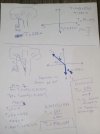
Would you do me a huge favor?
Explain what you’re illustrating
It seems like there’s something important but my math knowledge never got this far along
Thanks

point being direction of force is at least if not more important that the magnitude.
This is worth repeating.

TheTreeSpyder
Branched out member
- Location
- Florida>>> USA
DIRECTION is many times the most key factor.
>>maintaining it's focus can be much greater than maintaining efficiency etc.
.
i think DdRT as a 2/1 has less than half the elastic dampening of SRT;
on a sliding gradient scale response that is not so cleanly, evenly graduated to give 1/2 as much from 2/1.
.
Seems more English/less Greek would be helpful on the drawing obviously took some time to make!
.
Elasticity and frictions are buffers of passed forces.
>>maintaining it's focus can be much greater than maintaining efficiency etc.
.
i think DdRT as a 2/1 has less than half the elastic dampening of SRT;
on a sliding gradient scale response that is not so cleanly, evenly graduated to give 1/2 as much from 2/1.
.
Seems more English/less Greek would be helpful on the drawing obviously took some time to make!
.
Elasticity and frictions are buffers of passed forces.

My guess is the diagram illustrates that, with a basal anchor where the anchor leg is at an angle, the force on the branch is less than double the load. I recall a thread mentioning putting the basal anchor on a different tree to take advantage of this effect.
I'm not sure, but it kinda looks like he's showing the total tension (anchor leg + load leg) as the load leg tension.
I'm not sure, but it kinda looks like he's showing the total tension (anchor leg + load leg) as the load leg tension.
ghostice
Been here a while
- Location
- Way west of Lake ONTARIO
Maybe it'd be useful also to revisit some of the TreeFund 2020 research and presentations - please see Kane B. citations on the TreeFund website. Don't know if anyone can find archived copies of the slides tho? Also see https://www.ias.hk/brian-kane-2/
TheTreeSpyder
Branched out member
- Location
- Florida>>> USA
My guess is the diagram illustrates that, with a basal anchor where the anchor leg is at an angle, the force on the branch is less than double the load. I recall a thread mentioning putting the basal anchor on a different tree to take advantage of this effect.

Model view as upper limit benchmark of lossless/friction free potential , thus equal legs of tension as is w/o friction buffer between them.
>>Applied as equal deflections from the common apex centerline as the collective sums of force and direction:
.
Only have 2 xTension as pulley load against support as anything else;
iff (if and only if) Zer0 deflection of Load and Control legs as parallels to sum apex centerline, and thus each other.
>>as Zer0 deflection each, so is cos1; so 2x cos1 xTension IN CENTERLINE DIRECTION is pull against support.
.
As angle change on either/both legs : draw new centerline
>> will automatically be less than cos1 or '<cos1' if not parallel to centerline /apex sum
>>so 2x <cos1 xTension is load IN CENTERLINE DIRECTION.
The cosine is the efficiency/lack of deflection/correct alignment %
>>that the Load and Control legs apply to the centerline sum and also balanced direction.
If know tension(Load) and take half of span degrees apart from centerline as also a known
>>replace <cos1 simply with the actual cosine of half of span degrees to find pull against support
>>2x {cosine of half of span degrees } xTension
>>2x {cosine of half of span degrees } xLoad (as same)
.
Play that game on a similar 90degree span lossless system @ 1000#Load, therefore 1000# tension:
span90 = 2 x45 degree deflections from centerline of cos .707 or 70.7% (of full bull 100% of cos1 if aligned parallels to centerline)
so 2x 70.7% xTension renders apex sum =1414# @ apex direction(as sum of both directions also) from the 1000# Tension created by free hanging 1000# Load on single leg to lossless system(to reveal peak, benchmark as outside limiter of potential)
.
On pure round the support thickness leverage across is the same on any axis
(compressing one side of axis vs. tensions the opposing other extreme side of axis).
.
But, many limbs , especially long leveraged horizontals are not pure round,
but rather finite materials are allotted to maximize a/n to the most loaded axis(just as trunk and roots do), many times that is the vertical as the long axis on horizontal branch. So branch may be designed/exercised to hold more vertically than angle pulls. This is another geometry consideration; as all supports are just raw material(strength) xGeometry(limiter). Branch would be carrying own load already tho, unless load amputated before used as redirect/support, but then can be 'unsprung' from original 'manufactured'/exercised position.
.
Always need a perspective reference/benchmark, usually of peak, low or centerline (sometimes peak and low limiters) depending on what seeking to extrude out from equation.
As sine enters equation from <cos1, Equal & Opposite sines across cancel/ballast each other out of equation.
... But, many limbs , especially long leveraged horizontals are not pure round,
but rather finite materials are allotted to maximize a/n to the most loaded axis(just as trunk and roots do), many times that is the vertical as the long axis on horizontal branch. So branch may be designed/exercised to hold more vertically than angle pulls. This is another geometry...
Nice post, @TheTreeSpyder. I would just like to add that adaptive growth is the result of frequent and constant
exposure to things like gravity, open growth exposure, or constant wind, like sea breezes. It is specifically meant for compensation of those constant forces.
While this is true and it does add strength, the main thing to keep in mind, is that wood is made from parallel bundles of cellulose held together by lignin. When lateral forces are applied, the lignin will fail long before the cellulose. Think of splitting a log; i.e., lateral force in the form of a wedge vs chopping a log, cutting through cellulose.
Loading wood with the grain, in compression, will always be much stronger than any load applied laterally.
Last edited:

Voice of reason as usual. Get those vectors in compression. That is how I build rigging and climbing systems always. Creates favorable outcomes always.Nice post, @TheTreeSpyder. I would just like to add that adaptive growth is the result of frequent and constant
exposure to things like gravity, open growth exposure, or constant wind, like sea breezes. It is specifically meant for compensation of those constant forces.
While this is true and it does add strength, the main thing to keep in mind, is that wood is made from parallel bundles of cellulose held together by lignin. When lateral forces are applied, the lignin will fail long before the cellulose. Think of splitting a log; i.e., lateral force in the form of a wedge vs chopping a log, cutting through cellulose.
Loading wood with the grain, in compression, will always be much stronger than any load applied laterally.


