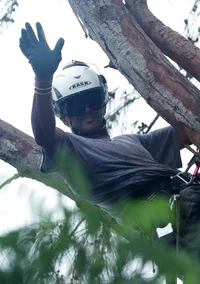
new generation of tree workers

so i know theres alot of discussion on the topic of guys that started out dragging brush for years before they became climbers VS the guys that just got right into the tree and got it done. do you think it matters honestly if you dragged brush for years before you became a climber? i havent had years of dragging brush so i dont have the same experience as some of you. so this brings me to my question. do you think that if someone did not drag brush for years before becoming a climber there is no way they can be good at tree work??? i dont understand the logic in this.

how many of you started out as a climber?

how many of you started out dragging brush?
 
I had never even run a saw when I started doing tree work and I was climbing my second week. If the guys that I worked for had forced me to drag brush for years first I would not be doing tree work now, 15 years later. The best groundmen are climbers!!!
 
I dragged brush for a while and still do. I am surrounded by the work for a day climbers who feel they are too good to do any ground work. I'm the primary climber and I try to work at a pace that suits the ground guys and me. The other guys kill the groundsmen. No reguard for their safety dropping stuff and create a piled tangle of brush for the guys to weed through. Naturally they like to work with me more than the premadonna junky day working climbers. Also the day climbers like to walk off the job when they feel overworked and it just compounds the work for the rest of us. Its been a long time since I worked with another climber I respected and that didn't sandbag so I did more climbing than them. Esp since I am older than most of them.
 
Just a note, I have, and still do, drag my share of the brush. I was also expected to know all of my basic knots(bowline, clove, running bowline, blake's hitch) as well as show general work place safety before I could climb. I wanted to climb bad and I pursued it. I am now in the position to train others and I take it seriously. If someone wants a chance I will give it to them but I have to be confident that they are safe and capable of being trained not just gung-ho. It is as fun as it looks but it is a potentially dangerous job too. It takes practice and education to really be a skilled treeworker.That means patience.
 
The term 'dragging brush' can be taken literally or it can mean 'doing your apprenticeship'.

If more professions followed the guild style of learning a craft the experienced workers would have a better grasp on their trade.
 
I own a small co and when I am done climbing the first thing I do is drag brush and buck logs and clean up and I work till the job is done to my standards.

If I did not know how to do everyones job and do it well I would not be in business today..

I went to school to learn the trade and learned by experiential education and work projects and when I was done I had to prove myself.

Josh as I have said before you need to just do the job and work and eat and sleep the job and eventually you will be what you want to be.

read this and comment please, it is about zen and about being what you want to be..

Define Zen! it is above you it is below you it is to your left and it is to your right. when you search for it it will not be there but when you search it not it is with you.


I hope this helps you in life my friend.

steve
 
tom, our climber community on maui is few and hard to find, so i had to learn what little i know from reading books and watching others work. never dragged brush for years although i did spend one year working for my friend tai doman who is an ISA cert arborist and have learned alot of things from him in that short time. in some ways it woulda been nice to learn certain things from someone else but in other ways i need to do things on my own. i have a slight learning disability OCD and tend to make habits pretty quick.
 
steve, thank you man. your post means more to me then you know. i have been feeling really discouraged lately partially because i shot myself in the foot when i lied about being ISA certified. i really could use the encouragement to get back on the right track. i just wanted to know if the norm is dragging brush first then climb or if there are some that just started climbing. i guess im not the only one but i still have years ahead of me.
 
You can't enjoy the sun without a little bit of rain. I love the chance to drag brush, its both a mental and physical challenge, a puzzle. I like to see how few cuts I can make to get stuff to a shape and size that gets it to the chipper.

When you get a big pine top you don't need to skin every damn limb off it, and you all know what I mean! Cut it in 1/2 or 1/3s and limb just enough to get it to the feed wheels....
 
I agree with Tom D. "dragging brush" can mean various things, but I take it as an apprenticeship of sorts, much like other crafts. Basically, you do ground work, watching and observing the climber as you work to try and pick up on techniques and ideas. During this time, you learn the basic knots, read up on climbing techniques, learn to run the ropes for rigging, and get a basic understanding of rigging and the forces involved. After you get the knots down, after work maybe, days off, whatever, do some rec climbing with the climber to get a feel for it. Then, on slow days, or jobs where speed isn't an issue, you may start to get some experience in being a production climber, and you work up from there.

I'm a second generation climber, grew up doing it and this is pretty much how I learned everything. Dragged brush, learned all my knots, observed all climbers we had, rec climbed whenever possible. I ate and slept tree climbing and trees for most of my life, and still do now. Once you do that, you'll start getting somewhere.
 
[ QUOTE ]
The term 'dragging brush' can be taken literally or it can mean 'doing your apprenticeship'.

If more professions followed the guild style of learning a craft the experienced workers would have a better grasp on their trade.

[/ QUOTE ]

I like this.

I don't think anyone expects anyone to drag brush for years and years before being allowed to climb a tree. That is silly. But starting on the ground with basic groundwork makes sense.

Some places they get you up right away and then you can brag for years about what a badass you had to be starting from the very first day on a 150 foot decayed pine in high winds hauling around a 660. I've heard this kind of thing.

I would say its reasonable to expect to climb something in the first 6 months or year, less if a grad from an arb program. I would look to see if the new potential climber showed good field sense which is awareness of what is happening on the ground and in the air. Have basic rope skills been mastered (knots etc)? Has this person got a good work ethic? If they drag their fatass all day pouting because they never get to do the cool stuff they would be waiting a long tiime on my crew.

And most importantly of all...this job is not about climbing. It's about pruning and cutting. Can this person do that? The climb is just the last part of the commute to the work site in my opinion.

I have seen guys who are athletic enough to climb anywhere but they don't know the first thing about doing the work.

Our crew is well trained and that means we all cut and climb and therefore ironically we do a huge amount of time dragging brush anyway...because only one person gets to climb.
 
Started out 'dragging brush' for about a year before climbing for a comp (although, I got a forestry/horticulture degree and taught myself climbing basics on my own gear)... Dragging brush can be extremely helpful in the tree, as you know the flow of a job, can adjust for efficiency, and have a more complete understanding of how things work. As mentioned previous, LIVE climbing. I have immersed myself in this dangerous, challenging, often selfless, but immensely rewarding profession and never want to stop learning and climbing trees.
Some good advice would be to stay honest with yourself, know your limitations, and continue to grow. You don't need others to pat you on the back for previous misgivings, get psyched, get motivated and go climb!
 
Thanks for starting this thread Josh, don't get down on yourself. I too live on an island with few resources with which to learn different techniques from. I started climbing and doing tree work at 40 years old, although I certainly don't look or feel like it. When I started climbing my friend gave me a rope, harness and a pair of spikes and armed me with a tautline hitch, that was it. 4 years later and lots of reading and researching and I am a whole different climber. I own a pair of spikes which I will only use on difficult removals. As for dragging brush I will do it, if necessary but my ground men are work horses very efficient, so by the time I return to the ground they have things well under control. We are a well dialed in team. Here only one tree company has a chipper, so we have to cut and load the dump truck manually, fitness is key, we all are in good shape. I make sure I don't bog my boys down with to much, which gives me time planning my next move. I live climbing and I love learning and honing my skills. Keep your head up dude you have youth on your side be patient and good things will come your way, the great arborists did not get there in one day they had to graduate slowly from strength to strength. Keep living to climb. Paul.
 

Attachments

  • 297344-IMG_6096.webp
    297344-IMG_6096.webp
    60.5 KB · Views: 54
Back to the thread all climbers must respect the ground worker an remember that moving brush is extremely exhausting, I sometimes forget myself but my crew reminds me even though I am their boss. At the end of the day I can't do the work without them. I will drag brush if I have to and I generally get out of the tree and buck logs regularly.Gives me a good workout. Who needs the gym. Paul.
 
Dude, you lied about being certified? Was that with TCI? Did you know I recommended you to Jeremy?
How could you do that?! No wonder I haven't heard from him in months.

I started out climbing with a saw... After 25 years of climbing rock, towers and buildings. It was on the ground where I got my most valuable education in tree care. Watching other climbers rig, learning to rope without shocking the systems, learning to communicate clearly.
No matter how you start, you need to spend time on the ground regularly. The biggest comment I hear from people who hire contract climbers is, prima donnas aren't worth the money and aggravation.
Takedowns are a team effort. Everybody has a part and being interchangeable makes each player more valuable.
When I've trained young climbers they do mostly ground work and get to climb as jobs come up that are within their skill envelope. It's not on a schedule. It's a progression based on opportunity.

I can't believe you lied about being a CA. That's really disappointing.
 
Hi, my name's Steven
I am new to this forum, but I would be interested in providing my opinion on this subject, seeing how i'm part of the "next generation" of workers:
I currently am an 18 year old college student who has been doing tree work for several years on and off now, all summer on vacation as well as weekends and days off from school/storm cancellations.
I have started off dragging brush from day one, and didn't see a problem with it. It appeared to me that I needed to prove myself through bucking wood and dragging brush that i would then get the chance to both operate the aerial truck and use the climbing gear, and make it into the hierarchy of the industry.
I now have countless hours now up in the bucket, and i'm starting to learn the rigging from up in the tree (to complete what i first learned running the ropes from the ground and in addition to the time in the bucket, I have done several tree removals and pruning with climbing gear for family and friends.
My opinion about it all is how much time you put into things; while i was on the clock, I did my duties and did them well, but when it was time to leave, i always hung around, talking to my boss, learning new tricks, and asking many questions. The more interest the employee shows in the industry to begin with can dictate how soon they should get into climbing.
I look forward to participating in this thread.
Thank you

-Steven
 
[ QUOTE ]
Dude, you lied about being certified? Was that with TCI? Did you know I recommended you to Jeremy?
How could you do that?! No wonder I haven't heard from him in months.

I started out climbing with a saw... After 25 years of climbing rock, towers and buildings. It was on the ground where I got my most valuable education in tree care. Watching other climbers rig, learning to rope without shocking the systems, learning to communicate clearly.
No matter how you start, you need to spend time on the ground regularly. The biggest comment I hear from people who hire contract climbers is, prima donnas aren't worth the money and aggravation.
Takedowns are a team effort. Everybody has a part and being interchangeable makes each player more valuable.
When I've trained young climbers they do mostly ground work and get to climb as jobs come up that are within their skill envelope. It's not on a schedule. It's a progression based on opportunity.

I can't believe you lied about being a CA. That's really disappointing.

[/ QUOTE ]

not to TCI, it was on a couple of youtube videos that some other buzzers found. i said like 10 times allready im sorry and im a young kid who knows nothing but talks all big. i admit it and im swallowing my pride. big lesson was learned. maybe i should find another profession if this is the way shits gonna go for me.
 
Its not about changing professions.

You've admitted getting caught in a lie.

You've apologized.

You have to take what you can from that experience and grow from it.

You'll still get some bumps from the lie time to time.

Sounds like there was some lies told about the TCI experience too, if I recall correctly.

You've come clean (or at least partially clean, what do I know) about that, IIRC.

The best way to earn people's respect is to be honest.

For whatever reasons, you seem to have had some challenges with this. Its part of life.

Try not to beat yourself up over things that you can't change, but don't forget them either.
 

New threads New posts

Back
Top Bottom