
Navigation
Install the app
How to install the app on iOS
Follow along with the video below to see how to install our site as a web app on your home screen.
Note: This feature may not be available in some browsers.
More options
You are using an out of date browser. It may not display this or other websites correctly.
You should upgrade or use an alternative browser.
You should upgrade or use an alternative browser.
Meriplus giganteus
- Thread starter AxeKnot
- Start date


guymayor
Branched out member
- Location
- East US, Earth
Nice pics Steven. meripilus works on beech much worse than other species. See schwarze.
matty, I did assess the roots--shoved a tile probe down to the the underside of the buttresses. They seemed solid. very straightforward--easier to assess buttress root decay than heartrot. Steven, did anyone resistograph that beech? Even if they did, that strip of paper is not as easy to interpret than the thud or squish of a tile probe.
Why 10-15%? Because <10% would be too little, and >15% would be too much. See Tree Statics research.
Why specifically a reduction? To lessen center of gravity, windsail, and risk of windthrow. See...geometry and physics.
Soil work? Vertical mulching with compost and aggregate, inoculating the soil around the base (where roots had been pruned before trenching) with beneficials, in the hopes they will compete with and weaken any present and future pathogens.
clients and city made the decision based on my report, and asked me to do the work. Routine process. I also 25% reduced a sprawling pecan affected by trenching and did soil work on it, too.
matty, I did assess the roots--shoved a tile probe down to the the underside of the buttresses. They seemed solid. very straightforward--easier to assess buttress root decay than heartrot. Steven, did anyone resistograph that beech? Even if they did, that strip of paper is not as easy to interpret than the thud or squish of a tile probe.
Why 10-15%? Because <10% would be too little, and >15% would be too much.
See Tree Statics research.Why specifically a reduction? To lessen center of gravity, windsail, and risk of windthrow. See...geometry and physics.
Soil work? Vertical mulching with compost and aggregate, inoculating the soil around the base (where roots had been pruned before trenching) with beneficials, in the hopes they will compete with and weaken any present and future pathogens.
clients and city made the decision based on my report, and asked me to do the work. Routine process. I also 25% reduced a sprawling pecan affected by trenching and did soil work on it, too.
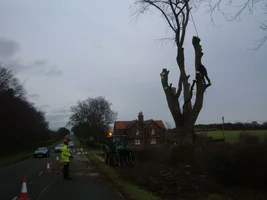
guy, that tree along with many others on the estate were tested with a picus ultra sound. theres a further 6 trees all of the same size to come down in the next few weeks.
with the ammount of meripilus evident around the base of the tree the picus was unnecessary imo, but it did give the powers that be what they wanted.
with the ammount of meripilus evident around the base of the tree the picus was unnecessary imo, but it did give the powers that be what they wanted.
[ QUOTE ]
I did assess the roots--shoved a tile probe down to the the underside of the buttresses. They seemed solid.
[/ QUOTE ]
What is a tile probe?
Can you guarantee that the tile probe is 100% accurate?
Did you test every square inch of the buttress roots?
What if you missed a bit of major decay?
Are you 100% satisfied with the result from the tile probe?
I did assess the roots--shoved a tile probe down to the the underside of the buttresses. They seemed solid.
[/ QUOTE ]
What is a tile probe?
Can you guarantee that the tile probe is 100% accurate?
Did you test every square inch of the buttress roots?
What if you missed a bit of major decay?
Are you 100% satisfied with the result from the tile probe?
doesnt bother me too much....i feel pretty happy with beech enough to know when it isnt safe to climb, and thats rarely.
theres one job i may have coming up, big beech takedown which will be done out of a basket though.
im happy rigging off beech if i have a competent groundie who knows how to run the ropes well.
theres one job i may have coming up, big beech takedown which will be done out of a basket though.
im happy rigging off beech if i have a competent groundie who knows how to run the ropes well.
I have climbed many a fungi infested tree - Kretschmaria(Ustilina)/Dryads saddle/Ganoderma/Heterobasidion/Dutch elm disease and Meripilus etc.
I become very aware of rigging weights and stresses on tree dependant on state of decay,
Old dead elms are the worst by far....I try to avoid them now.
When I first started climbing I used to shock load vertical sections onto the stem on dead elms....stupid I know...I did not know any better.
Now I do and fungi on trees makes me hyper aware of failure potential.
I know its not the solution to the problem but every climber should have a mini hand held picus. VTA is very important.
I sometimes drill trees and sound them out with hammers to see if there is decay or hollowness.
be careful in those fungi riddled trees.
I become very aware of rigging weights and stresses on tree dependant on state of decay,
Old dead elms are the worst by far....I try to avoid them now.
When I first started climbing I used to shock load vertical sections onto the stem on dead elms....stupid I know...I did not know any better.
Now I do and fungi on trees makes me hyper aware of failure potential.
I know its not the solution to the problem but every climber should have a mini hand held picus. VTA is very important.
I sometimes drill trees and sound them out with hammers to see if there is decay or hollowness.
be careful in those fungi riddled trees.
guymayor
Branched out member
- Location
- East US, Earth
What is a tile probe?
A 4' fiberglass rod with a metal tip and a T handle.
Can you guarantee that the tile probe is 100% accurate?
Nothing is 100%--do you think it needs to be?--but I have enough experience with it to be confident of its use. I have used it on tree roots that were decayed, and tree rooots that were not decayed.
Did you test every square inch of the buttress roots?
No. I tested enough to form an opinion with a reasonable degree of arboricultural certainty.
What if you missed a bit of major decay?
Then I missed a bit of major decay. I don't think i did.
Are you 100% satisfied with the result from the tile probe?
I am satisfied enough to form an opinion with a reasonable degree of arboricultural certainty.
Any more cross-examination, bring it on. It's good practice!
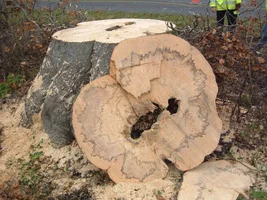
Steve, if you have the time, more of those stump shots would be very interesting.

A 4' fiberglass rod with a metal tip and a T handle.
Can you guarantee that the tile probe is 100% accurate?
Nothing is 100%--do you think it needs to be?--but I have enough experience with it to be confident of its use. I have used it on tree roots that were decayed, and tree rooots that were not decayed.
Did you test every square inch of the buttress roots?
No. I tested enough to form an opinion with a reasonable degree of arboricultural certainty.
What if you missed a bit of major decay?
Then I missed a bit of major decay. I don't think i did.
Are you 100% satisfied with the result from the tile probe?
I am satisfied enough to form an opinion with a reasonable degree of arboricultural certainty.
Any more cross-examination, bring it on. It's good practice!
Steve, if you have the time, more of those stump shots would be very interesting.
i have 1 close up on my camera i think, which is in my truck at the moment, i'll get it later. in the meantime heres a couple of pics i have on file. its a beech with ustulina. i got some cross sectional photos of the stump whilst i was grinding
Attachments
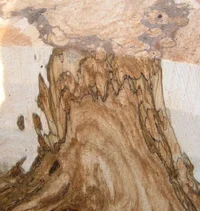
the butts were craned out in 1 piece....i never got a look in on the wood in that job.
guymayor
Branched out member
- Location
- East US, Earth
define 'arboricultural certainty'
Seems a wee bit vague to me.
Certainty based on the study of trees. Fairly cut-and-dried

What does 'reasonable degree' mean exactly?
A degree that is reasonable; more likely than not. To be protected from liability, one need not have absolute certainty. Courts realize that certainty is seldom absolute.
Some arborists choose not to accept the assignment of assessing risk, out of a generalized concern of getting sued. Liability is assumed according to four specific factors:
1. Duty, the responsibility for the tree’s care
2. Breach, the failure to act reasonably
3. Harm, damage or injury
4. Cause, proof that the breach resulted in the injury
A certain level of liability is unavoidable no matter what we do or not do, but there are steps that can limit our own personal and professional liability when assessing tree risk. First, define your assignment so that you and the owner understand the level of detail that you will be going to, and what form the written report will take. Second, state your limitations in a written “disclaimer”. Unless you have a big “S” on your chest, you cannot see inside the tree or under the tree. You cannot foresee what storms will be testing the tree’s strength, so you cannot guarantee its safety for a week or even for a day. Finally, make it clear that risk is always present, and it is the owners of the tree who are responsible for the decisions affecting the tree.
It's pretty simple--arborists need not recommend removal of every tree with a conk.. In fact, they could be liable for negligence if they make such blanket recommendations.

Seems a wee bit vague to me.
Certainty based on the study of trees. Fairly cut-and-dried
What does 'reasonable degree' mean exactly?
A degree that is reasonable; more likely than not. To be protected from liability, one need not have absolute certainty. Courts realize that certainty is seldom absolute.
Some arborists choose not to accept the assignment of assessing risk, out of a generalized concern of getting sued. Liability is assumed according to four specific factors:
1. Duty, the responsibility for the tree’s care
2. Breach, the failure to act reasonably
3. Harm, damage or injury
4. Cause, proof that the breach resulted in the injury
A certain level of liability is unavoidable no matter what we do or not do, but there are steps that can limit our own personal and professional liability when assessing tree risk. First, define your assignment so that you and the owner understand the level of detail that you will be going to, and what form the written report will take. Second, state your limitations in a written “disclaimer”. Unless you have a big “S” on your chest, you cannot see inside the tree or under the tree. You cannot foresee what storms will be testing the tree’s strength, so you cannot guarantee its safety for a week or even for a day. Finally, make it clear that risk is always present, and it is the owners of the tree who are responsible for the decisions affecting the tree.
It's pretty simple--arborists need not recommend removal of every tree with a conk.. In fact, they could be liable for negligence if they make such blanket recommendations.
having seen time and time again the damage caused by ustulina and meripilus to beech i have no qualms whatsoever about recommending removals for any tree infected.
guymayor
Branched out member
- Location
- East US, Earth
[ QUOTE ]
having seen time and time again the damage caused by ustulina and meripilus to beech i have no qualms whatsoever about recommending removals for any tree infected.
[/ QUOTE ]Ustulina is as common as dirt here. I don't have enough experience with beech to comment on your approach, except to say that with a small conk on a big tree I'd sure look at treatment and give it time before whacking it.
Especially with a tomograph handy, wouldn't annual inspections cover such cases? Powers that be like data before deciding, nothing wrong with that.
having seen time and time again the damage caused by ustulina and meripilus to beech i have no qualms whatsoever about recommending removals for any tree infected.
[/ QUOTE ]Ustulina is as common as dirt here. I don't have enough experience with beech to comment on your approach, except to say that with a small conk on a big tree I'd sure look at treatment and give it time before whacking it.
Especially with a tomograph handy, wouldn't annual inspections cover such cases? Powers that be like data before deciding, nothing wrong with that.
i guess i should have added.....it comes down to what the targets are also.
one particular job i do has about 400 beech trees on the site. they rotate the work so each year we pay attention to 60 or so.
the trees that develop ustulina never prosper. they get thinned here and there and deadwooded but they inevitable come out. that being the case why waste time and money on them for 5 years when you could have them out and get a new tree in its place that much sooner?
one particular job i do has about 400 beech trees on the site. they rotate the work so each year we pay attention to 60 or so.
the trees that develop ustulina never prosper. they get thinned here and there and deadwooded but they inevitable come out. that being the case why waste time and money on them for 5 years when you could have them out and get a new tree in its place that much sooner?


