- Location
- Nevada County, CA
Hi all, noob here  ,
,
I'm fairly new to climbing but I noticed the crane operator doesn't always have the best visual of what's going on in the tree. This sparked an idea using FPV drone gear for crane work or for training new climbers.
The climber could wear a very tiny FPV camera, video transmitter and battery that could be picked up on a video receiver/monitor that was given to the crane operator before the start of the job or for the trainer on the ground.
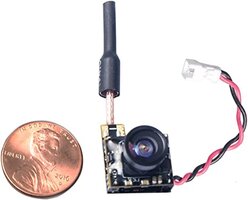
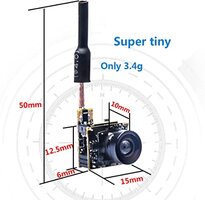
There are lots of options for a standard definition analog helmet cam. There are cheap, tiny and straight forward AIO (all in one) units that would just need a battery. Or, a slightly larger cam with separate transmitters that have better camera quality( some require soldering some don't), where the transmitter could have audio (out) and a onboard DVR.
There are also newer HD digital camera/transmitter units that have better and cleaner video quality and onboard DVR's but cost quite a bit more and would need a digital receiver/monitor.
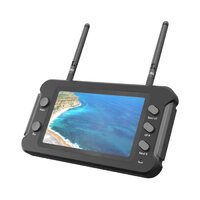
For standard def analog monitors, some have power in, audio out and DVR capabilities. The crane operator could record the job but the video quality in the DVR wont be as good as the monitor quality and the monitor quality wont be as good as helmet cam DVR quality before transmission. Goggles(like VR goggles but with a video receiver) are another monitor option for the trainer and would give a more immersive experience and they wouldn't have to deal with glare or back lighting.
Monitors run $40-100 and some have built in batteries and some don't, AIO cams are around $20 plus a battery. Separate cam and transmitter unit would run around $40-80 plus a battery. Camera and transmitter operating voltages depends on the parts used but are between 3.3v-25volts so battery size, milliamps and price varies.
I was thinking about selling a ready to go setup but for the savvy it's super easy to make your own. Hardest part would probably be the mounting system. There are replacement plastic canopies from various small prebuilt drones that are sold that could be adopted for this purpose. BetaFPV has a few different size canopies that mount different size cameras and transmitter mounting sizes that would provide some protection. Hot glue and double sided tape also works but most likely would get knocked off or damaged.
Let me know if you have any questions or need some help, I'm not up to speed on the digital equipment as I use standard analog video in all my quads/quadcopters(drones) and goggles.
I usually purchase from Racedayquads or GetFPV but Amazon has most of the gear also.
Scott
,I'm fairly new to climbing but I noticed the crane operator doesn't always have the best visual of what's going on in the tree. This sparked an idea using FPV drone gear for crane work or for training new climbers.
The climber could wear a very tiny FPV camera, video transmitter and battery that could be picked up on a video receiver/monitor that was given to the crane operator before the start of the job or for the trainer on the ground.
There are lots of options for a standard definition analog helmet cam. There are cheap, tiny and straight forward AIO (all in one) units that would just need a battery. Or, a slightly larger cam with separate transmitters that have better camera quality( some require soldering some don't), where the transmitter could have audio (out) and a onboard DVR.
There are also newer HD digital camera/transmitter units that have better and cleaner video quality and onboard DVR's but cost quite a bit more and would need a digital receiver/monitor.
For standard def analog monitors, some have power in, audio out and DVR capabilities. The crane operator could record the job but the video quality in the DVR wont be as good as the monitor quality and the monitor quality wont be as good as helmet cam DVR quality before transmission. Goggles(like VR goggles but with a video receiver) are another monitor option for the trainer and would give a more immersive experience and they wouldn't have to deal with glare or back lighting.
Monitors run $40-100 and some have built in batteries and some don't, AIO cams are around $20 plus a battery. Separate cam and transmitter unit would run around $40-80 plus a battery. Camera and transmitter operating voltages depends on the parts used but are between 3.3v-25volts so battery size, milliamps and price varies.
I was thinking about selling a ready to go setup but for the savvy it's super easy to make your own. Hardest part would probably be the mounting system. There are replacement plastic canopies from various small prebuilt drones that are sold that could be adopted for this purpose. BetaFPV has a few different size canopies that mount different size cameras and transmitter mounting sizes that would provide some protection. Hot glue and double sided tape also works but most likely would get knocked off or damaged.
Let me know if you have any questions or need some help, I'm not up to speed on the digital equipment as I use standard analog video in all my quads/quadcopters(drones) and goggles.
I usually purchase from Racedayquads or GetFPV but Amazon has most of the gear also.
Scott