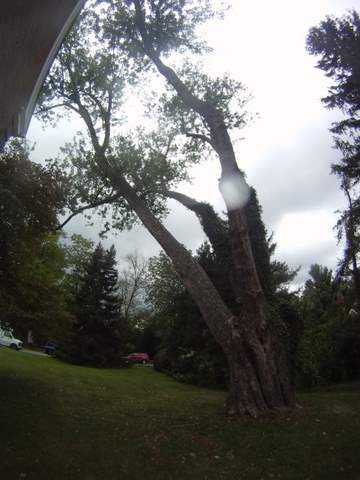
Lighting Struck Tree

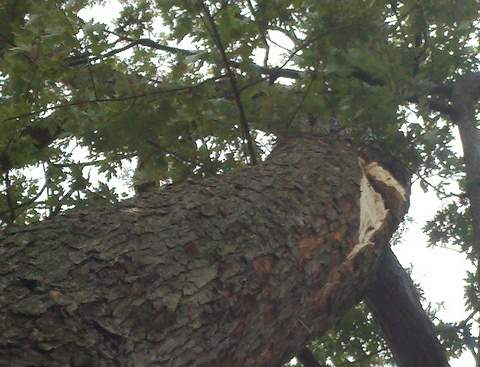
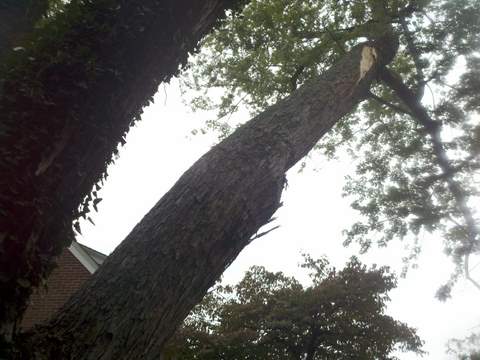
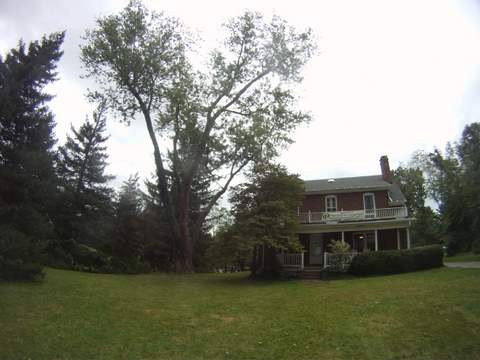
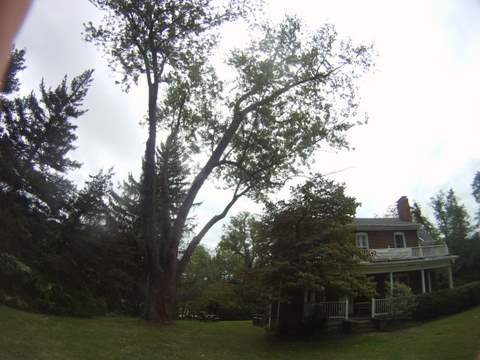
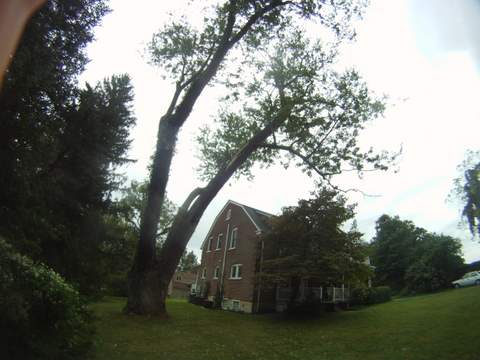
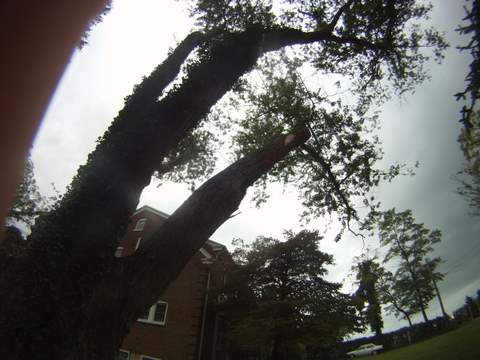
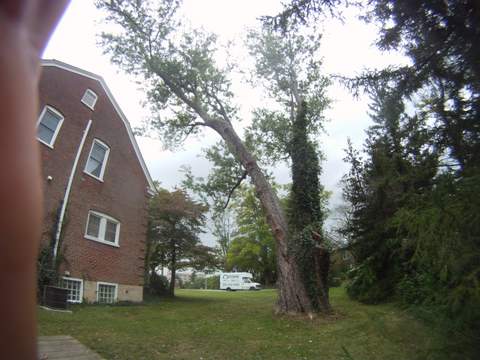
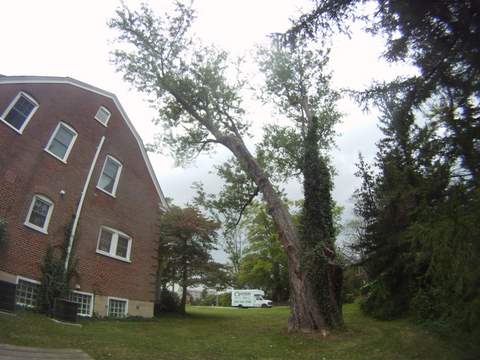
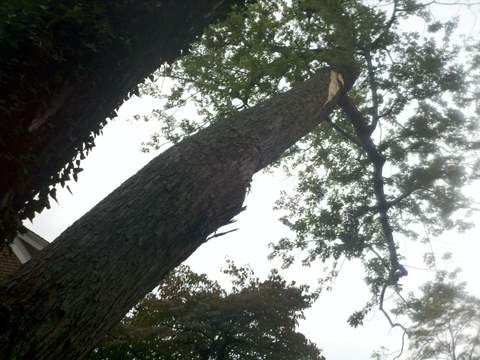
Lighting struck this lion tailed Maple. The bark is blown off 3/4 of the way up the branch growing near the front porch. There is also a split in the branch starting from the bark wound traveling down the branch 20'. The split is hard to see in the pictures, but is at least 1/2 wide with the twist of the branch rotating toward the house (Top going counter clockwise toward the house).
Question: Should this branch be removed immediately or can it be made safe.

My thoughts on keeping it would be to through bolt the branch every 4 feet along the split, remove the house side of the foliage at the end of the branch, and cable the entire branch back to the main two branches.

What do you think?
ls1.jpg


ls2.jpg


ls3.jpg


ls4.jpg


ls5.jpg


ls6.jpg


ls7.jpg


ls8.jpg


ls9.jpg


ls10.jpg
 
Is the client requesting its preservation? Im all for preserving neat, old trees, but its just a beat old silver maple. You could probably leave a stub at ground level and it will be that big again in 4 years .....

There's no way to know the internal and underground damage it may have done, and being over the house id just ditch that lead, preferably the whole tree. I've got no love for silver maples. :-p
 
But Jeff, I just heard thru the grapevine there is gorgeous Silver just waiting for you to climb all over her.
ooo.gif


Prune it, prune it, prune it.
smile.gif


hard to tell mb cable back to neighbouring tree so if it does fail it will land in the open.
 
I’m with Jeff on this one. From the looks of that Maple, it’s not the most beautiful nor can you truly get the full extent of the structural damage that was done from the lightning strike.

I personally would not want to take that kind of liability of bolting and cabling it without a written contract with the owner on the mitigation that I was planning on doing and having him/her sign off on it.

My opinion…remove the lead.
 
If it was struck by lightning, it's more than likely gonna fade away and eventually die. It also appears to be structurally compromised to the point where there is a lot of liability involved.
I would remove it.
 
interesting thread. I think in order to apply a treatment to a lightning struck tree you first need to understand what were the forces/energies that inflicted to damage. The theory that the electrical energy gets beneath the bark boiling the sap and blasting off the bark is just that theory and quite unproven.
 
Ok, let's say that spiral crack was caused by wind. Would you now be more or less inclined to remove it? Would it matter the cause? Its still compromising the structural integrity of that piece, regardless. Thoughts?
 
Isn't this decision the homeowner's? If it were me, I'd explain the various options and what I thought of them, but I wouldn't ever make the judgment of what's an acceptable level of risk.

It's their house and their tree.

If they do decide to ask you to preserve it in spite of your concerns, get them to sign something.


JeffL, I think it's important to remember that most clients don't look at trees the same way we do. What you see as 'just a beat, old silver maple' may be to them a 'neat, old tree' worthy of preservation efforts. Just my two cents.
 
Very true. What would be needed to secure the tree and what would the cost be? At the same time you do need to protect yourself from liability exposure. Advising the client as to the risks and assessing it against their risk tolerance is vital before going ahead.
 
remove the entire leader as the spar is structurally compromised (as can be seen in the pictures).

evaluate while climbing and complete assessement at that point...

The silver maples took a big hit during the recent tropical storm in New England.
 
If you do leave the tree(not my reccommendation) and try to add support get written documentation signed by the client as to the future risk.
 
"Lighting struck this lion tailed Maple.

Yes and don't forget 'topped" too; really cuts down on the pruning options, plus the season is wrong for a hard reduction.

"My thoughts on keeping it would be to through bolt the branch every 4 feet along the split..."

This might be too many, or few. As others stated, you don't know the extent of the crack or the damage, so find out by climbing it and probing and tap testing. Probing at twilight with a bright light might reveal crack goes through. whatever new theories may be bandied about at the pub about cause of damage, it is extent that matters. Don't shoot off your mouth before your brain is loaded.
wink.gif


"...remove the house side of the foliage at the end of the branch,"

reduce the end from the point where those sprouts from the big topping cuts start to narrow. gotta shorten the whole lever arm not just one side of it would do a lot to stabilize

"and cable the entire branch back to the main two branches."

That's a tough job, since those other leads look smaller. guying back to another tree would be better, if there is one.

'What do you think?'

Well personally i think the tree looks beat and in a bad spot for veteranization, but like the man said it is the owner's opinion that counts. #1 job is to assess the damage thoroughly, #2 report condition with reasonable options specified, (#1 and #2 being on the clock) #3 carry out owner's decision.

Another option may be a temporary guy now and a hard reduction in february. find out what the owners value--if it is the view out the window then a major whacking might accomplish their objective.

O and check the site--and the neighbors'-- for the next tallest trees of value and specify lightning protection!!

Yes there should be a disclaimer on this one--there should be a disclaimer on all of them! Disclaimers are to clarify ownership of tree and liability at all times, not just to be pulled out in cases that exceed our comfort zones.

Tereeguya mucked up this poor tree with their saws, topping and liontailing. If all we have to offer is more of the same by Basil Kutz, then what good are treeguys?

confused.gif
 
There is also Resistograph, this tool wil show the extent of damage in the tree out of sight, cheep and cheerful. Another option is to tap small panel pins into the tree either side of the crack then join with fuse wire or similar. As the tree/crack flexes the wire snaps. for example a two inch crack could have a three inch wire, at set intervals additional wires and so on.
My reasons for applying such methods is that there exists an alternate theory re tree damage as a result of lightning strike, traditional thinking electrical energy beneath bark boiling sap.This is of course possible but would require a conduit invite beneath the bark such as a path created by potential electrical difference. The alternate theory suggests sonic shock wave is the culprit. should this theory be correct then it could well impact on the type of remedial works or diagnosis applied.
 
how does a sonic shockwave cause fire? I tell ya heat is involved. Not many are on fire or had a fire, but I've seen it.

who knows maybe both things happen...
 
Sonic shock waves do not start fires. My comments were made in the context of tree splintering/shattering.
Lightning comes in many forms all with there own little ways each ever so slightly different. Fire starters for example have often been referred to as hot bolts, long in duration and low in yield. By long I mean over one five thousandths of a second. In such circumstances heat is a factor.
yes it is quite possible that both theory's co exist as do many others in the field of lightning.
 

New threads New posts

Back
Top Bottom