Leaf drop on Gray (White?) Birch

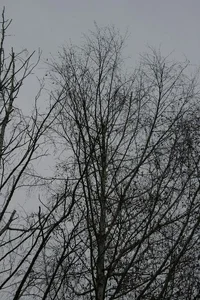
As indicated at the beginning, the tree splits at the ground. This photo shows the right side.

This side had leaves this Spring, but has since lost them.
 

Attachments

  • 93025-RightSide.webp
    93025-RightSide.webp
    157.4 KB · Views: 87
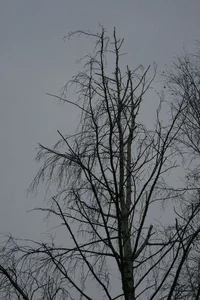
This photo shows the left side.

It appeared healthy, according to the customer, last year, but had no leaves this Spring. You can see there are lot of dead branches.

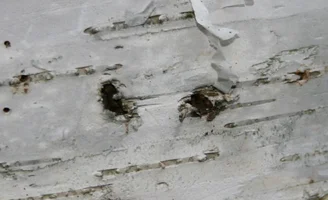
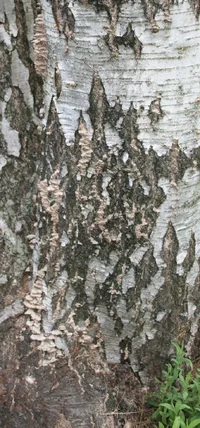
Additionally, there is a considerable amount of fungus growing at the base of this trunk.

Overall recommendations? Suggestions? Thoughts?
 

Attachments

  • 93027-LeftSide.webp
    93027-LeftSide.webp
    103.8 KB · Views: 83
I came to the same conclusion. Everything I've read seems to indicate that efforts should be directly toward prevention of borers; is there any hope of saving a tree which is damaged this badly?
 
Could I get some feedback!

I've read that once the crown of a white birch dies back 50% (some say as little as 1/3), it is very unlikely that the tree can be saved. The damage on the left side of the tree seems more consistant with the norm in that there are clear signs of a progression (many of the smaller branches have died). The right side on the other hand seems to have dropped all at once (not so much die back in the crown).

Unfortunately, I received the call on this tree when the leaves had already fallen off the entire tree, so I was unable to observe the process. What are your thoughts on that? Experiences?
 
phc=plant health care. the fungus--stereum?-- only grows on dead wood, so the next logical step is to remove the dead bark and assess the infection and the strength loss. bark removal should be done cautiously, by someone who knows dead brown tissue from living white or green tissue.
 
The fungus appears on one trunk; I plan to remove that side.

I believe both sides need to be removed, but I don't want to jump the gun. How is that determination made? Should I just err on the side of safety (always!) and remove a tree that might be saved?
 
You are asking such basic questions I have to suggest that you go and do some reading first. At the very least read the ISA certified arborist study guide to gain the most basic insight into arboriculture.

If you know so little about arboriculture are you working safely? Perhaps some training and reading will make you safer and a better "arborist". The question of fungi alone is so important to tree climbing that knowing a little may save your life.
 
mrtree,

I've acted on your suggestion; I just ordered the Study Guide (by the way, for anyone else who needs it, you can order it from illinoisarborist.org for $65.96 + shipping).

I see how my questions would make it seem that I'm completely clueless. Certainly I have much to learn, but the reason for my questions is that I want to stray as far from being a hack arborist as possible. I don't want to have my saw idling in the pickup when someone asks me what is wrong with their tree. And I'd rather sound stupid here than anywhere. (Notwithstanding all that, thanks to everyone for your candor, concern for my safety, and willingness to contribute to the success of others.)

When it does come time to remove a tree, I take safety very seriously; I simply view saving the tree and saving myself as two distinct issues (although, I'm beginning to understand that I must keep both issues at the fore of my mind, as pointed out earlier, since I am not the only one whose safety might be jeapordized by a failing tree).

Again, thank you.
 
Yes all that too but he's asking questions most "tree service" people never bother to. That alone sets him apart and ahead of many in our industry that wouldn't be considered outright hacks but straddle the fine line between redneck saw runners/brush haulers and true service providers.
 
[ QUOTE ]
The fungus appears on one trunk; I plan to remove that side.

[/ QUOTE ] The next question is, how severe is the infection on the one side? The answer can be approached by removing dead bark, and any dead inner wood (mushy tissue). The next step would be more carefully examining the entire root crown of both stems.

I'm with wilt, asking these questions by itself puts you in an upper tier. One step at a time; we cannot all be in mr's league, tho we are fortunate to bask in his brilliance. If his advice was more specific, it would thereby be much more useful. And credible.
blush.gif
 
Are you talking about examining the side with the fungus? Or examining the other side to see if it can be saved?

Also, what would I be looking for if I were to "examine the root crown"?

That raises another question I have:

I do not offer stump removal at this time (I typically refer to other companies that do just that). When a Birch has been destroyed by the borer, must you remove the stump? If it is left behind (at the customer's election), will it provide a breeding ground for the borer?

Thanks for the encouragement and advice.
 

New threads New posts

Back
Top Bottom