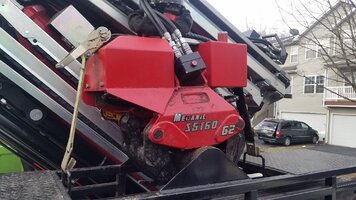
Grapple, grapple saw, hydraulic connections?

I've never really understood the ton/meter way of rating a crane. I'm not even sure what mine is..... Nomenclature is 28/198.... So maybe it's in there somewhere. If you have more insight on this, please elaborate.
I just go by the truck chart.. The nomenclature doesn't really concern me specifically. I just know what manufacturers of certain cranes roughly the size of the crane. Like Steve said it's something about the ability of the crane in its max lifting moment. I'm not 100 percent certain myself.
 
I just go by the truck chart.. The nomenclature doesn't really concern me specifically. I just know what manufacturers of certain cranes roughly the size of the crane. Like Steve said it's something about the ability of the crane in its max lifting moment. I'm not 100 percent certain myself.
My understanding is that the ton-meter rating is similar to a pound-foot rating; it’s the number of tons of force the crane can exert one meter from the lower pivot pin.

I do not have a source at hand I can cite though, so don’t put too much stock on my answer without a little research.
 
Thanks for your input. You're pushing me in the other direction as far as getting the saw, it really would put me into a niche market vs competing with stick cranes, which is where I am at now.


I'm glad to know you have experience with the 160 and like it. According to the specs the saw is only 16" and the recommended cutting diameter is ~14. How are you doing 18" with it? Just peeling the extra off? Rotating and cutting again?
So the only saw I've had for the last 4 years is the 160. I ended up putting a 20" cutting bar on it...actual full length is 23". I've found that 20-22" is the most I can safely hold with the 160 (grapple opening wise). It cuts fairly well with this bar, obviously flower than stick (like a ground saw with biggest bar possible for it).

Soon I will have a 220, I'm looking forward to see the difference. Though I think they have the same cutting force motor.

As to bypass cuts. I do tend to grab on the top to "break it", especially on larger diameter wood. I find it grips a bit better, and less tipping action. If you do bypass, keep your cuts close.
 
So the only saw I've had for the last 4 years is the 160. I ended up putting a 20" cutting bar on it...actual full length is 23". I've found that 20-22" is the most I can safely hold with the 160 (grapple opening wise). It cuts fairly well with this bar, obviously flower than stick (like a ground saw with biggest bar possible for it).

Soon I will have a 220, I'm looking forward to see the difference. Though I think they have the same cutting force motor.

As to bypass cuts. I do tend to grab on the top to "break it", especially on larger diameter wood. I find it grips a bit better, and less tipping action. If you do bypass, keep your cuts close.
Thanks for that input! I guess I never thought of a grapple saw as just a damn chainsaw. Putting a larger bar on it makes some great sense.

Fyi, if you're looking for some cash towards your upgrade, I'm certainly open to the used market for a saw.... Only if it's mutually beneficial, I have time, so I'm down to order new as well.
 
Oh no Never peel. Torque the crap out of your boom. Bypass cuts work.
Steve, I really appreciate all your input on this thread, and everywhere else. I've read a lot from you all over about grapple saws and I think you're really an expert on the subject. It seems you took great attention to detail when building your rig, and you're very thoughtful of your business as a subcontractor as well as the business of those that hire you. Truly thank you for sharing your knowledge.


That being said..... I saw in your thread your storage for the grapple in the boxes. Can you tell me why you prefer boxes over a grapple grab type storage? Any chance you could share photos and/or give me dimensions of the box for your 160? Anything you'd do differently storagewise after your years of experience with this setup?

Climbhightree, your rig is awesome. Im Also running a hook lift set up. How are you storing your grapple? Any pros and cons to your setup that you'd like to share? Thanks again for your input, it is an immense help to me as I feel I'm coming in a little blind to this.
 
Steve, I really appreciate all your input on this thread, and everywhere else. I've read a lot from you all over about grapple saws and I think you're really an expert on the subject. It seems you took great attention to detail when building your rig, and you're very thoughtful of your business as a subcontractor as well as the business of those that hire you. Truly thank you for sharing your knowledge.


That being said..... I saw in your thread your storage for the grapple in the boxes. Can you tell me why you prefer boxes over a grapple grab type storage? Any chance you could share photos and/or give me dimensions of the box for your 160? Anything you'd do differently storagewise after your years of experience with this setup?

Climbhightree, your rig is awesome. Im Also running a hook lift set up. How are you storing your grapple? Any pros and cons to your setup that you'd like to share? Thanks again for your input, it is an immense help to me as I feel I'm coming in a little blind to this.
20200416_083846.jpg
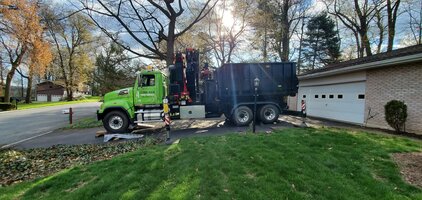
My saw is on a mount above my mats. It is definitely not ideal, due to having to climb up there to attach/deattach it. But it was the best solution I could come up with, that did not take away from container space.

So that kind of goes a long with the biggest disadvantage of a hooklift (imo), lack of storage/tool box space. These grapple saw trucks like having spare parts, cribbing etc. Since there is no bed, you are limited to underbody boxes.

I currently have a flat bed hooklift being built, which will become my primary body now. The container was great for my own tree work (hauling wood, stump grindings, chipping into if needed etc). But as straight crane sub I need room for more gear and spare parts. It will have 2 saw bollards on it (for 160 and a new 220), and have room for a lot more boxes and extra mats...or to carry my avant. I decided to go bollards versus boxes mostly because I wanted to be able to wash off the saws on the truck, while they were mounted and also not have a debris catch (twigs, saw dust etc getting into the box and not easily removed).

I am starting the process of getting a new truck (longer and more capacity). It will look pretty similar to Steve's with a few variations. No hooklift.
 
So, you're going the subcontractor route too? It's interesting to see folks going this way. I always see the guys I'm working for making a lot more money than me on a job..... but I don't miss it all. No employees and less machines to keep running is great.

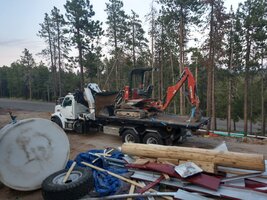
Thanks for the pics. It is cool you have all that storage for mats and ramps on the truck. That is something mine lacks, but surprisingly enough, I don't often find myself needing.

My truck came with a flatbed when I bought it. I removed it to install the hook lift, then cut it down to size and made it into a hook lift. It is very useful for my construction business, not so much for tree work. I find more times than not, people want me to haul material, which I'm all about, it gets me a couple extra billable hours for the day.

Maybe I need to build a grapple saw box, something like a 20' container that the front part holds the grapple, mats, ramps, etc and the back is just for wood.

I'd love to see a closer up picture of your bollard if you get the chance. I am probably going to build something like that for starters. There is a couple places on my truck I could do it.IMG_20210728_193640701_HDR.jpg
 
So, you're going the subcontractor route too? It's interesting to see folks going this way. I always see the guys I'm working for making a lot more money than me on a job..... but I don't miss it all. No employees and less machines to keep running is great.

Thanks for the pics. It is cool you have all that storage for mats and ramps on the truck. That is something mine lacks, but surprisingly enough, I don't often find myself needing.

My truck came with a flatbed when I bought it. I removed it to install the hook lift, then cut it down to size and made it into a hook lift. It is very useful for my construction business, not so much for tree work. I find more times than not, people want me to haul material, which I'm all about, it gets me a couple extra billable hours for the day.

Maybe I need to build a grapple saw box, something like a 20' container that the front part holds the grapple, mats, ramps, etc and the back is just for wood.

I'd love to see a closer up picture of your bollard if you get the chance. I am probably going to build something like that for starters. There is a couple places on my truck I could do it.View attachment 85816
It is a switch for sure for me. It was something I figured I would do in the long term timeframe, go more crane subbing, ever since I got the truck. But it ended up happening soon and faster than I thought, mostly due to bartlett being interested in us and them wanting trimming operations (with crane we were doing more and more removals every year). Money wise it is different. We went from doing $3-5k days, to $1,600 crane sub days. Ps-I'm just getting started...hasn't been a full month yet. Also as a tree company I was booked put for 6 months in advance for over 3 yrs...now I only have 2 crane sub days scheduled in February so far.

On the other side I'm not bidding jobs evenings, less equipment, maybe slightly less insurance, no employees (my wife was only employee for last 3 or so years really), no deal. G with homeowners or associations.

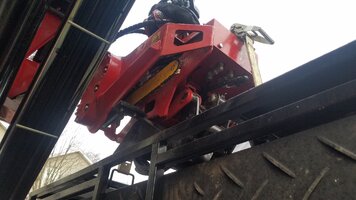
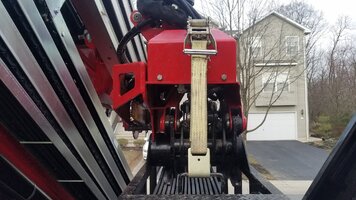
My bollard isn't the best...it was the first one this crane shop made. Only real thing it lacks is a flat top...where saw head rest it should be flat and have wood or plastic on to protect chain

20190318_074154.jpg20190318_074143.jpg20190318_074118.jpg
 
It is a switch for sure for me. It was something I figured I would do in the long term timeframe, go more crane subbing, ever since I got the truck. But it ended up happening soon and faster than I thought, mostly due to bartlett being interested in us and them wanting trimming operations (with crane we were doing more and more removals every year). Money wise it is different. We went from doing $3-5k days, to $1,600 crane sub days. Ps-I'm just getting started...hasn't been a full month yet. Also as a tree company I was booked put for 6 months in advance for over 3 yrs...now I only have 2 crane sub days scheduled in February so far.

On the other side I'm not bidding jobs evenings, less equipment, maybe slightly less insurance, no employees (my wife was only employee for last 3 or so years really), no deal. G with homeowners or associations.

My bollard isn't the best...it was the first one this crane shop made. Only real thing it lacks is a flat top...where saw head rest it should be flat and have wood or plastic on to protect chain

View attachment 85820View attachment 85821View attachment 85822


Thanks for the pics. That bollard design looks super simple. Does the saw move one way or the other on that pipe? I was thinking of making more of a triangular design for it to grab onto, so maybe I wouldn't even need the ratchet strap.

The best part about subbing for me has been the straight up less amount of work, and less stress. One thing is I mostly own my truck debt free, I am taking a bit of debt with these upgrades, but nothing unmanageable. This way, one or two decent days a week is plenty for all I need to make to live my lifestyle, which this year includes a lot more days off skiing than it used too when I had 20+ guys and customers booked weeks out. Also, I always get a check at the end of the day, no estimates, no invoicing, no bs. My best clients are guys that used to work at my tree service and have gone out on their own. From those guys, word got out. I've never handed out a business card or advertised in the slightest. Most are small time dudes who are just getting started. I spend most of the day on the helmet comms with them not just doing the tree removal but giving them tidbits of advice on their whole operation. Overall this has been a rewarding and satisfying move.
 
@climbhightree you didn't wanna discuss buying my truck? Some days the answer might surprise you.
@Kottonwood I prefer boxes over bollards for several reasons. The hydraulics bleed and loosened a bit over time with my old saws. I had to strap them down to make sure I didn't show up and find a saw on its side after it spun around the bollard. Also having them grabbed hard on the bollard, everything has to be perfectly aligned to get the pin out of the rotator/lifting lug on the boom. Get it bound in any direction and you have to figure out how to unbind it or start it over. In the boxes I set the saw in there on its blocks and pull the pin. very little manipulation needed and I can muscle the saw a little but if I'm struggling to get the pin out. It's just sitting there and not grabbing anything. Easy Peasy. My 280 and 160 box are the same size. I'll try to remember to measure next time I'm at the truck. Maybe tomorrow. I just prefer the ease of the boxes. My boxes have a big drain hole in them so I can brush the sawdust and junk straight down to the ground. I blow my saws after every job so I don't ever wash them. Occasionally I'll wash the grease off them but not frequently. The bollards made connection and disconnection stressful, slow, and cumbersome. The boxes solved that completely. I could put covers over them if I wanted and probably should. Honestly I wouldn't change anything about storage on my rig except less mats. I'm happy with the boxes. They have synthetic lumber on the floor of them to prevent the metal on metal bouncing and blocks grooved out to stabilize the saw as its sitting. Also has places for my ratchet straps.

Thanks for your kind words. Most of what I know was either by making a mistake or it was passed down to me by others. I just like to pass on what I know so maybe it'll help somebody so they don't struggle like I did.
 
Alright looking for some input on an upcoming decision for me.

I finally got around to adding a remote control and two extra valves on my knuckle boom (was definitely not cheap or easy, but way worth it). So, now I can theoretically run hydraulic power to the end of the boom. I have ordered the reels, but they are a month out, so I'm waiting on them now.

My main consideration is whether to just add a grapple or to bite the bullet and go for a grapple saw.

I am only a contractor now, no employees. My current rate for my crane is 175 an hour. If I got a grapple saw I would want to make at least 250, probably more. Some of my clients have expressed they'd want that, others say they'd rather climb and save the money because they're climbers and that's what they do. I'm open to comments on my pricing. Most people hire me not because of the size of my crane, but because of my experience in the industry doing hundreds of crane removals on both sides of the rope. ....it also helps I can haul all the material for them.


My first concern with the grapple saw, other than price is whether my crane is big enough to really make it make sense (see load chart below). I'd probably go with the sg160 vs the sg220 due to weight, which would mean a significant amount of most trees would need to be craned out anyways.

My other question is if some of you guys that own this stuff could show me some pics of your reels and your hydraulic quick connects. I want to get an idea for the best way to set mine up. Luckily no welding will be required on the boom, there are threaded holes in the right spots. I will fabricate brackets and bolt them on. I am just looking for some ideas about hose orientation/routing and the quick connect on the end so that it is easy to remove and replace the grapple.

I'm open to any and all comments on my situation, so lay it on me and thanks for any thoughts on this.View attachment 85707View attachment 85706View attachment 85708View attachment 85709View attachment 85710

In my experience, having worked with knucklebooms, grapplesaws, boom trucks amd truck mounted cranes, I will offer this:

- Your money may best be spent finding a fly jib to add to the end of your outer boom. This will reduce your capacity, but give you substantially more reach and setup options.
- After that, if you still want a grapple, I would consider mounting a pair of diverter valves on the fly jib and hang a small rotating grapple out there. Another option would be to remove the fly jib and hang a grapple at the end of the outer boom, which would simply hydraulics but create a mess of time to make the switch.

If a tree is completely smoking hot and totally unsafe to remain in following a cut, the grapple saw is a good option, but eventually there will be cases in which you have to switch to slings for trunk wood. If a tree is stable, the grapple saw is a rather poor option in my humble opinion.

This is because I am happy to climb and set slings. Maybe that’s less and less commonplace now?, I don’t know. But when I’m standing near my chipper waiting for the saw to bring down a tiny piece, I am usually ready to die of boredom or be sick die to lack of productivity.

I have a great deal more I could say and share on the topic, but time is short. I don’t intend to offend any saw truck owners/operators, etc…but unless the crane is a super high ton meter unit, my opinion is the juice isn’t worth the squeeze for hanging a saw. A rotating grapple would allow grab/cut options that make for greater capacity, larger pieces being removed, less post-cut dynamic loading, less cycles, etc.
 
I get what Eric is saying and agree to some extent. As a sub I provide a tool or an option. The grapple saw provides that option. Typically if they wanna sling brush, they'll call a stick crane. If they wanna stay out of the tree until trunk picks they call me. Whatever reason they wanna stay out of the tree is perfectly fine in my books. I work with a lot of small crews. Taking a big tree with a 3 person crew is a lot of work especially when the key player is in the tree setting slings and making cuts. You change the waiting game from standing at the chipper chute to standing in the tree waiting for a material to be processed. I guess you have to decide as a business owner what direction you wanna go. You have to decide as a sub what market you're trying to capture. I can't compete with all the stick cranes around here so I picked my niche and thats the field I play in. I grapple everything except the trunks. Thats what people want me to do and what they pay me for. TBH I'd rather be a climber setting slings for a stick crane but this is the path I've chose and I'm kinda committed.
 
In my experience, having worked with knucklebooms, grapplesaws, boom trucks amd truck mounted cranes, I will offer this:

- Your money may best be spent finding a fly jib to add to the end of your outer boom. This will reduce your capacity, but give you substantially more reach and setup options.
- After that, if you still want a grapple, I would consider mounting a pair of diverter valves on the fly jib and hang a small rotating grapple out there. Another option would be to remove the fly jib and hang a grapple at the end of the outer boom, which would simply hydraulics but create a mess of time to make the switch.

If a tree is completely smoking hot and totally unsafe to remain in following a cut, the grapple saw is a good option, but eventually there will be cases in which you have to switch to slings for trunk wood. If a tree is stable, the grapple saw is a rather poor option in my humble opinion.

This is because I am happy to climb and set slings. Maybe that’s less and less commonplace now?, I don’t know. But when I’m standing near my chipper waiting for the saw to bring down a tiny piece, I am usually ready to die of boredom or be sick die to lack of productivity.

I have a great deal more I could say and share on the topic, but time is short. I don’t intend to offend any saw truck owners/operators, etc…but unless the crane is a super high ton meter unit, my opinion is the juice isn’t worth the squeeze for hanging a saw. A rotating grapple would allow grab/cut options that make for greater capacity, larger pieces being removed, less post-cut dynamic loading, less cycles, etc.
Thanks for your input. I think me and many of my clients have a similar mindset to that. I still haven't pulled the trigger on the saw and I'm trying to still gather info on the best way to go. Meanwhile getting the reels and faster connections is taking absolutely forever... They are at least ordered though.

The fly jib would be cool, but not an option I'm looking into.... Even if I could find a jib (which is pretty unlikely) it would be a complete custom job and would reduce capacity so much that it wouldn't be worth it imo.

One advantage of the saw is that it also works as a grapple (albeit a small one). The other advantage is I can actually do taller trees because I can top them without having to be over the top of them.

For now I'm still leaning towards the saw route, but I still have to have some more conversations with tree services in the area to get a good idea of demand.
 
Thanks for your input. I think me and many of my clients have a similar mindset to that. I still haven't pulled the trigger on the saw and I'm trying to still gather info on the best way to go. Meanwhile getting the reels and faster connections is taking absolutely forever... They are at least ordered though.

The fly jib would be cool, but not an option I'm looking into.... Even if I could find a jib (which is pretty unlikely) it would be a complete custom job and would reduce capacity so much that it wouldn't be worth it imo.

One advantage of the saw is that it also works as a grapple (albeit a small one). The other advantage is I can actually do taller trees because I can top them without having to be over the top of them.

For now I'm still leaning towards the saw route, but I still have to have some more conversations with tree services in the area to get a good idea of demand.
I had a tiny little grapple and rotator sitting in my shop for like 4 years or so. I had intended on putting it on my smaller mini excavator, but then my crane came along and I started to think about other ideas for it. Then I got so busy it fell by the wayside.

Just a week ago I finally mounted it on the mini ex, but man, I almost hung it on my crane. The only real issue is grabbing more vertical pieces…I just didn’t feel all that great about it. Horizontal stuff, yes, but you’d really be best off with the Mecanil 160 without the saw for getting all grabby. At least you could adjust the angle to match the stem for a proper grip. I would imagine the saw could be added on later without too much fuss. Might even be plug and play.
 
For sure deal with Todd with knuckle boom trader. He’s helped me sell 7 or 8 grapple saw trucks now and bought 5 saws off of him. Good luck with the modifications. I added plumbing for my Effer 655. It’s a fun project
 
For sure deal with Todd with knuckle boom trader. He’s helped me sell 7 or 8 grapple saw trucks now and bought 5 saws off of him. Good luck with the modifications. I added plumbing for my Effer 655. It’s a fun project
Well shoot, are you a tree guy or a dealer? That's a lot of trucks. It's definitely a project! The hardest part is over with, getting the damn valve in. It's all cake now.
 
Can you get a pullout extension for that crane? You should have an angled pullout extension, especially since the crane has no fly-jib.

If you need a Mecanil grapplesaw from someone that will actually support you, give me a call.
Even with a fly jib I've observed watching them work the angled manuel extension seems much better.
 
Even with a fly jib I've observed watching them work the angled manuel extension seems much better.
If hanging a saw and holding one end of a tree part, that angled manual is an absolute must. It not only keeps the grapple from making contact with the boom, but it also allows for better options to approach a piece that is angled towards the crane.

I’m gonna go as far as saying it helps with slings, too. My crane has an adapter that allows 3 angles of the stinger. I most always use the downward most angle, which is close to 45 degrees.
 
Back
Top Bottom