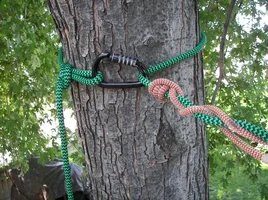
extra lanyard prussik?

RemWiz,

Can you guarantee 100% that you will not cause any 'external pressure on the gate' using the mini-prussik technique for the choker?

If you were to change your work position and move your body down the stem the gate is bound to contact the stem causing external pressure on it.

Maybe the mini-prussik is not the answer, why not just choke a sling round the stem and connect the biner to the sling?

72820-general004LargeWebview.jpg
 
[ QUOTE ]
...I don't put external pressure on the gate either.

Its still obvious to me that the mechanics of a correctly choked set up is mis-understood, and the security benefits underestimated.

[/ QUOTE ]


I'm curious about this. Can you provide a photo? I'll re-size it if it's real big.
 
(general comments not aimed at MA)

Choking and retrieving a lanyard and lifeline are an essential aid to secure working in trees. Using a micro prusik of high strength, high modulus fibres does not enable this, unless the lanyard is passed back on itself (like a timber hitch) to clip the pruik. And doing this is the same alignment on the krab as just choking without the prusik anyway. A RG on a lifeline is limited to small diameter timber, and cannot be safely retrieved from the ground by use of throwline when used in this fashion on pole work.

The durable safety of high modulus prusik cords is highly questionable (see below), and even the open gated strength of a correctly choked krab is superior in reliability. The way high loads come on the line in a correct choke also rolls the gate away from the wood, so its not a practical issue. Again, if worried use a steel krab, or short round section alloy krab with a high strength barrel such as the Ovalock (why do you think the ovalock exists?).

http://www.caves.org/section/vertical/nh/49/cthsc/cthsc.html

Karabiners used in industry will typically have a minor force pushing on the gate (resting against walls/wood/rock). That doesn't mean all work at height must use shackles instead for obvious reasons.

Work positioning forces are 6kN MAX. Look at the gate open strength of your krab. Worst case scenario it can handle it. Only an idiot (IMHO) would think they are going to work at height expecting 5,000lb forces! Thats just a safety factor to cover the less than ideal wear and tear circumsatnces all work at height encounters. durable safety (and strength vs security) concepts again.

For lanyards, Micro prusiks don't solve this one and have real risks of their own. Correctly choked Krabs do solve security issues and are not a real concern in work positioning scenarios.

 
ok i had a rain day today and decided to do some testing(i hate talking about things that are assumed(by me) and only leaning on my understanding of physics and past experiences)

so here we go,

i found out some things that will change the way that i have been doing things, and i hope that me using about $100 in climbing gear(biners, rope, prussiks) does not go to waste.

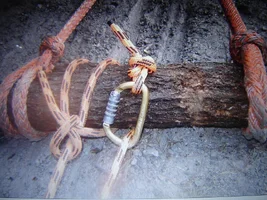
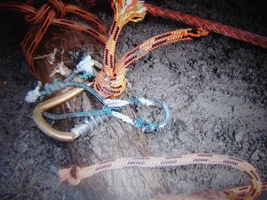
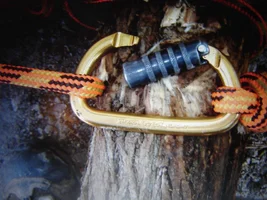
i started this test by choking a biner on a 5-6" limb and pulled it till failure
 

Attachments

  • 97858-DSC02718.webp
    97858-DSC02718.webp
    249.3 KB · Views: 108
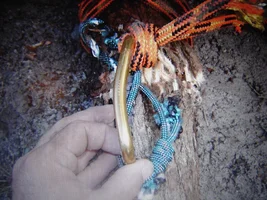
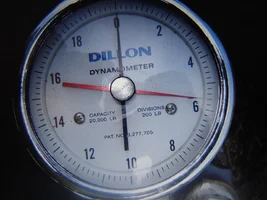
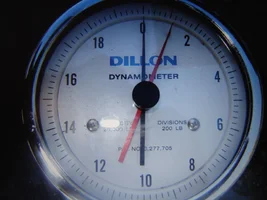
there was quite a bit of distortion of the biner, but it was the rope that failed at 4800#, and it broke at the point that it interfaced with the biner
 

Attachments

  • 97860-DSC02720.webp
    97860-DSC02720.webp
    161.8 KB · Views: 98
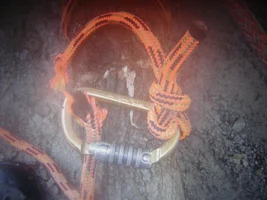
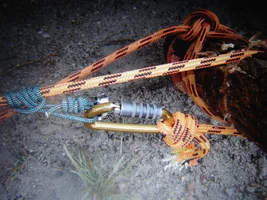
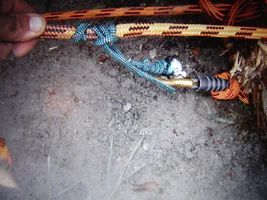
next i put together a system with a "mini prussik"... it was 5.5mm bluewater titan(#3600 tinsle)

i had it in a double wrap prussik and was suprised that it started slipping at 2000-2200#.... it slipped all the way till the biner was choked on the limb and then it broke at the same place and pressure that the one above did..
 

Attachments

  • 97862-DSC02722.webp
    97862-DSC02722.webp
    212.5 KB · Views: 81
one thing that you will notice, the prussik slipping allowed the biner to move further around the "backside" of the limb which caused even more distortion
 

Attachments

  • 97864-DSC02726.webp
    97864-DSC02726.webp
    247.7 KB · Views: 61
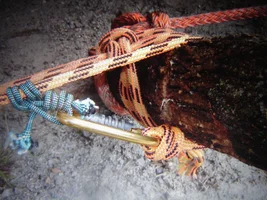
i was glad to see that it did not slip at all and the rope was the first to fail(at the port a wrap no less).... it failed at the tinsle strength of the rope
 

Attachments

  • 97866-DSC02731.webp
    97866-DSC02731.webp
    189.3 KB · Views: 67
so then i thought..... well i have not really proven anything exept:

1. ropes do not like small bend radius
2. "mini prussiks" need to be wrapped 3 times

but i have not proven my point on why you should not choke your biners.

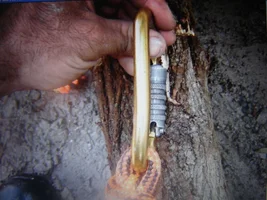
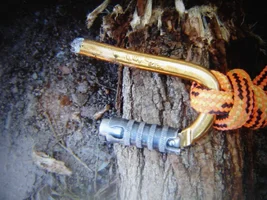
so i choked a biner, then i minipulated it back and forth to see how easy it would be to open..... suprisingly easy, and i was not putting very much weight on it....
 

Attachments

  • 97870-DSC02735.webp
    97870-DSC02735.webp
    128.3 KB · Views: 83
now everyone can come to their own conclusions(because this test was not replicated enough to be classified as scientific.... i do not have enough spare biners to waste), but my conclusion is:

1. Mini prussiks are effictive and safer if used correctly(three wraps, and far enough away from the limb to not cause interface between limb and biner)

2. Biners will open "on their own" with very little minipulation when used in a way not condoned by the manufacturer(with possible contact/pressure on the gate)

3. If choked correctly***, your body would rip in half prior to biner failure ------- ***the term correctly means, if you set a biner in such a way that it can not move in any direction till it is pulled to failure...


note: I personally believe that my third point can only happen in a controlled inviornment, where there are no variables such as uncontrolled swings, falling, failure of tree parts ect....


Any thoughts?
 

Attachments

  • 97877-color_logo.webp
    97877-color_logo.webp
    34.6 KB · Views: 52
Thats a good use of a rainy day Removal wizard.
It looks in the pictures as though your angle of pull was at nearly 90 degrees I wonder what it would have failed at if the carabina was slide round more as to create an MA on the bina,,with the gate open maybe about 6-700lbs till failure.A little bit under 6Kn I thinks...OK thats worst,worst case. But then theres that irish man whos name begins with M and I will not utter for fear of him coming for a visit....Again nice work .

Didj
 
Thanks for the demos! I was working a spar/pole in SRT setup with Alpine butterfly and carabiner interface last year and looked up to see the biner had come open. Perhaps a solution to the gate opening would be to use a Ball Lock gate instead of Triact.
 

Attachments

  • 97886-Figure2.webp
    97886-Figure2.webp
    163.8 KB · Views: 59
Very interesting Rob. Thanks for taking the time to do this and share. How 'used' were the biners? Just trying to get the 'cycles to failure' thing in mind.
I use a mini prusik on my lanyard with a 2 wrap (4 coil prusik). I like the point that it started to slip @ 2,000 lbs. I think I'll keep it @ 4.

Laz, awesome site. I learned alot. Thanks. Any others?
 

New threads New posts

Back
Top Bottom