
Navigation
Install the app
How to install the app on iOS
Follow along with the video below to see how to install our site as a web app on your home screen.
Note: This feature may not be available in some browsers.
More options
You are using an out of date browser. It may not display this or other websites correctly.
You should upgrade or use an alternative browser.
You should upgrade or use an alternative browser.
Double braid ring-N-ring
- Thread starter Zac
- Start date

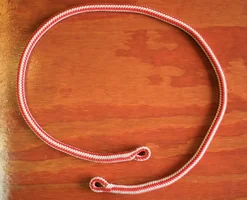
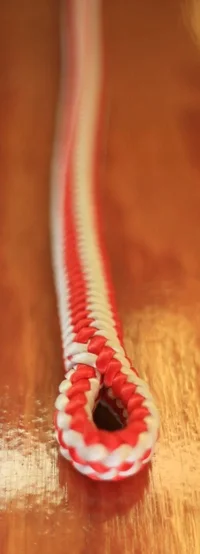

- Location
- sunny Madison, WI
to do the cross over taper do you:
milk and smooth out as much as you can
mark where the core comes out
pull out 11-12" or so equally on each side
taper the core equally on each side
cut off excess
milk it all back together and smooth out nice and pretty
Thanks very much for posting these pictures. I think I will make one of these, it looks easier than the 24 strand that I did, probably a better option.
Do you pull 8 or 10 pairs for your tapers?
Thanks again
milk and smooth out as much as you can
mark where the core comes out
pull out 11-12" or so equally on each side
taper the core equally on each side
cut off excess
milk it all back together and smooth out nice and pretty
Thanks very much for posting these pictures. I think I will make one of these, it looks easier than the 24 strand that I did, probably a better option.
Do you pull 8 or 10 pairs for your tapers?
Thanks again

NickfromWI
Participating member
- Location
- Los Angeles, CA
John, those were awesome pics. You included just the steps people need to see to supplement the directions from samson's website.
I leave an extra strand in my personal friction saver. It stiffens the rope up a little bit and decreases the chance of it "indiana jonesing" itself around branch on the way down. So for friction savers, I just pull 8 or 9, depending on the weave of the rope.
love
nick
I leave an extra strand in my personal friction saver. It stiffens the rope up a little bit and decreases the chance of it "indiana jonesing" itself around branch on the way down. So for friction savers, I just pull 8 or 9, depending on the weave of the rope.
love
nick

- Location
- Colorado
Good pics John...how short of an eyeneye would be possible using 1/2" 16s. Does/could the overlap go all the way to the opposite eye.
I think Norm's looks pretty swell as well... I wonder how well the captive eye krab/thimble bounces through crotches.
I think Norm's looks pretty swell as well... I wonder how well the captive eye krab/thimble bounces through crotches.
- Location
- Ontario
Did you completely remove the core strands?
WP
WP
NickfromWI
Participating member
- Location
- Los Angeles, CA
WPA- yes, there is no core in his splice he showed. The cover tail becomes the core.
I've done 16 strand eye-eye slings down to about 20". You can go shorter, but it is a pain in the arse and requires a shortened taper and might not be strong enough.
love
nick
I've done 16 strand eye-eye slings down to about 20". You can go shorter, but it is a pain in the arse and requires a shortened taper and might not be strong enough.
love
nick

- Location
- Haddonfield, nj
one day ill learn how to splice and then i can talk nerd with all of you, great lookin splice john
not to get off subject, but about how long did most of you splice before you felt comfortable climbing on what you spliced, be it a split tail or friction saver or just an eye splice in your rope
not to get off subject, but about how long did most of you splice before you felt comfortable climbing on what you spliced, be it a split tail or friction saver or just an eye splice in your rope
- Location
- Ontario
Could someone explain the final taper for me a little better. So you make it smooth, mark where the core strands come out, then pull out 10-11", how come? How do you know how much to pull out? I've read the instructions on the samson website, but something still isn't clickin' with me.
Thanks
WP
Thanks
WP

- Location
- Chapel Hill, NC
I'm not the expert but I'll take a shot at it.
You mark the exit points when all the slack and bunching is out of the rope like it will be in finished condition. The tips of the tapers will be just a bit, maybe 1/2" shorter than that mark. The amount you pull out is the length of the taper plus a little bit for working room.
Think for a minute if you pulled out 10 or 11" of core... that will make the jacket bunch up right? Say then you just cut the core straight off 1/2" shorter than your exit mark and milked the slack back out... the core would disappear inside the jacket right? The center would be bulky though because it effectively has 2 whole cores overlapping.
So instead, to smooth out the bulk and make a consistent diameter you cut off at the exit marks and and make fairly long, equally measured tapers so when you milk the cores back into the jacket they overlay each other exactly and make a consistent diameter all the way across the length of the FS.
The trick is make sure the rope is zeroed out (milked until there is no bunching or slack) before marking the core exit points and then measuring your tapers equally.
You can practice making eye-eye split tails with tenex and save your yourself some frustration.
I didn't know you could pull the core from 16 strand before splicing it... I'll bet it's a little easier that way. So, is the core in 16 strand there just to keep the rope round rather than as a strength component?
You mark the exit points when all the slack and bunching is out of the rope like it will be in finished condition. The tips of the tapers will be just a bit, maybe 1/2" shorter than that mark. The amount you pull out is the length of the taper plus a little bit for working room.
Think for a minute if you pulled out 10 or 11" of core... that will make the jacket bunch up right? Say then you just cut the core straight off 1/2" shorter than your exit mark and milked the slack back out... the core would disappear inside the jacket right? The center would be bulky though because it effectively has 2 whole cores overlapping.
So instead, to smooth out the bulk and make a consistent diameter you cut off at the exit marks and and make fairly long, equally measured tapers so when you milk the cores back into the jacket they overlay each other exactly and make a consistent diameter all the way across the length of the FS.
The trick is make sure the rope is zeroed out (milked until there is no bunching or slack) before marking the core exit points and then measuring your tapers equally.
You can practice making eye-eye split tails with tenex and save your yourself some frustration.
I didn't know you could pull the core from 16 strand before splicing it... I'll bet it's a little easier that way. So, is the core in 16 strand there just to keep the rope round rather than as a strength component?
- Location
- Chapel Hill, NC
[ QUOTE ]
[...]
... but about how long did most of you splice before you felt comfortable climbing on what you spliced, be it a split tail or friction saver or just an eye splice in your rope
[/ QUOTE ]
Get some tenex and try a single eye split tail or spider leg balancer. Once you do a locking brummel you'll see that you can trust your very first splice... just make sure it's actually a <u>locking</u> brummel and stitch it.
When you do a 16 strand or a double braid you'll swear there is no way it will back out under load. Arborist rope is woven really tightly, packing a bury into an already full section of rope is HARD, you'll have blisters from all the massaging and pulling... great for the forearm strength.
The weakness with splices is when they're under low or no load, they can work loose over time. That's why you stitch and whiplock them.
You've been a tree man long enough... time to be a splice geek.
[...]
... but about how long did most of you splice before you felt comfortable climbing on what you spliced, be it a split tail or friction saver or just an eye splice in your rope
[/ QUOTE ]
Get some tenex and try a single eye split tail or spider leg balancer. Once you do a locking brummel you'll see that you can trust your very first splice... just make sure it's actually a <u>locking</u> brummel and stitch it.
When you do a 16 strand or a double braid you'll swear there is no way it will back out under load. Arborist rope is woven really tightly, packing a bury into an already full section of rope is HARD, you'll have blisters from all the massaging and pulling... great for the forearm strength.
The weakness with splices is when they're under low or no load, they can work loose over time. That's why you stitch and whiplock them.
You've been a tree man long enough... time to be a splice geek.

- Location
- St. Paul, MN
[ QUOTE ]
So, is the core in 16 strand there just to keep the rope round rather than as a strength component?
[/ QUOTE ]
Yes. So how have you been splicing 16 strand?!!!
So, is the core in 16 strand there just to keep the rope round rather than as a strength component?
[/ QUOTE ]
Yes. So how have you been splicing 16 strand?!!!
- Location
- Chapel Hill, NC
[ QUOTE ]
[ QUOTE ]
So, is the core in 16 strand there just to keep the rope round rather than as a strength component?
[/ QUOTE ]
Yes. So how have you been splicing 16 strand?!!!
[/ QUOTE ]
Apparently the hard way!
My first 16 strand splice was a bust, used rope, I threw it away after breaking two wire fids. My second was new Hi-vee and I broke one fid... but it came out...

[ QUOTE ]
So, is the core in 16 strand there just to keep the rope round rather than as a strength component?
[/ QUOTE ]
Yes. So how have you been splicing 16 strand?!!!
[/ QUOTE ]
Apparently the hard way!
My first 16 strand splice was a bust, used rope, I threw it away after breaking two wire fids. My second was new Hi-vee and I broke one fid... but it came out...
- Location
- St. Paul, MN
The eye looks normal in that photo; only cover around the ring, with no core inside.

Norm_Hall
New member
- Location
- Wauconda, (Chicago),IL,USA
[ QUOTE ]
[ QUOTE ]
Get some tenex and try a single eye split tail or spider leg balancer. Once you do a locking brummel you'll see that you can trust your very first splice... just make sure it's actually a <u>locking</u> brummel and stitch it.
When you do a 16 strand or a double braid you'll swear there is no way it will back out under load. Arborist rope is woven really tightly, packing a bury into an already full section of rope is HARD, you'll have blisters from all the massaging and pulling... great for the forearm strength.
The weakness with splices is when they're under low or no load, they can work loose over time. That's why you stitch and whiplock them.
[/ QUOTE ]
Blinky, during break tests the locking brummel was breaking consistantly lower than the non lock and strate bury. For 2 years now I have doing strate buries with all hollow braid splices. Just make sure your measurements are rite. And lock stitch. Probably not for every splicer, but I have been climbing, rigging and using them for crane work. I made strate bury spider legs for TK as well.
Food for thought.
[ QUOTE ]
Get some tenex and try a single eye split tail or spider leg balancer. Once you do a locking brummel you'll see that you can trust your very first splice... just make sure it's actually a <u>locking</u> brummel and stitch it.
When you do a 16 strand or a double braid you'll swear there is no way it will back out under load. Arborist rope is woven really tightly, packing a bury into an already full section of rope is HARD, you'll have blisters from all the massaging and pulling... great for the forearm strength.
The weakness with splices is when they're under low or no load, they can work loose over time. That's why you stitch and whiplock them.
[/ QUOTE ]
Blinky, during break tests the locking brummel was breaking consistantly lower than the non lock and strate bury. For 2 years now I have doing strate buries with all hollow braid splices. Just make sure your measurements are rite. And lock stitch. Probably not for every splicer, but I have been climbing, rigging and using them for crane work. I made strate bury spider legs for TK as well.
Food for thought.
- Location
- Chapel Hill, NC
Taylor, Yep, the bury is cover only but the standing part still has the core. Is that how it's supposed to go on a friction saver?
Norm, I haven't used non-locking brummels or straight buries yet. I know the LB is weaker but it's still really strong, right? ...compared to knots i mean.
i figured if FamilyTree wanted to start splicing, LBs with tenex was a good place, but you're in a better position to say than i am; I've only been doing it about six months.
Norm, I haven't used non-locking brummels or straight buries yet. I know the LB is weaker but it's still really strong, right? ...compared to knots i mean.
i figured if FamilyTree wanted to start splicing, LBs with tenex was a good place, but you're in a better position to say than i am; I've only been doing it about six months.
NickfromWI
Participating member
- Location
- Los Angeles, CA
For climbing applications, I prefer locking brummells. There is only a small loss in strength/efficiency while you make a HUGE improvement on security. In climbing, we are nowhere near pushing the strengths of the rope, so security is more important here, I think.
love
nick
love
nick

Norm_Hall
New member
- Location
- Wauconda, (Chicago),IL,USA
[ QUOTE ]
Norm, I haven't used non-locking brummels or straight buries yet. I know the LB is weaker but it's still really strong, right? ...compared to knots i mean.
[/ QUOTE ]
For friction hitch eye & eye's, the LB is secure. No worries of the eye becoming undone. I like the strate bury cause there's not as much 'full volume bury' to interfere with my hitch. If you are comfy with the LB, go for it. I would highly recommend that beginning splicers use the LB.
For rigging purpose's and crane work, there is a substantial increase in strength using a strate bury.
Sorry, didn't mean to confuse anyone.
Norm, I haven't used non-locking brummels or straight buries yet. I know the LB is weaker but it's still really strong, right? ...compared to knots i mean.
[/ QUOTE ]
For friction hitch eye & eye's, the LB is secure. No worries of the eye becoming undone. I like the strate bury cause there's not as much 'full volume bury' to interfere with my hitch. If you are comfy with the LB, go for it. I would highly recommend that beginning splicers use the LB.
For rigging purpose's and crane work, there is a substantial increase in strength using a strate bury.
Sorry, didn't mean to confuse anyone.
- Location
- St. Paul, MN
Blinky,
http://www.samsonrope.com/site_files/16S_C1_EyeSpl.pdf
In a friction saver (or split-tails) there's just not enough length to justify keeping the core in there; too much of a PITA. On a full length rope, or even a long lanyard, the core stays and you splice per instructions. With the core removed completely, a 4' FS or split-tail takes about 8' of rope. A 15' lanyard would need 30' so here it makes sense to leave the core and use less rope. The numbers are ballpark, of course.
http://www.samsonrope.com/site_files/16S_C1_EyeSpl.pdf
In a friction saver (or split-tails) there's just not enough length to justify keeping the core in there; too much of a PITA. On a full length rope, or even a long lanyard, the core stays and you splice per instructions. With the core removed completely, a 4' FS or split-tail takes about 8' of rope. A 15' lanyard would need 30' so here it makes sense to leave the core and use less rope. The numbers are ballpark, of course.
New threads New posts
-
test
-
 China fir looks like it's having a bad year - advice pls
- Started by MikoDel
- Replies: 5
-

-

-
-

-
-
test2
-

-
-

-
 Lyme disease is a man-made military biological weapon developed on Plum Island
- Latest: Maplegeddon213
