












theatertech87
Branched out member
- Location
- Rochester
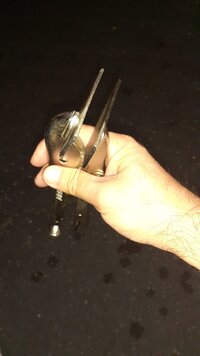
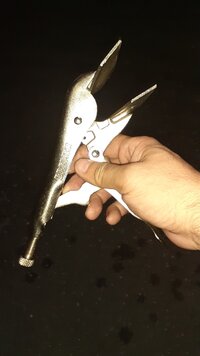
reminds me of the old metal crimps and plates that you would hammer onto ropes to make crude eyes and keep the ends of 3/4 strand ropes from unfraying
Follow along with the video below to see how to install our site as a web app on your home screen.
Note: This feature may not be available in some browsers.

Glad to see it arrived safe and sound! Enjoy the gear (and the stickers)!
I'm very surprised that polyurethane would be the product of choice since I've used it in outdoor applications and the UV performance/durability is nothing short of horrific. I have a redwood slab tabletop that lives in a sunny location and a thick poly coating lasts one season if I'm lucky, even with 4-6 coats. I am new to the rope sewing game but at least on wood poly has been an extremely fragile product when exposed to the sun and I've just given up on using it entirely because it has zero durability in my situation. But the shoe goo makes a lot more sense as it remains flexible and has never failed in my applications.It may be minwax, but I don't think it matters that much. I was told that they just pop down to the hardware store and grab some from the paint department. They don't care what brand, and have used behr, and varathane. Sorry to keep you in suspense @Dan Cobb , I was just curious if anyone had figured this out yet, as I have seen folks try to act like it's a secret they can't share. The key seems to be making sure it's water based, not oil, and I am betting you shouldn't use the spray cans.

 sherrilltree.com

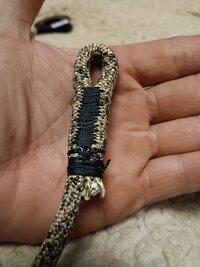
That should hold. I would melt the end and taper it like A.J. does so it doesn't catch on stuff, and it doesn't unravel.
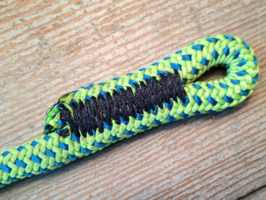
It's a dyneema core and 50% technora cover, so I don't think that heat will affect it the same way. I adapted the principles of the Yale whiplock, which is what you see below the main run of stitches. I was thinking of putting a dab of shoe glue, which I have tested on rope ends before, and it still looks like the day it was applied.That should hold. I would melt the end and taper it like A.J. does so it doesn't catch on stuff, and it doesn't unravel.
View attachment 91622
I prefer electrical tape. I definitely wrap all my stitch work.I would still put heat shrink tubing over the stitching if I were you. Abrasion resistance is nice. I had a rigging line jump to the wrong side of a spar with a small piece tied on because of my own error and instead of affecting the stitches, it melted the heat shrink instead before I stopped it.

Start a GoFundMe for @Matias?3M does make a clear electrical tape, but it is used mainly in electronics, and it is horridly expensive. I think it runs about $40.00 a roll. I have never used it so I can't tell you how it stretches or adheres.
40PR 1X72 would be their stock number.
A good middle strategy is use e-tape to hold down and taper the frayed end, leave the stitching visible. Then clear shrink tube over the entire shebang.With clear heat shrink you can kind of keep an eye on things. With electrical tape it is hidden. Hard to see if something is failing.
I like electrical tape as well however. Good electrical tape. Not crappy stuff. 3ms 88 is a good one.
Yes! The higher quality e-tape is thinner, stronger, and conforms to the cordage shape better. Especially when wrapping a taper.With clear heat shrink you can kind of keep an eye on things. With electrical tape it is hidden. Hard to see if something is failing.
I like electrical tape as well however. Good electrical tape. Not crappy stuff. 3ms 88 is a good one.
It seems to get scuffed enough that I replace it regularly, and take time to inspect things. The 88 is tough stuff, and what gets used for lanyards and climb lines, but I'll use some colored 3M for things like this where I like to color code opposite ends.With clear heat shrink you can kind of keep an eye on things. With electrical tape it is hidden. Hard to see if something is failing.
I like electrical tape as well however. Good electrical tape. Not crappy stuff. 3ms 88 is a good one.
That's true, but wrapping tightly compresses the rope before it is loaded. You can see the effect in the first picture taken right after wrapping.
View attachment 65130
After loading it to 170 pounds five times, there's some shifting. A second pass that fits down between the first would probably reduce that a bit.
View attachment 65132
That's my first try using Voyager rope and #21 braided nylon twine (200 lb). If I was serious about using it for life support, I'd use at least three sections that size with second passes...and do a LOT more testing.


 so they don't cut the fibers




















