Diagnosing Grand Fir Disorder

Brando CalPankian

Carpal tunnel level member
Location
Pine City, MN
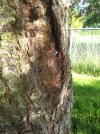
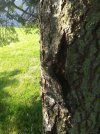
I'm out in Port Angeles, Washington. In Sequim (slightly less rain than PA) I just evaluated a grand fir with some major dieback. I may run back and get photos. The top was dying back, and it had large vertical cakers/cracks throughout the stem. I saw no fruiting bodies visible along the stem or root flare. It's about a 30 year old tree, and it's neighbors are healthy, one doug fir and another grand fir. I'm leaning towards primary amarilla root rot with secondary mites, as I found some mite damage and frass on the needles. Wanted to see if you PNW folks may have some insight, as I'm not as well versed on this west side of the state.

Thank you,

Brandon
 
Some pictures of the root/stem flare might help, especially if Armillaria is to be included/excluded. Hard to exclude, I admit. What does "good fertilizer" mean? I don't mean brand names, but what would you recommend in terms of types or sorts?
 
Hoping to do a dredge of 16-10-10 that I found locally. Going to look online as there isn't a lot here.

She didn't send me pictures of the flare. When I go back to perform some other work this weekend I'll get some more pictures. The large cracks were interesting to me, seemed like some sort of wood rot or fungal pathogen, but I'm still learning.

Thank you for the response!!
 
fir engraver beetle. Peel back the loose bark and look for galleries. the canker looking areas are likely gallery patches where the tree compartmentalized the whole section. Not to sound hash but I'd recommend removal/replacement over fert... Feel free to send me close ups...
 
Thank you for the advice! I will bring it up to her. She'd planted them with her family before they passed 30 years ago, so they're fairly special to her. Makes sense why there aren't fruiting bodies! I'll have to ask her what she wants to do. Thank you!
 
fir engraver beetle. Peel back the loose bark and look for galleries. the canker looking areas are likely gallery patches where the tree compartmentalized the whole section. Not to sound hash but I'd recommend removal/replacement over fert... Feel free to send me close ups...
I remember seeing galleries in the openings now that I think of it. Are they a primary pest? Is there a prevention (i.e bifinthrin or hort oil) to prevent infestation to her neighboring firs?

Ordered some books from the library and thriftbooks to further knowledge in the topic.
 
I remember seeing galleries in the openings now that I think of it. Are they a primary pest? Is there a prevention (i.e bifinthrin or hort oil) to prevent infestation to her neighboring firs?

Ordered some books from the library and thriftbooks to further knowledge in the topic.
Not sure if you have a applicators license I'd look to PNW plant disease handbook. I'm seeing pockets where they are the primary, historically not and typically secondary. The actual primary is drought triggering a pocket where they can take healthy trees out.
 
This tree does get more sun than the other two. Makes sense then! I'll look in to that book in particular. Thank you!

It's not too far gone, hopefully I can turn it around, and keep the other two resistant at the same time.
 
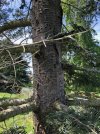
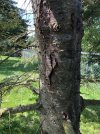
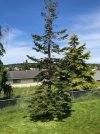
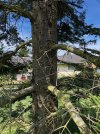
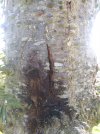
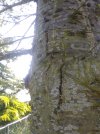
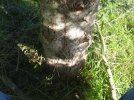
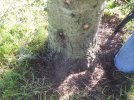
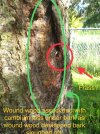
Here are some more images
 

Attachments

  • 20210516_081958.jpg
    20210516_081958.jpg
    866.8 KB · Views: 10
  • 20210516_082006.jpg
    20210516_082006.jpg
    672.5 KB · Views: 10
  • 20210516_082028.jpg
    20210516_082028.jpg
    809.5 KB · Views: 10
  • 20210516_082154.jpg
    20210516_082154.jpg
    855.7 KB · Views: 11
  • 20210516_082252.jpg
    20210516_082252.jpg
    930.1 KB · Views: 11
  • 20210516_082312.jpg
    20210516_082312.jpg
    805.3 KB · Views: 11
No lose bark per say, lots of compartmentalizing though. It looks like some sort of fungi forming around the wounds. No visible galleries in the wounds, though sparatic boring holes can be found throughout. Lack of vigor, dry soil so prescribing irrigation. Fert to increase vigor. Hort oil for treatment/prevention of boring insects on all 3 firs. Monitor and see how it handles the season. Other white fir kill in the immediate area (same block) looks like from borers.
 

New threads New posts

Back
Top Bottom