Burls and Badges

I feel descending on a static line with ONLY a friction hitch is

  • relatively safe

    Votes: 0 0.0%
  • not safe at all

    Votes: 0 0.0%
  • I do not know

    Votes: 0 0.0%

  • Total voters
    0
[ QUOTE ]

That's right jon; spoken to Hank on the road home from the mills. That was really a "click"ing point in the mystery, esp. from Hank's pov.

[/ QUOTE ]

It's important to bear in mind that Atlas Shrugged is a work of fiction Guy. I've never read a book where a single author beats the same theme to death so many ways in each chapter other than the Bible, which had multiple authors beating on the same theme.

When I was a child I thought as a child. When I became a man, I put away childish things. Maybe that's why I'm so fkd up?

Jomoco
grin.gif
 
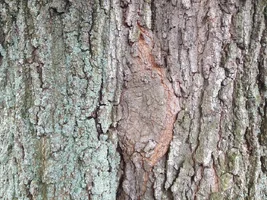
Just looked at a tree yesterday. This formation was found in areas where I am fairly certain there were no pruning wounds. Pic attached. Formation at RS base about a foot off the ground. I wasn't photographing for it and it is a bit hard to discern.
 
As I consider the thought that it would be caused by an insect...

These do last for several years.

Maybe an insect as a vector to a virus? I can't see an insect forcing tree tissue to conform to its wishes as is completely possible for a virus.
 
[ QUOTE ]
As I consider the thought that it would be caused by an insect...

These do last for several years.

Maybe an insect as a vector to a virus? I can't see an insect forcing tree tissue to conform to its wishes as is completely possible for a virus.

[/ QUOTE ]

How else could a wasp cause a gall to form simply by strategic laying of her eggs on a very specific spot on a branch? Topical absorbence of a secreted hormone capable of changing branch or leaf growth characteristics in only a local sense?

Could burls be a lasting trophy of a tree successfully walling off a viral or hormonal infection. In human terms a benign mole or wart?

Jomoco
 
The badges or pancakes...or...look like callous tissue run amok and overflowing.

I think that a lot could be learned by using a bandsaw to slab and crosscut a few of them.
 
The badges or pancakes...or...look like callous tissue run amok and overflowing."

That's descriptive--they do look liquid--but what triggers the amok running, no idea. I got paid to aerial assess and got a lot of pics; maybe time to try to inventory the growths. Data data data.

"I think that a lot could be learned by using a bandsaw to slab and crosscut a few of them."

Unfortunately most of the shields are in live wood, and the tree is up for retrenchment--deadwooding/crown cleaning and only the reduction of those living branches that are clearly on their way out.

But I have a request in to leave the growths for such dissection.

jon, i agree; some of those childish/childesque things may be worth picking up again, to check the flip side, and shed some of this adult craziness. What did Albert E say about that...?
 
I bet using an increment borer, an interesting cross section could be taken from the growth.
Its a pretty small hole (4 MM I think)
Hard to read a book by its cover
 
[ QUOTE ]


jon, i agree; some of those childish/childesque things may be worth picking up again, to check the flip side, and shed some of this adult craziness. What did Albert E say about that...?

[/ QUOTE ]

I sometimes ask myself how it came about that I was the one to develop the theory of relativity. The reason, I think, is that a normal adult never stops to think about problems of space and time. These are things which he has thought about as a child.

Albert Einstein

Jomoco
 
Yes a core would be an option; we'll try dissecting cut tissue before invading though. I keep meaning to core that beech with the washboard-type bulges, but never do.

Yeah normal adults get too busy making plans and stuff.
bud.gif
boohoo.gif
 
Well you know about trunk buttressing wood growths on old hollow trees like California Peppers(Schinus m.) and Box elder trees doncha Guy?

Looks like masses of giant 6 inch warts entirely covering the base trunk and flare for bout 6 feet or so up.

They are a sign of great age in those tree species.

See definition C

http://www.merriam-webster.com/dictionary/buttress

You got box elders in the east right?

Jomoco
 
Though these look different from crown galls, I would think the situation is similar.

According to Sinclair, Lyons and Johnson, with crown gall, a bacteria releases or injects a plasmid that distorts the plant's growth controls, causing anomolies in growth.

Had to look it up :|.
 
Very different from crown gall imo. Agrobacterium leads to some nasty rot. But are there bacteria at work? Sure, they're always there.

Signs of great age; not sure what that means re causality. Yes these type growth are typically on older trees. Old boxelder here are only found deep in the woods; not a favored urban tree.

Buttresses are found on almost all trees (and branches). Hard to stand without them!
 
Well, as an old hollow tree ages and progressively loses interior support, it's only logical to assume that the exterior walls might flex in the wind, and that this action some how releases something that spurs the growth of basal wood buttresses?

Jomoco
 
Sure that may be logical to assume, but that first tree has no indication of hollowing.

This one does--inonotus 360 major root rot and buttrot no doubt, the only shield on this willo oak.

this growth is in an upper sinus, between buttresses, and may have formed as you described. but the others were way above the buttress, aka flare.
 

Attachments

  • 324285-shield.webp
    324285-shield.webp
    349.6 KB · Views: 39
[ QUOTE ]
In a willow oak today with the most burls I have seen in that species. Also "badges", one name for those flat plates; "shields" is another. Seldom see decay noted in either--dozens of burls in this tree, but only 3 had rot.

Seen the shields in other species but primarily q phellos. Fairly rare; most often seen in very old (or in this case declining) specimens. Anyone seen these shields before, or have a clue of their origin?

[/ QUOTE ]

<font color="blue">In an apparent attempt to escape the roil and clutter of suckers and its confusions, you started a new thread about burls and badges. You have further obscured the landscape with the smoke of burls, badges, galls, shields, plates, and now pancakes.

What's the successful conclusion to our discussion? Validation by a poll and a pachinko machine?

I love intuition and word stretching as much as the next author, but what's next, you giving us some irrelevant paper on the value of trees in the serenity of public housing?</font>


Bob Wulkowicz

Yes, I am indeed venting. It happens.
 
I don't think I've ever seen anything quite like the 'badges' here. They do look like covered over wounds with the edges looking defined where the collar covered over. I don't know why I think it, but maybe from limbs that were naturally shed after they either dried out or rotted out.

Burls here on urban trees are overwhelmingly on Manitoba maple(boxelder). Numerous watersprouts are often associated with them. I think burls are random growths with as many causes as fasciation. Viral, 'cancerous' - (but not in a disease way like in animals), wound-initiated....chemically induced....
 
[ QUOTE ]
Sure that may be logical to assume, but that first tree has no indication of hollowing.

This one does--inonotus 360 major root rot and buttrot no doubt, the only shield on this willo oak.

this growth is in an upper sinus, between buttresses, and may have formed as you described. but the others were way above the buttress, aka flare.

[/ QUOTE ]

The compression ridges in upper wood structure elbows are quite striking on Eucalyptus citriodora or lemon eucs. They look eerily like a well muscled body builders arm. They too might be logically viewed as a result of reaction to wood structure flexing and putting out new exterior support ridges. When a dead stub that's very old and grey protrudes from a lemon euc trunk or branch, the cambium/callous growth will chase the stub outwards up to three or four inches. As a climber in them, I've pulled these old rotted stubs out of their huge collars like a stick in a narrow molasses jar, it pops right out covered in what Aussie's call keno, essentially eucalyptus blood or sap.

These are the structures X man got a little bent about I believe.

Jomoco
 
[ QUOTE ]
but maybe from limbs that were naturally shed after they rotted out.


[/ QUOTE ]

exactly.

Also, if a sheild is seen at a V-crotch, it's because the v-crotch pinched off tissue and had some cambium die, then the callous over.

I still think it is because some individual trees genetically callous too much. A simple sprout or limb death, or crotch pinch.... any wound stimulates excessive callous.

here is a question, perhaps you book readers can tell me, what causes the callous tissue to stop.... say when it grows over at a limb collar cut, when it gets to the middle, what makes it stop?
pressure from the sides hitting each other?

maybe some trees don't stop. Even after the most simple things...
 
Nonstop callusing, cancerous (not disease), I hear ya Frax and X. but wound-initiated; not sure about that, unless verrrry small wounds are included..some of you book readers hahahaha

bob the sucker thread just played out, didn't it? but you can vent anew about tangential links...jon's note on eucs reminded me of the amazing growths observed by my friend Cassian (aka Cal Modulin, aka Chamomile Dundee) that are portrayed in the aussie arbor age mag...
crap, forgot the 1 mb limit here; pm me your email and i'll send ya some. the only small one is this, with a guess about localised compression.
 

Attachments


New threads New posts

Back
Top Bottom