Am I just being a baby about this TIP?

ductaper

New member
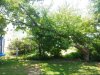
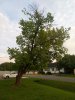
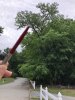
What’s your opinion of setting a TIP on a spreading limb? Id prefer to go through a second crotch and base anchor but the structure of this tree and leaves made it tough even with a big shot. I’ll keep at it. Here’s a pic with my pen pointing to a canopy anchor about 10’ from the main stem on a branch about 8” in diameter where the rope is.
91F83DF4-9428-4151-8B9F-EF3ACB70AC0A.jpeg
I don’t know why this one spooks me. Maybe it’s the damage to the other limbs around it (anchor limb is not damaged) I know asking based on a pic is tough. Was just hoping for some feedback to one opinion or the other like “that’s twice the size it needs to be; stop being a baby” or “I’ve seen problems doing it like that before”.

Thanks guys.
 
That looks like a horrible anchor point. Our guidelines for choosing a TIP would call for a minimum of 4" diameter, preferably around the main stem, and no more than 30 degrees past vertical. We also require a canopy anchor before cutting and a two person, static load test.

The union up to the right looks better, but pictures of trees are only two dimensional.
 
That looks like a horrible anchor point. Our guidelines for choosing a TIP would call for a minimum of 4" diameter, preferably around the main stem, and no more than 30 degrees past vertical. We also require a canopy anchor before cutting and a two person, static load test.

The union up to the right looks better, but pictures of trees are only two dimensional.

Thanks for the quick and very helpful reply. I appreciate your honesty and especially like that you can put a number on it: 4" and no more than 30 degrees past vertical.

Forgot to mention that the dead wood I need to get is over on that side of the tree. I'll get a more central anchor and use my hook to get out there.

Glad to know the ol' gut is properly calibrated :)
 
That would be an absolutely terribly choice for a straight up and down tie in. It hopefully would be obvious to you once a line was set and you gave it a pull test. Canopy movement is almost always a sign of side loading. Side loading 10' from a union is never going to be safe on something that size.

It is possible, on some trees, to change the vectors by capturing crotches that would open up the angles and place the loading force into compression. It is amazing how strong a limb is when loaded in compression and how little movement you will get with a pull test.
 
It is possible, on some trees, to change the vectors by capturing crotches that would open up the angles and place the loading force into compression. It is amazing how strong a limb is when loaded in compression and how little movement you will get with a pull test.

I totally get it. Thanks. I did something similar a few weeks ago when I had to remove some vines from a spindly leaning maple. I set a TIP high in a stout tree behind it and redirected through the spindly one. Worked great and kept the load where it belonged.

Thanks for taking the time to "weigh" in.
 
Bucket truck.

But the TIP high right of where you're talking look better. Then redirect your way out.

The 4" minimum I think is species and location dependent. I've climbed on plenty of 2" and 3" TIP that didn't give an inch. And 30 degrees isn't always feasible. Try that on a A. negundo. They literally grow at 45's here and are miserable bastards to climb.
 
Bucket truck.

But the TIP high right of where you're talking look better. Then redirect your way out.

The 4" minimum I think is species and location dependent. I've climbed on plenty of 2" and 3" TIP that didn't give an inch. And 30 degrees isn't always feasible. Try that on a A. negundo. They literally grow at 45's here and are miserable bastards to climb.

Cut one of these yesterday, made a social media post about it, and someone weighed in saying that these are 'to be respected' and referenced ash trees, with straight grain. Are they brittle, in your experience? Yesterday was the first one I've ever seen (just fell it from the ground).
 
Cut one of these yesterday, made a social media post about it, and someone weighed in saying that these are 'to be respected' and referenced ash trees, with straight grain. Are they brittle, in your experience? Yesterday was the first one I've ever seen (just fell it from the ground).
Think of an ash/willow hybrid and that's what you get. Weak, brittle, prone to failure, and grow like weeds. There's rarely a central tie in. Deadwooded one this morning that went straight 10 feet and then shot out two leads at 45 degree angles.
 
Think of an ash/willow hybrid and that's what you get. Weak, brittle, prone to failure, and grow like weeds. There's rarely a central tie in. Deadwooded one this morning that went straight 10 feet and then shot out two leads at 45 degree angles.

Eesh. My 'closest-to-home' experience with crap trees are Bradford Pears...
 
Dag.

Here's the one from yesterday. Similar growth pattern, but this one had at least half of the left side to fail, right down to the below-grass-level root crown.

IMG_20200623_062123608.jpg
 
Think of an ash/willow hybrid and that's what you get. Weak, brittle, prone to failure, and grow like weeds. There's rarely a central tie in. Deadwooded one this morning that went straight 10 feet and then shot out two leads at 45 degree angles.
I have a neighbor with a large, healthy A. negundo in their back yard and I tell him every time I'm over there how weird it is that it is a) large AND healthy, b) mostly grows upright and c) has a single trunk that goes up about 30' before branching. It is growing up between two houses so I suspect it grew straight to get sunlight.
 
Solid advice all around. To save time as well, why not use that "better" TIP to the right and pre-direct over to the side you need to retrieve dead from? That way you are spreading load and going straight to the area of tree you need to work in.
 
What’s your opinion of setting a TIP on a spreading limb? Id prefer to go through a second crotch and base anchor but the structure of this tree and leaves made it tough even with a big shot. I’ll keep at it. Here’s a pic with my pen pointing to a canopy anchor about 10’ from the main stem on a branch about 8” in diameter where the rope is.
View attachment 68846
I don’t know why this one spooks me. Maybe it’s the damage to the other limbs around it (anchor limb is not damaged) I know asking based on a pic is tough. Was just hoping for some feedback to one opinion or the other like “that’s twice the size it needs to be; stop being a baby” or “I’ve seen problems doing it like that before”.

Thanks guys.

A bit of missing information - what species, what the attachment of the limb looks like at the trunk (it is too grainy on zoom and leaves block the view of it). 8" is pretty thick for a lot of guys - That does not worry me unless it is box elder or some such.... My main consideration is the leverage on the trunk attachment. The wind may be levering it much more than you could.

What I'd also be looking at is what you can accomplish from that TIP. Looks like a pleasant scrabble to get atop it, and then you're above your anchor point to start out your climb. Looks like you'd need to re-establish your TIP 1-3 times before you could work, and you'd be uncomfortable the whole time.

Definitely follow your instincts and back off if you're feeling a bad vibe. It's not worth it. And, up your throwline game. You can get that high shot.
 
I would stand across road with big shot and try to hit the crotch where your pen is AND one of the back crotches in one shot, work the ball how you need to, then base anchor. Forces way more favorable. That's pretty much my defacto way of climbing maples with braches smaller than yours. I would not call you a baby for feeling uneasy about a canopy anchor on that horizontal-ish limb. Your body weight could potentially increase torque at trunk by 50-100%. It looks like a 400lb limb, but hard to tell.
 

New threads New posts

Back
Top Bottom