ALB In NJ

I just got in there today with Joey and Teti. Charley went home today.

Where you at Trev?? I don't have a clue where we are. All I know is route 9 and a little lunch spot called the Rio Cafe with a sexy little chica. Got some nice little chi chi's and a boomin culo.

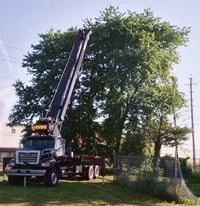
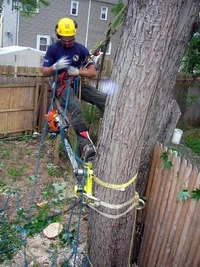
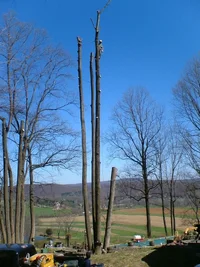
BTW here's a pic of Charley at my neighbors house we did some work for. This next door neighbor is about 40 acres away. As you can see I don't have many neighbors.
 

Attachments

  • 25903-TB15.webp
    25903-TB15.webp
    204.3 KB · Views: 82
[ QUOTE ]
you near the Tamke guys?

[/ QUOTE ]

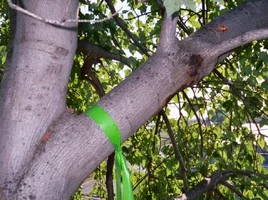
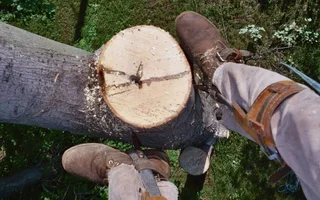
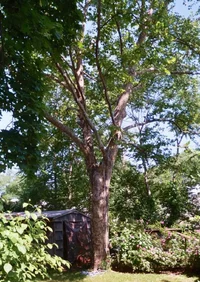
Yeah, the Tamke guys are working with us. We're on the other side of Route 1&9 in Rahway and Carteret. Yesterday I cut down an ALB-infested tree in Linden.
 
Thanks for showing us the presence of the beetle, Brian. Here, I've cut down all these host species trees as a precaution, and havn't seen any evidence yet.

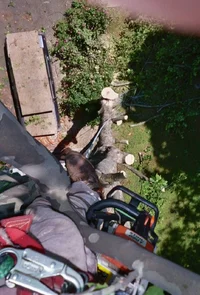
Here's a sample of some of the close quarter situations we find.
 

Attachments

  • 25949-CharleyDSCN0823.webp
    25949-CharleyDSCN0823.webp
    102.5 KB · Views: 100
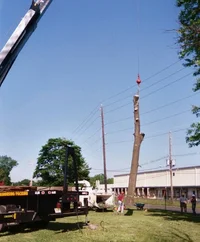
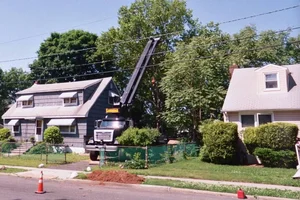
This was the next stop yesterday morning after the infested tree. We went back over to Rahway for a London Plane and a Norway Maple. We managed to squeeze the crane into the driveway, but we had to land everything in the small front yard next door to stay away from the wires.
 

Attachments

  • 25951-018_8A2.webp
    25951-018_8A2.webp
    203.8 KB · Views: 78
Nice pics guys. What a shame though. All of those trees being removed is a bit sad. All so healthy until that bug came along. I understand removing all trees with infestation signs, but not the ones that are just host species that might become a host. That's a bit crazy to me, but the USDA has more knowledge than I do.

Here's some info about how many trees have been removed so far in NJ:
ASIAN LONGHORNED BEETLE UPDATE JUNE 10, 2005
<!--[if !supportEmptyParas]--><!--[endif]-->
Middlesex/Union Counties ALB Infestation

As of June 9, 6,327 trees have been removed from the Middlesex/Union ALB quarantine area. Of those, 515 were infested host trees and 5,812 were high-risk exposed host trees. Crews continued removing trees this week in areas of Rahway and Carteret. Currently, 30 program personnel from USDA APHIS PPQ, NJDA, NJ Forest Service are performing survey, control and regulatory activities. To date 18,288 host trees have been surveyed.

As of June 9, 4,322 trees have been treated with imidacloprid in the Middlesex/Union Counties ALB quarantine area; 4,005 by soil injection and 317 by trunk injection. Approximately 20,000 trees will be treated with the insecticide by the time treatment is completed. The insecticide is being injected into the tree's trunk or into the soil surrounding the tree. The treatment is a preventive measure aimed at host trees currently deemed to be at low risk of infestation.

The New Jersey State Forest Service’s landscaping contractor has completed the spring planting of non-host trees in the Carteret and Woodbridge areas of the removal zone. A total of 688 trees were planted; 565 in Carteret and 123 in Woodbridge. The New Jersey State Forest Service is planning to plant an additional 2,000 non-host trees in the fall within the Middlesex/Union ALB quarantine area.
<!--[if !supportLineBreakNewLine]-->
<!--[endif]-->
The New Jersey Department of Agriculture has written each member of the state’s Congressional delegation to ask that they pursue increased federal funding for ALB eradication in the FY2006 federal budget. Currently, the President’s budget calls for $15 million nationally for the ALB eradication program, a substantial decrease from the $30 million appropriated nationally in FY2005.

Jersey City/Hoboken ALB Infestation
Five program personnel, along with five temporary summer hire employees, are performing survey and regulatory activities in the Jersey City/Hoboken ALB quarantine area. To date, 1,671 host trees have been surveyed with no signs of ALB infestations.

Public Outreach:
Barry Emens, USDA-APHIS ALB New Jersey Program Director, worked with personnel from TruGreen ChemLawn on an educational ALB training video for their employees. The video covered the biology of the ALB, survey and detection methods, dealing with the public and working with program cooperators.
--
 
I just returned to Seattle from 3 weeks of localized host-species genocide to control the ALB infestation in the USDA quarantine zone in Rahway, New Jersey.

We systematically destroyed all individuals of certain species within a certain distance of a known instance of presence that was found. Trees known to be 'not edible' by the bug were left intact, and treated with insecticide. Lots of large oak, mulberry, conifer and other types of trees are still standing, while there is an eerie absence of any maples, or elms, or many other species on the eradication list. Even though perfectly healthy, if a tree was within the treatment radius, it was sacrificed to protect the remaining trees outside the zone.

No one asked me if I thought these trees should be removed. I was only asked if they could be safely cut into sections and removed from within the landscaping in residential & commercial zones with as little disturbance as possible.

0-385-47956-5.gif

In transit thru the airports during my journey home, I read a book, "The Hot Zone", by Richard Preston. Richard is the author of the article on Redwood tree climbing in the Valentines Day, 2005 issue of The New Yorker magazine.

"The Hot Zone" is the story of the Ebola virus outbreak. The concept of containment of an outbreak of disease struck me as similar between Asian Longhorned Beetle and the nearly always fatal Ebola virus.

Preston shares the possibility that the Ebola virus is an efficient predator about to prey on the bloated human population of 5 billion chunks of meat, waiting to be consumed.

This urgency recalled ecologist Dr. Jerry Franklin's message about exotic pests in his address to the 2002 ISA conference, "Old Growth and New Technology". Franklin said our dependency on wood products could be affected if a catastrophic disease that kills Douglas fir trees, for example, was accidentally imported into an area with little species resistance to the pathogen.

Are we the tree doctors, or the tree morticians? For my take on the cost/benefit analysis of preserving or removing trees, please see my treedr.net article from the October, 1995 issue of Arbor Age magazine at: Tree Removal, the Ultimate Maintenance Option

 

New threads New posts

Back
Top Bottom