A First

guymayor, and treehumper mrtree has said it really, QTRA merely provides your client with more detailed info on the degree of risk they then have to decide whether to proceed with the mangement options that you would include in the assessment. It is an attempt to reduce the subjectivity in risk assessments but there still remains a big chunck of subjectivity since you have to decide in the end how likely an event is going to be in relation to the tree being looked at. It is an improvement because it places greater emphasis on the target value than the defect in the tree...all trees have defects (well every one I've seen)

Its a model out of the UK but they are improving and internationalising the impirical data sets used to calculate target occupation.

In many ways it is a model that may well reflect what you are already doing in your assessments getting recognition from your clients of the numerous hazards we all face in our everyday lives and the risks we accept daily, and comparing the assessed quantified risk in their tree to these other risks. In the UK the HSE has provided a measure of acceptable risk 1/10,000 and thats the line in the sand if you like. But even after all this calculating etc in comes down tot he clients decision based on your assessment. Like I said I use it from time to time but not every tree assessment or report.
 
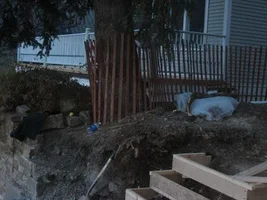
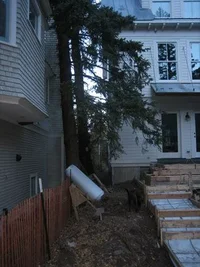
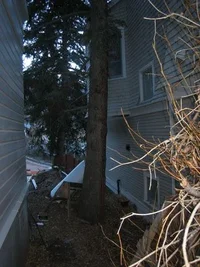
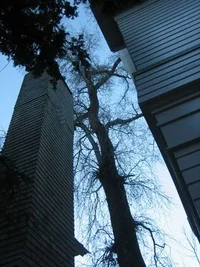
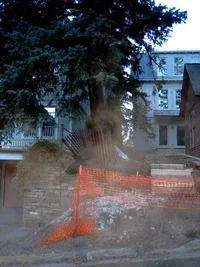
I think this is the last one. I now will pat myself on the back for my technological breakthrough of being able to post pictures. Oh and we are on weather delay because of snow but hope to start wrecking later.
 

Attachments

  • 80460-SalemTrees4.webp
    80460-SalemTrees4.webp
    35.3 KB · Views: 127
Looks to me like a construction site and severed roots, not a problem as you described. I would bet that if this is a construction site the trees were fine before construction.

I do agree they are now inappropiate for the location, but certainly an arborist was not needed to argue this.
 
After reading Altreeist's post if brings to mind what we determine is hazardous. IF the tree is hazardous and must be removed is is safe to climb? Over the years I have seen so many trees declared hazardous and ready for the chainsaw but most are climbed and removed without incident. Thus we get back to a question of how to we rate hazardous. Work by Erk Brudi and others indicate hollow trees are far safer than we generally believe.
 
Just because a tree is safe to climb...doesnt mean I want it over my house...or above where kids play etc. I agree hollow trees are usually safer then we think (and defiantely safer then avg jo thinks). But the tree is still a hazard compared to a heathly, none hollow, tree. And it a storm it will be more likely to fail.

so the question becomes what is more valuable: the hollow/hazardous tree...or the house, kids, etc.

I have had customers that stayed in a hotel over night, during wind storms, cause they were that freakout the tree would crash through their house. The tree wasn't even hollow, but it was leaning againts their house some. My avatar is from the top of it.
 
[ QUOTE ]

so the question becomes what is more valuable: the hollow/hazardous tree...or the house, kids, etc.

[/ QUOTE ]This sounds like fearmongering. It is never such a cutanddried assessment.

Skew's tree should have been removed before the house was built. the real estate occupied by the roots was needed for other uses.
 
I know it is not that cut a dry. But it is something that weighs into a assesment. A hollow tree that is away from buildings and high pedestrian areas, makes a good wildlife tree. I have a bunch of hollow black oak trees around my house...but none within striking distance.

Plus (and correct me if I am worng) if we say the tree is safe despite a noticeable defect (like hollow), and it fails in that spot. we are liable for a suit.

About 70% of my work is similar the the picture skew posted. Except my work is in a old church campgrove, with +100' pines etc. With the house roof eaves notched out for the trunks. The house were there before the trees...one old lady told me she wished she had pulled it out. When it was samll and she was a kid.

And I dont tell them they need to remove the tree...just because it us againts the house. But neither do I blame them for wanting it down...if they so desire.
 
I think one house was built long ago and the other is new/signicant restoration/extension.

"I agree hollow trees are usually safer then we think (and defiantely safer then avg jo thinks). But the tree is still a hazard compared to a heathly, none hollow, tree. And it a storm it will be more likely to fail."

This is really not true. If you look at the work of Wessolly, Brudi etc. and engineers a safety factor of 1.5 (150%) is more than enough to provide significant reserve strength and is regarded as safe. This mean that two identical trees (species, height, diameter, canopy etc.) which differ only in one being (say) 20% hollow and one solid, both would have a safety factor of well over 1.5 and be considered safe and neither would fail in the same conditions.

A difference may occur if a hollow is located such that it affects limb attachment.
 
OK, the house was not new, it was extended, but so what. Either way, a critical amount of roots were sacrificed.[ QUOTE ]

Plus (and correct me if I am worng) if we say the tree is safe despite a noticeable defect (like hollow), and it fails in that spot. we are liable for a suit.

[/ QUOTE ]You are not wrong. If we say a tree is safe, then we deserve all kinds of trouble. nothing is safe, everything can fail:

A certain level of liability is unavoidable no matter what we do or not do, but there are steps that can limit our own personal and professional liability when assessing tree risk. First, define your assignment so that you and the owner understand the level of detail that you will be going to, and what form the written report will take. Second, state your limitations in a written “disclaimer”. Unless you have a big “S” on your chest, you cannot see inside the tree or under the tree. You cannot foresee what storms will be testing the tree’s strength, so you cannot guarantee its safety for a week or even for a day. Finally, make it clear that risk is always present, and it is the owners of the tree who are responsible for the decisions affecting the tree.
 
I did an experiment last summer. Dropped a 80' Red Oak on a house. It was being demolished. It was a 2 story home. The tree fell to about a 30 deg angle before striking the house. Sufficient momentum to do some serious damage one would think. However, the only damage done was minor. the large overhanging eaves was broken but the shallow pitched roof was intact. This was a solid tree.

I find the notion that the tree will come crashing thru the house, specially when it is close to the house, is absurd.
 
"You are not wrong. If we way a tree is safe, then we deserve all kinds of trouble. nothing is safe, everything can fail:"


Well this is entirely unfair. If everything can fail do we hold everybody involved rsponsible, no, and we certainly do not expect them to make failproof products. Can you imagine if we expected builders to build failure proof homes. We would all be living in pyrimids, that shed floods. We have put trees in a special category of unnatural fear.

"You cannot foresee what storms will be testing the tree’s strength, so you cannot guarantee its safety for a week or even for a day."

Sure you can foresee storms, check with the weather office and find out what is the maximum wind speed recorded in the area. Find out the how often hurricanes, tornados, microblasts occur. Further look at the size of trees in the area. YOu can not guarantee but you can provide some good information.

"Finally, make it clear that risk is always present, and it is the owners of the tree who are responsible for the decisions affecting the tree."

This perhaps is key, pass the information to the homeowner and let them make a decision. On other thing to consider is not only the hazard and risk of the tree but what is the future for the tree. In Skews case, ratty old spruce with severed roots don't have much future, so this may overrule the hazard determination.
 
Your experiment has been my experience. Very little major damage done to houses, lots of damage to cars.

In Canada I think we get all upset by scenes from hurricanes and tornados. We cannot place in prespective the difference in the magnitude of the storms. Further the largest trees regularly encountered in Ontario are about 120-130 feet, still small by standards of trees as near as southern Pennsylvania. The majority of trees we encounter are less than 80 feet, with many areas dominated by Acer negundo at 40-50 feet.
 
The dreaded Acer negundo...

It really does come down to mitigating the risk. Removing a tree because the situation we find the tree in suggests an inevitable failure at some point. Removing while it is still safe for climbing is prudent.
 
NOw to really upset people

"It really does come down to mitigating the risk. Removing a tree because the situation we find the tree in suggests an inevitable failure at some point. Removing while it is still safe for climbing is prudent."

So all along we have made our decisions based strictly on what the customer and humans want with no thought to the tree. We know every tree will fail at somepoint, but to we always have to destroy trees far too early?
 

New threads New posts

Back
Top Bottom