













- Location
- Retired in Minneapolis
Though some attempted answers in this thread have hit on portions of the mechanics involved, no one has come up with a complete answer.
You've dressed the stage..now its time for your One Act. The audience awaits
Follow along with the video below to see how to install our site as a web app on your home screen.
Note: This feature may not be available in some browsers.
Though some attempted answers in this thread have hit on portions of the mechanics involved, no one has come up with a complete answer.

NICE CUT... that's why we hone falling skills on the ground, so we can trust our lives to them in the air!I just wanted to thank everyone in this thread for the incredible wisdom and insight you’ve shared on tree felling. View attachment 81623
And if you keep this up, I'll get some real "pros" to speak up and shut you up.
Before I do.. does Mark have any more "real pros to shut me up"? Because I'm beginning to think they don't exist!You've dressed the stage..now its time for your One Act. The audience awaits

I'm waiting for Mark's real pros to shut me up.Keep comparing yourself to lessers in your area. You work in the suburbs with medium sized trees, with largely open drop zones, except that whizzy off the ladder over the drain field video.
I'm waiting for Mark's real pros to shut me up.

I’m waiting for him to take credit for x man’s shark gil cut technique.Daniel, you are the best ever.
Everyone help Daniel's self- esteem.
He's the best ever, just ask him.
If any real tree people know he's the best, please chime in.
It's tiring for someone to always blow their own horn.

Great feedback to hear.I just wanted to thank everyone in this thread for the incredible wisdom and insight you’ve shared on tree felling. This thread has bolstered my confidence in felling because I have a better understanding of the “why” (and “why not”) behind the felling decisions I make.

Wise advice !Great feedback to hear.
Just be cautious of well intended information that is flawed. Practice any new tree felling methods in situations where a failure is not critical to your safety or property damage. Complex methods of tree felling often have reduced reliability that results from variables not discussed or identified when you give it a go. Learn to be very competant with core skills first and leave being fancy to the "peacocks". Just my thoughts.
Regards
Graeme McMahon
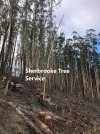
Very high steps. How does the height of the face compare?View attachment 81707
This shows a section of felled bush with the density of trees behind and the boundary to the clear coupe (high left). The alpine ash are all 50 - 60m trees and pull heavily down hill. The "free grain" of these trees have a very high tendancy to split up. The strength of the outside fibres to hold are clear.
This picture shows a rare display of a tree departing before the "back release" strap is cut or breaks. The strap whipped down to the rear hitting the ground before standing back up again. Note there is no pulled wood on any of the stumps which demonstrates employable skills for a production faller. The high steps are obvious however may not work for all species. The thick fiberous bark sends most would be fallers packing as we do not take this off to fall.
A tree every 2 - 5 minutes for 9 hours a day in steep country is steady work for my old legs.
Regards
Graeme McMahon
Just a normal standard scarf.Very high steps. How does the height of the face compare?

Thank you for sharing what you do. I’ve been in residential tree care for 19 years now, at one level or another, and our company specializes in limited access trees, so we do a lot of very tight space felling, but I have nowhere near the experience you do. I greatly respect your skill and your tenacity in cutting at that level!View attachment 81708
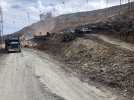
A view of about a third of one of my hand felled coupes 2018. Center near the top of the hill is a 30 ton excavator for perspective. Seed trees left as prescribed and a tuft to go to complete it. Credit to the crew on the machines to prepare the bush, process and load that volume of wood.
My motives for adding to this thread is to assist persons with consolidating sound core skills not to facilitate antagonistic behavior. Some would say that, "falling trees infrequently in a boutique existance does not give the repetition needed to be in judgement".
Regards
Graeme McMahon
I didn't intend any criticisms of industry knowledge or practices, or the other comments or contributors in this thread to refer to you.My motives for adding to this thread is to assist persons with consolidating sound core skills not to facilitate antagonistic behavior. Some would say that, "falling trees infrequently in a boutique existance does not give the repetition needed to be in judgement".
I want a refund on my ticket. Back on April 16, post #56:You've dressed the stage..now its time for your One Act. The audience awaits
Much respect Graeme and I have an honest question. How do you feel about working in clear cuts like the one pictured above? I spent a decade working in similar looking sites in Sountheast Alaska and eventually realized I could no longer participate in such devastation so I became more involved in the sustainable selective logging practices that were beginning to take hold in the redwoods of NorCal. Logging in Alaska was an amazing time in my life but even after a few decades I still carry some regrets.View attachment 81708
A view of about a third of one of my hand felled coupes 2018. Center near the top of the hill is a 30 ton excavator for perspective. Seed trees left as prescribed and a tuft to go to complete it. Credit to the crew on the machines to prepare the bush, process and load that volume of wood.
My motives for adding to this thread is to assist persons with consolidating sound core skills not to facilitate antagonistic behavior. Some would say that, "falling trees infrequently in a boutique existance does not give the repetition needed to be in judgement".
Regards
Graeme McMahon























