
Navigation
Install the app
How to install the app on iOS
Follow along with the video below to see how to install our site as a web app on your home screen.
Note: This feature may not be available in some browsers.
More options
You are using an out of date browser. It may not display this or other websites correctly.
You should upgrade or use an alternative browser.
You should upgrade or use an alternative browser.
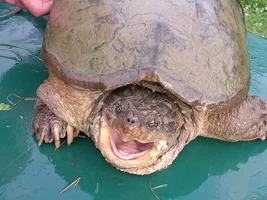
What is this lil bugger?
- Thread starter treedimensional
- Start date

- Location
- Canada
LOL
NO!!!!
NO!!!!
[ QUOTE ]
i gotta save the thread
[/ QUOTE ]
It must be a thread-derailment night !

It's happening all over the place!
Have you got a snapping turtle there, Xman?
In reference to the blue-tailed skink.
Don't all juvenile skinks have blue tails?
It has to do with defense...as a predator would see the blue tail and grab at it and it falls off and the skink escapes.
As they get older the color fades.
If so, ID would need to be more specific such as a 5-stripe skink or a mole skink, etc., right?
I'm just trying to learn some things here.

-Diane-
i gotta save the thread
[/ QUOTE ]
It must be a thread-derailment night !
It's happening all over the place!
Have you got a snapping turtle there, Xman?
In reference to the blue-tailed skink.
Don't all juvenile skinks have blue tails?
It has to do with defense...as a predator would see the blue tail and grab at it and it falls off and the skink escapes.
As they get older the color fades.
If so, ID would need to be more specific such as a 5-stripe skink or a mole skink, etc., right?
I'm just trying to learn some things here.
-Diane-

- Location
- NJ
soup?
[ QUOTE ]
[ QUOTE ]
i gotta save the thread
[/ QUOTE ]
It must be a thread-derailment night !
It's happening all over the place!
Have you got a snapping turtle there, Xman?
In reference to the blue-tailed skink.
Don't all juvenile skinks have blue tails?
It has to do with defense...as a predator would see the blue tail and grab at it and it falls off and the skink escapes.
As they get older the color fades.
If so, ID would need to be more specific such as a 5-stripe skink or a mole skink, etc., right?
I'm just trying to learn some things here.
-Diane-
[/ QUOTE ]
I don't know everything about skinks and i don't have time to look into it. These blue tailed skinks do fade if the adult is very large, I just missed catching the biggest one I've ever seen that day, it's tail was still slightly blue. And I'm pretty sure, they are called "blue-tailed skinks". There are tons of skink species, some have no blue tail at all I believe. That would be news to me if all young had a blue tail; but maybe they do and I'd learn something. Mole skink is endangered or rare I think, so this wasn't a mole skink. My skink does have very distint lines, so maybe it's a five lined or something then. We always called it a blue-tailed skink though.
--------------
yes, what kind of snapping turtle though?
caught it in my pond, dive to the bottom with mask and snorkle and follow the bubbles and catch by hand. I've caught two large ones this way in the past 3 years.
[ QUOTE ]
i gotta save the thread
[/ QUOTE ]
It must be a thread-derailment night !
It's happening all over the place!
Have you got a snapping turtle there, Xman?
In reference to the blue-tailed skink.
Don't all juvenile skinks have blue tails?
It has to do with defense...as a predator would see the blue tail and grab at it and it falls off and the skink escapes.
As they get older the color fades.
If so, ID would need to be more specific such as a 5-stripe skink or a mole skink, etc., right?
I'm just trying to learn some things here.
-Diane-
[/ QUOTE ]
I don't know everything about skinks and i don't have time to look into it. These blue tailed skinks do fade if the adult is very large, I just missed catching the biggest one I've ever seen that day, it's tail was still slightly blue. And I'm pretty sure, they are called "blue-tailed skinks". There are tons of skink species, some have no blue tail at all I believe. That would be news to me if all young had a blue tail; but maybe they do and I'd learn something. Mole skink is endangered or rare I think, so this wasn't a mole skink. My skink does have very distint lines, so maybe it's a five lined or something then. We always called it a blue-tailed skink though.
--------------
yes, what kind of snapping turtle though?
caught it in my pond, dive to the bottom with mask and snorkle and follow the bubbles and catch by hand. I've caught two large ones this way in the past 3 years.
[ QUOTE ]
soup?
[/ QUOTE ]
I haven't done it yet, but I keep talking to my 3 year old about doing it.
we let that one go. the latest one, almost this size, we took to another area, a big creek and let it go too. haven't downloaded the pictures yet though.
soup?
[/ QUOTE ]
I haven't done it yet, but I keep talking to my 3 year old about doing it.
we let that one go. the latest one, almost this size, we took to another area, a big creek and let it go too. haven't downloaded the pictures yet though.
[ QUOTE ]
yes, what kind of snapping turtle though?
[/ QUOTE ]
A dangerous kind!
Maybe the Florida species? It's suppose to have that little pink worm-like attachment inside the bottom of its mouth.
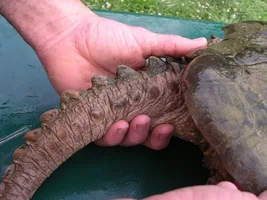
And it's a male because of the longer tail, right?
A friend of mine found a turtle crossing a road and brought it to my pond. It's at least 12" across.
I thought it was a western native but it's an eastern red-ear.
He said it was probably purchased at a pet store when it was young and then released by its owners (or escaped).
I didn't even know those little pet store turtles got so big.
When I was growing up ours always died. They'd get some bacterial disease.
-Diane-
yes, what kind of snapping turtle though?
[/ QUOTE ]
A dangerous kind!
Maybe the Florida species? It's suppose to have that little pink worm-like attachment inside the bottom of its mouth.
And it's a male because of the longer tail, right?
A friend of mine found a turtle crossing a road and brought it to my pond. It's at least 12" across.
I thought it was a western native but it's an eastern red-ear.
He said it was probably purchased at a pet store when it was young and then released by its owners (or escaped).
I didn't even know those little pet store turtles got so big.
When I was growing up ours always died. They'd get some bacterial disease.
-Diane-
I was just looking for Common Snapping Turtle. Say, verses, alligator snapping turtle.
red-ears are not very common in the wild. we have lots of painted turtles around here in ponds and water. Lots of very neat looking box turtles in the woods too.
...or crossing the road after a rain storm.
red-ears are not very common in the wild. we have lots of painted turtles around here in ponds and water. Lots of very neat looking box turtles in the woods too.
...or crossing the road after a rain storm.
So I'll take a turn:
What creature generates these soil-volcanoes and damages millions of dollars worth of crops and young trees each year?
This animal was the sole reason that Russian immigrants did NOT establish settlement along the western side of our continent centuries ago.
(or so it has been said)
And, yes, Holly, a soup can be (and was) made out of them!
-Diane
What creature generates these soil-volcanoes and damages millions of dollars worth of crops and young trees each year?
This animal was the sole reason that Russian immigrants did NOT establish settlement along the western side of our continent centuries ago.
(or so it has been said)
And, yes, Holly, a soup can be (and was) made out of them!
-Diane
Attachments


tomthetreeman
Participating member
- Location
- Rhode Island
Prairie dogs?
Or maybe that guy from 'Close Encounters.'
...One of those two for sure.
-Tom
Or maybe that guy from 'Close Encounters.'
...One of those two for sure.
-Tom
[ QUOTE ]
Prairie dogs?
[/ QUOTE ]
Prairie dogs!?!
Tom, didn't you mention 'prairie' lizards before?
Did you once live on the prairies?
No, not even a ..... 'close encounter' !
But a good try all the same!
-Diane-
Prairie dogs?
[/ QUOTE ]
Prairie dogs!?!
Tom, didn't you mention 'prairie' lizards before?
Did you once live on the prairies?
No, not even a ..... 'close encounter' !
But a good try all the same!
-Diane-
- Location
- Canada
Vole
TD-
While voles are destructive to crops and young trees their borrowing habit is with surface tunnels and not the noted volcano mounds of this photo.
Close, very close, though.
-Diane-
While voles are destructive to crops and young trees their borrowing habit is with surface tunnels and not the noted volcano mounds of this photo.
Close, very close, though.
-Diane-
- Location
- Canada
OK Mole!
Getting warmer.....
But moles also only make surface tunnels and actually they don't chew on the roots of plants.....not so much at least to cause economic damages.
-Diane-
But moles also only make surface tunnels and actually they don't chew on the roots of plants.....not so much at least to cause economic damages.
-Diane-

TreeCo
Carpal tunnel level member
Looks way to small for a groundhog mound. Looks like a fire ant mound found in this area!
I'm guessing this critter is not found on the east coast which makes it a rough ID for me.
I'm guessing this critter is not found on the east coast which makes it a rough ID for me.
I don't think it's on the east coast, TD.
Although, they do hibernate in the winter but perhaps their burrows are not deep enough for the type of cold out your way.
We haven't had good winter rains in 4 years which usually floods their burrows and controls their population so it's really getting out of hand out here.
You gave a valiant effort.
-Diane
Although, they do hibernate in the winter but perhaps their burrows are not deep enough for the type of cold out your way.
We haven't had good winter rains in 4 years which usually floods their burrows and controls their population so it's really getting out of hand out here.
You gave a valiant effort.
-Diane
jim454
Participating member
- Location
- The land of Utopia
pocket gopher sister friend
You got it, Jim !

Your turn.
-Diane
Your turn.
-Diane


