
Navigation
Install the app
How to install the app on iOS
Follow along with the video below to see how to install our site as a web app on your home screen.
Note: This feature may not be available in some browsers.
More options
You are using an out of date browser. It may not display this or other websites correctly.
You should upgrade or use an alternative browser.
You should upgrade or use an alternative browser.
Traditional to eye and eye split tail
- Thread starter Jem4417
- Start date


I second the baaaahaha.
I started on a distel, then switched to a vt, then to a michoacan. I did that for about three years, then used Ddrt (with a michoacan hitch climber system) for the first time on my first crane job last week. Somewhere in there a client convinced me to try her Blake's hitch... that lasted for 10 feet. This idea of a progression is out. date. ed.
I started on a distel, then switched to a vt, then to a michoacan. I did that for about three years, then used Ddrt (with a michoacan hitch climber system) for the first time on my first crane job last week. Somewhere in there a client convinced me to try her Blake's hitch... that lasted for 10 feet. This idea of a progression is out. date. ed.

Fairfield
Participating member
- Location
- Bucks County pa USA
Yes, but that is just how things work. As new techniques become the norm the old norm becomes less and less used or taught. Are they still relevant? Absolutely! Hell, I think picket systems should be taught along with AHDs but you never see that anymore. We can get away during the day in day out with very little, but the climbers that dig deeper in learning the old alongside the new stand out when the shit hits the fan or a mini loader rolls in the middle of a field on muddy ground with no overhead anchor to be seen.Well put jim. It's always interesting to hear from someone with your background for some perspective of how vast rope access techniques are. Would you think the blakes hitch on a traditional system will be taught less and less as more advanced systems become the norm?

- Location
- Riegelsville
Haha ill never forget how to build a high point with fence posts. Thanks for that one Jim!We can get away during the day in day out with very little, but the climbers that dig deeper in learning the old alongside the new stand out when the shit hits the fan or a mini loader rolls in the middle of a field on muddy ground with no overhead anchor to be seen.
Fairfield
Participating member
- Location
- Bucks County pa USA
Lol, thought you would like that!Haha ill never forget how to build a high point with fence posts. Thanks for that one Jim!

Jem4417
Branched out member
Yes, but that is just how things work. As new techniques become the norm the old norm becomes less and less used or taught. Are they still relevant? Absolutely! Hell, I think picket systems should be taught along with AHDs but you never see that anymore. We can get away during the day in day out with very little, but the climbers that dig deeper in learning the old alongside the new stand out when the shit hits the fan or a mini loader rolls in the middle of a field on muddy ground with no overhead anchor to be seen.
I agree that's "how things work" but I'm finding people still think proficiency in the blakes hitch is necessary as some right of passage before an eye to eye prussic hitch can be taught or practiced.Yes, but that is just how things work. As new techniques become the norm the old norm becomes less and less used or taught. Are they still relevant? Absolutely! Hell, I think picket systems should be taught along with AHDs but you never see that anymore. We can get away during the day in day out with very little, but the climbers that dig deeper in learning the old alongside the new stand out when the shit hits the fan or a mini loader rolls in the middle of a field on muddy ground with no overhead anchor to be seen.
Fairfield
Participating member
- Location
- Bucks County pa USA
That's only because it has always been "the way". That's when not confining yourself to a box comes in. Think of it this way.... if I was to say I want you as a tree guy to show a new guy to climbing, how to safely get from the ground to a branch that is say 15 feet off the ground, you may very well show him/her the Blakes Hitch method. Nothing wrong with that, it works, it's safe, and it accomplished the goal set. If I then ask a caver, or industrial Climber,or rescue person to do the same thing they most certainly will teach that person a single line method with a backup line . Most likely consisting of some form of a change over as well. Again, it works, it's safe, and it accomplished the goal. It all depends on who is teaching and what they have been taught is the standard or believes is the standard. A big part of this as well is what the instructor and rest of the climbers there know. Tree climbing is largely still in a transition time. SRT although being one of the oldest forms of climbing is an infant with arborculture at large scale. I would say in 10 to 15 years SRT will be a method taught first for climbing with Dbrt added as the build on skill by a large percentage of climbers. This generation of SRT climbers needs to get to that point first when they become the old heads in the company.I agree that's "how things work" but I'm finding people still think proficiency in the blakes hitch is necessary as some right of passage before an eye to eye prussic hitch can be taught or practiced.

As was stated, there are totally separate techniques for ascent including single and doubled rope systems. Many pro tree workers are moving toward SRT as their go-to. Does that mean a new climber at the present time should perhaps learn single first, and bag the double until much later?
For me it came down to my training, and also my true love of climbing and my intention to learn it from the inside out. I used Jeff Jepson's (everyone hold up your cigarette lighters) "Tree Climber's Companion". And yes, that text teaches a very basic DdRT system first with a Blake's. I can't even tie a tautline or a Distel without instructions - I didn't find either of those hitches performed to my liking. In the "dark ages" I found the Blake's, and a modified Blake's with a 5th turn, were the friction hitches that I could "count on" depending upon the rope I was using. And remember Jepson cautions newbies very strongly about the dangers of tying a VT incorrectly. I think any friction hitch tied incorrectly is a disaster. But it did stick in my mind the way Jeff "underscored" the very bad day you would have if you didn't know what you were doing tying a VT.
As a new climber, I was less interested in "gadgets" for mechanical ascent. I wanted (and still do) to learn how to climb using knot tying and basic techniques. There was so much to learn in the beginning, and I thought it would get extra-complicated if I tried to incorporate mechanical ascenders. And price is a consideration. Those ascenders are big bux, some require parts replacment at maintenance intervals... what if I didn't like the way it felt? What if it just wasn't "for me"?. Now I'm out 2-$300!?!?? My favorite arborist store is almost an hour away, I can't go there and test everything. And honestly, don't you wanna be able to just MacGuyver a climb hookup if you need to? It's cool to be able to take a single piece of rope and ascend with nothing more than a saddle, clove hitch and friction hitch. But I wouldn't say essential - it's not essential. I wouldn't go back to climbing like that unless you held a gun on me!!! It sucks. But I can do it if I have to. I also practice a "fireman's" safety harness, using nothing but climbing line, that would allow someone to be lifted away in an emergency. I doubt I will ever have to use that!! But I can do it.
And something else I noticed the other day segues into this question well... I was climbing with my daughter, swapping out eye-to-eye tails with her, and suggested she try Ocean. Since I hadn't used my Ocean tail in so long, I went up a couple of times beforehand, just to remember how it performs on the different ropes we climb. (16strand and 12 strand). The 10mm Ocean I have from Sherrill tree has a "grizzly" splice forming the eyes. I was NOT able to tie a satisfactory Valdotain Tresse friction hitch because of the grizzlies. Those Sherrill splice takes up too much of the length of the rope. By the time the VT is tied it's way too tight. It dragged and fought with me like an ex-girlfriend. But my homemade HRC with the rope thimbles and the double-fisherman's loops for eyes... beautiful. And BTW they are BOTH exactly the same length, eye center to eye center. So I ended up tying a Schwab hitch with that 10mm Ocean. VT just did not want to glide.
Now, a novice climber, if instructed from the onset in advanced climbing setups using split-tails and Schwab or VT hitches, would he or she know that? Would a newbie understand some gear isn't compatible with some techniques? Or would they think they're doing something wrong?
I am good w/the fact that it was mostly frustration that drove me from early, simpler techniques to the more complicated setups that perform better. As I got stronger and faster as a climber, I eventually outgrew the more cumbersome and slower setup.
I could set my daughter up with a hitch climber rig, where she wouldn't have to throw the knot each time. But even after years of climbing, I don't think she's ready for that. She doesn't show much desire to learn how to tie on by herself. I do her setup for her. If she ever gets to the point where she can tie on and climb on her own, only then will she "graduate" to a hitch climber.
Lastly, as was posted on this thread, I probably would not be physically able to navigate some of the work I do without a hitch climber setup. I find it to be absolutely essential to be able to tend slack with one hand while pulling myself up and thru some crazy, more technical parts of a climb. I do about 30% tree work, 70% recreational climbing. If I had to do tree work every day - you can bet I would already have several mech ascenders ( I do have a Texas-style system but I mean the more modern SRT ascenders) and be super well-versed in SRT. And I'd have at least one coil of Snakebite (or whatev) SRT line in my shed!
For me it came down to my training, and also my true love of climbing and my intention to learn it from the inside out. I used Jeff Jepson's (everyone hold up your cigarette lighters) "Tree Climber's Companion". And yes, that text teaches a very basic DdRT system first with a Blake's. I can't even tie a tautline or a Distel without instructions - I didn't find either of those hitches performed to my liking. In the "dark ages" I found the Blake's, and a modified Blake's with a 5th turn, were the friction hitches that I could "count on" depending upon the rope I was using. And remember Jepson cautions newbies very strongly about the dangers of tying a VT incorrectly. I think any friction hitch tied incorrectly is a disaster. But it did stick in my mind the way Jeff "underscored" the very bad day you would have if you didn't know what you were doing tying a VT.
As a new climber, I was less interested in "gadgets" for mechanical ascent. I wanted (and still do) to learn how to climb using knot tying and basic techniques. There was so much to learn in the beginning, and I thought it would get extra-complicated if I tried to incorporate mechanical ascenders. And price is a consideration. Those ascenders are big bux, some require parts replacment at maintenance intervals... what if I didn't like the way it felt? What if it just wasn't "for me"?. Now I'm out 2-$300!?!?? My favorite arborist store is almost an hour away, I can't go there and test everything. And honestly, don't you wanna be able to just MacGuyver a climb hookup if you need to? It's cool to be able to take a single piece of rope and ascend with nothing more than a saddle, clove hitch and friction hitch. But I wouldn't say essential - it's not essential. I wouldn't go back to climbing like that unless you held a gun on me!!! It sucks. But I can do it if I have to. I also practice a "fireman's" safety harness, using nothing but climbing line, that would allow someone to be lifted away in an emergency. I doubt I will ever have to use that!! But I can do it.
And something else I noticed the other day segues into this question well... I was climbing with my daughter, swapping out eye-to-eye tails with her, and suggested she try Ocean. Since I hadn't used my Ocean tail in so long, I went up a couple of times beforehand, just to remember how it performs on the different ropes we climb. (16strand and 12 strand). The 10mm Ocean I have from Sherrill tree has a "grizzly" splice forming the eyes. I was NOT able to tie a satisfactory Valdotain Tresse friction hitch because of the grizzlies. Those Sherrill splice takes up too much of the length of the rope. By the time the VT is tied it's way too tight. It dragged and fought with me like an ex-girlfriend. But my homemade HRC with the rope thimbles and the double-fisherman's loops for eyes... beautiful. And BTW they are BOTH exactly the same length, eye center to eye center. So I ended up tying a Schwab hitch with that 10mm Ocean. VT just did not want to glide.
Now, a novice climber, if instructed from the onset in advanced climbing setups using split-tails and Schwab or VT hitches, would he or she know that? Would a newbie understand some gear isn't compatible with some techniques? Or would they think they're doing something wrong?
I am good w/the fact that it was mostly frustration that drove me from early, simpler techniques to the more complicated setups that perform better. As I got stronger and faster as a climber, I eventually outgrew the more cumbersome and slower setup.
I could set my daughter up with a hitch climber rig, where she wouldn't have to throw the knot each time. But even after years of climbing, I don't think she's ready for that. She doesn't show much desire to learn how to tie on by herself. I do her setup for her. If she ever gets to the point where she can tie on and climb on her own, only then will she "graduate" to a hitch climber.
Lastly, as was posted on this thread, I probably would not be physically able to navigate some of the work I do without a hitch climber setup. I find it to be absolutely essential to be able to tend slack with one hand while pulling myself up and thru some crazy, more technical parts of a climb. I do about 30% tree work, 70% recreational climbing. If I had to do tree work every day - you can bet I would already have several mech ascenders ( I do have a Texas-style system but I mean the more modern SRT ascenders) and be super well-versed in SRT. And I'd have at least one coil of Snakebite (or whatev) SRT line in my shed!
Attachments
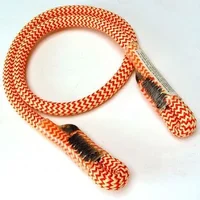
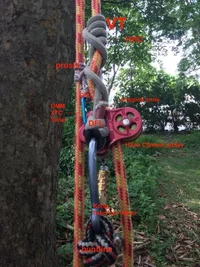

That's only because it has always been "the way"....
That is so true. The greatest suppresser of advancement is tradition. There are new tools that form systems with unique properties that were not available just a few years ago.
Learn from the past, bring forward what is good , but recognize the future when you see it.
Fairfield
Participating member
- Location
- Bucks County pa USA
exactlyThat is so true. The greatest suppresser of advancement is tradition. There are new tools that form systems with unique properties that were not available just a few years ago.
Learn from the past, bring forward what is good , but recognize the future when you see it.

- Location
- Hutchinson, Kansas
Yes, but that is just how things work. As new techniques become the norm the old norm becomes less and less used or taught. Are they still relevant? Absolutely! Hell, I think picket systems should be taught along with AHDs but you never see that anymore. We can get away during the day in day out with very little, but the climbers that dig deeper in learning the old alongside the new stand out when the shit hits the fan or a mini loader rolls in the middle of a field on muddy ground with no overhead anchor to be seen.
What is an AHD? How would you use a picket system in tree work? To establish MA for pulling over felled tree?
Fairfield
Participating member
- Location
- Bucks County pa USA
Artificial High Directional. The picket System can be used for a large amount of things really, imagination is the limitationWhat is an AHD? How would you use a picket system in tree work? To establish MA for pulling over felled tree?

JeffGu
Been here much more than a while
- Location
- Osceola, Nebraska
Does that mean we should throw away our hammers?
No, we need them to smack people upside the head when they start suggesting we climb on a Blake's Hitch.

Frax
Participating member
Good arguments for either thing.How long do you feel is the appropriate amount of time to spend on a traditional hitch (blake's,tautline) before moving to an eye and eye Prussic like a hitch climber set up? Is it possible that just the basics of a traditional hitch can be taught and basically immediate training can start with a vt, distel, shwabish, and Michoacán for a fresh climber? All this assuming they can tie the hitch proficiently
I tied a Blake's from the climbing line through a captive eye carabiner. I did that for a couple of years although to be fair i was the climber of last resort (mostly ground help) and we typically had small branchy trees in Calgary. It taught me to climb the tree, not the rope. What it did most of all was solidify the most basic system you can use in my mind. Every climber should know how to do this but I don't think it's the best way to start.
I eventually switched to a split tail with a Blake's which I think is really the most basic way you should go. As others have said the Blake's is easy and reliable. I'd start new people on it only on small branchy trees though. Don't make people hump up 70' in the air before they even get a branch to stand on.
An eye to eye prussik cord with a micropulley is in my mind the most basic system one should use these days, the hitchclimber being the best in my opinion because it gives you a single point of attachment on the bridge. It also sets you up to switch up to an SRT system if you want just by adding a rope wrench.
Sent from my SAMSUNG-SM-G930A using Tapatalk
Frax
Participating member
Sorry. Two posts in a row.
It's always advisable to start new people on whatever is simple and safe. That applies to anything, not just climbing.
We configure all kinds of innovative rigging scenarios, and climbing systems are just about rigging ourselves.
SRT choices are simple installs where we anchor to the tree, giving us a 1:1 'advantage'. That's why we usually need ascenders to go with it. With DdRT choices we anchoring to ourselves, giving us a 2:1 advantage. You don't really need the ascenders and it makes sense in many situations. However, it's still a massive bitch to ascend 70' midair, and slow because if the cost of the gained mechanical advantage.
Teach your recruit about the relative advantages of each and to think about climbing as rigging oneself to best advantage for that tree and job rather than as a progression.
Sent from my SAMSUNG-SM-G930A using Tapatalk
It's always advisable to start new people on whatever is simple and safe. That applies to anything, not just climbing.
We configure all kinds of innovative rigging scenarios, and climbing systems are just about rigging ourselves.
SRT choices are simple installs where we anchor to the tree, giving us a 1:1 'advantage'. That's why we usually need ascenders to go with it. With DdRT choices we anchoring to ourselves, giving us a 2:1 advantage. You don't really need the ascenders and it makes sense in many situations. However, it's still a massive bitch to ascend 70' midair, and slow because if the cost of the gained mechanical advantage.
Teach your recruit about the relative advantages of each and to think about climbing as rigging oneself to best advantage for that tree and job rather than as a progression.
Sent from my SAMSUNG-SM-G930A using Tapatalk
Fairfield
Participating member
- Location
- Bucks County pa USA
Lets think of this ( and this is not to argue against anyone's point of view they may have... I don't think there is a wrong or right in reality with this)...... You show up to a company and they say we are going to start teaching you how to climb. You say ok, and they start teaching you Dbrt and all that goes with the basics of it. You do well and off you go. Not hard to imagine is it seeing how really that is the norm for 99% of the industry anyway.
Now lets take the same person and instead say we are going to teach you climbing and start them on a basic SRT system. They learn all the same principles of ascent, descent, self rescue, limb walks ext...
I know the second scenario is hard for a lot of climbers to imagine but it is coming. Think about the amount of climbers ( myself included) that don't carry another climbing line other then a static line... Don't know about you all but I am not using that line to make a blakes, so there goes that. ...... Now as time goes on more climbers on the crew are predominately climbing SRT and getting more and more away from Dbrt with the exception of crane work ( I am sure we all agree is advanced tree work and would not be taught to the new climber anyway). All of a sudden you have your first generation of climber in a company that started on rope SRT and was later taught Dbrt. This is going to start happening, One of the big reasons for our industry even using Dbrt was due to lack of equipment and know how for SRT from the start. It was not practical to ascend a single line with two prussics to have to change over to a Rack or Eight just to change over again and again. Now we have no need for change over.
There is one BIG missing part to SRT for tree equipment still though, ( if anyone wants to fix this and has the means I vote you call the added piece a Fairfield ) its the ability to add friction and use the device for a two person rescue. The Runner and the Akimbo both lack this ability making it in my mind fall short of being that all important piece of gear that completely bridges the Arb climbing world to a Rescue and Industrial climbing world.... We are close though. The closer we get to having these worlds be connected the closer we get to a shit ton more of information sharing and possibly an answer to lack of new climbers and or qualified climbers that want to stay in the industry.
Now lets take the same person and instead say we are going to teach you climbing and start them on a basic SRT system. They learn all the same principles of ascent, descent, self rescue, limb walks ext...
I know the second scenario is hard for a lot of climbers to imagine but it is coming. Think about the amount of climbers ( myself included) that don't carry another climbing line other then a static line... Don't know about you all but I am not using that line to make a blakes, so there goes that. ...... Now as time goes on more climbers on the crew are predominately climbing SRT and getting more and more away from Dbrt with the exception of crane work ( I am sure we all agree is advanced tree work and would not be taught to the new climber anyway). All of a sudden you have your first generation of climber in a company that started on rope SRT and was later taught Dbrt. This is going to start happening, One of the big reasons for our industry even using Dbrt was due to lack of equipment and know how for SRT from the start. It was not practical to ascend a single line with two prussics to have to change over to a Rack or Eight just to change over again and again. Now we have no need for change over.
There is one BIG missing part to SRT for tree equipment still though, ( if anyone wants to fix this and has the means I vote you call the added piece a Fairfield
) its the ability to add friction and use the device for a two person rescue. The Runner and the Akimbo both lack this ability making it in my mind fall short of being that all important piece of gear that completely bridges the Arb climbing world to a Rescue and Industrial climbing world.... We are close though. The closer we get to having these worlds be connected the closer we get to a shit ton more of information sharing and possibly an answer to lack of new climbers and or qualified climbers that want to stay in the industry.
- Location
- Austin, TX
This seems pretty well covered, but I have to add that Blake's can be tended with a micropulley or keychain biner same as a VT-style hitch. It's not quite as smooth and easy, and might leave a little more slack between grabs, but seeing a climber stranded because they didn't have a free hand is not a reason to bag the blake.
New threads New posts
-
test
-

-
 Alternatives to standard asphalt around roots
- Started by southsoundtree
- Replies: 10
-
-

-

-

