
Through cabling

theXman

Branched out member
Location
MD, USA
just saw a picture from some cabling i did this year, reminded me to bring this up here.

situation:

you are cabling, and directly in line where a cable is going to run, there is a much smaller leader, basically in the way or the leader is thin, weak, or some defect in it as well.

Lets say you gave a customer a quote for a certain amount of cables and hardware too and you want to stick to it.

now, in the past, I would just bite it and install a threaded rod through the small leader and put on the amon eyes and use more dead ends, thimbles and all that.

but two times this year I did this:

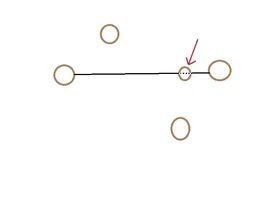
I drilled through the smaller leader with a bit slightly bigger than the cable. Then just ran the cable through the leader instead of putting hardware in it. Less hardware and much faster. Now, the rigguy cabling systems are acceptable still, i think. So I think this method would be acceptable too. I don't use rigguy cabling cause i think the cable might not last as long as a eye with thimble on hardware, so I'm being a bit of a hypocrite here.

Now, I do this through cable all the time with tiny tree and shrub wiring/cabling, but only done it maybe 2 or 3 times on big stuff.

see diagram here.
 

Attachments

  • 254468-throughcable.webp
    254468-throughcable.webp
    5.8 KB · Views: 146
silver maple here.

this cable was very slightly out of straight. Very long cable.

if i put the cable in without going through the small leader here, it would have been rubbing the leader very hard.
 

Attachments

  • 254470-silvermaplethroughcable.webp
    254470-silvermaplethroughcable.webp
    181.8 KB · Views: 119
okay, i might have to punish myself for being on the buzz so long tonight. i might not get on here for a few days...
 
Hmm

Interesting idea in theory. Not sure I like it in practice though. Without the hardware in the middle the cable would be allowed to move through the hole as all three leaders sway independently. I would tend to think this would prevent the central leader from developing a proper callous and compartmentalizing. Every windstorm would be akin to picking off a scab. Have you done any of these where you've been able to observe it long-term to see what happens?
 
[ QUOTE ]
Without the hardware in the middle the cable would be allowed to move through the hole as all three leaders sway independently. I would tend to think this would prevent the central leader from developing a proper callous and compartmentalizing. Every windstorm would be akin to picking off a scab. Have you done any of these where you've been able to observe it long-term to see what happens?

[/ QUOTE ]

I agree with this. The idea is interesting but I would just bite down and use the extra hardware.
 
I agree with the above that the tree may never callous or compartmentalize properly.

I would also think you may be putting vector forces on your anchors.

All in all, while it may be easier for the climber I think it is not better for the tree. So a thumbs down here.

Tony
 
I think you're probably getting unwanted lateral forces on the cable during wind events. I also agree that the through hole may never callous.

Not sure how I would solved that one.
 
Neat idea.

But I think everyone is right, the free moving cable does pose some problems.

The better solution is probably a through bolt with eyes on each end. This has the added benefit of the strength and motions dampening of the middle leader

As for how to explain it to the customer when you bid the job do so based on time and materials, or at least let them know that materials are extra.

That is pretty much what we do. We let them know how many complete "units" we anticipate installing for the estimate and also let them know that there may be other parts necessary such as bolts, eyes and such and provide a price/per for them.

We've never had a problem invoicing for the extra hardware as a result.
 
[ QUOTE ]
Hmm

Interesting idea in theory. Not sure I like it in practice though. Without the hardware in the middle the cable would be allowed to move through the hole as all three leaders sway independently. I would tend to think this would prevent the central leader from developing a proper callous and compartmentalizing. Every windstorm would be akin to picking off a scab. Have you done any of these where you've been able to observe it long-term to see what happens?

[/ QUOTE ]

Can someone explain to me how this is different from the Rig Guy or other through cabling system? Ever since they came out I have been asking this question, and have gotten very little feedback. Two arborists I know that use it say that the trees they have done have closed up tight around the cable, but it would seem to me that the system would have to be extremely tight to restrict movement.

As to Xman's question, I agree with the sentiment that the extra hardware should be used. I have a multi-stemmed Linden in my backyard cabled this way.

-Tom
 
you all addressed what was my first concern as well. Then I decided that a small hole like that will likely calus so quickly that I bet it will calus over even with cable movement.

I will visit these trees in about a year an report back to what I learned.

I decided if the cable isn't grown around tightly, I doubted that decay will happen anyway.

thanks for the thoughts.

I've got pictures of through rods and eyes somewhere, but sounds like most of you know what we mean by adding that hardware instead.
 
[ QUOTE ]


Can someone explain to me how this is different from the Rig Guy or other through cabling system? Ever since they came out I have been asking this question, and have gotten very little feedback. Two arborists I know that use it say that the trees they have done have closed up tight around the cable, but it would seem to me that the system would have to be extremely tight to restrict movement.

As to Xman's question, I agree with the sentiment that the extra hardware should be used.

[/ QUOTE ]

Agreed.

Sending a cable through a stem like that would certainly put side loading force on the cable that could weaken strands. Through bolts are definitely the way to go.
 
I would be hesitant to try that. Especially on a tree with large leads that are in need of support from an EHS cable system. You're dealing with a "flawed" tree that needs supplemental support, presumably over a high value target (i.e. their house). I wouldn't have my company assume the liability of doing work that is at best "experimental" and certainly outside acceptable standards and best practices.

That said, I'll be curious what you observe in the next few years.
 
X, I have done it the way that you have shown in the pictures using RigGuy Wire Stops on a Sugar maple where I did not want any excess movement.

I haven't gone back to check on the tree yet this year, but have no doubt that everything is fine and that the small through hole has sealed up fine.
 
I only ever use EHS cable, for every "static" cabling application. I don't use common grade.

I agree with everything that is being said here. All valid concerns. But I'm thinking "side load" here is not going to be enough of a factor to make these cables fail in those two applications I did.

It's not much different then two leaders cabled using the rigguy system, imo.
 
I had a cable like this in June or July, I went the other route by putting in more hardware in, it was a real toss up though, I didn't think it was worth cabling at all because the tree is spiraling towards death and I thought it should have just been removed.
 

New threads New posts

Back
Top Bottom