Hi I think this a fantastic topic, outside of my work in Lightning I have been a full time timber faller for twenty years working the forests in the UK and Wales. I specialize in big timber and just like you we too have exactly the same debate on technique.
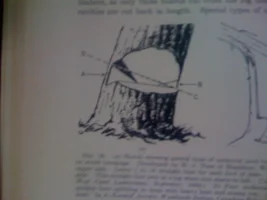
Although I have worked a lot in the USA it has always been lightning training with Davey so no forest work so a bit ignorant of your ways. Over here all chain saw opperators must be ticketed, no ticket no work. Our training starts with the basics , how the saw works and how to look after it. we then move to felling. Only if you fail your mantainance you may not progress to felling. The first felling ticket is for trees up to fifteen inch dia. There are three basic techniques to learn. Felling tree in direction of lean, felling tree away from lean and negative plus take down of hung up trees. This is how a new guy starts his life in tree works he can go on and update with bigger trees in tougher places but you get the idea. Golly I got loads of questions. Over here a typical contract for me would have the words "Any tree deemed to be damaged due to insufficient boring, back cutting or poor choice in felling direction will not be paid for" Sounds harsh but works for me. Tearing the middle of the tree out, we call it pulling straws is unforgivable, that give away sound can be heard all the way to the mill. they must fall quiet just the wind through them. Some times we cut the ears off, this is not buttressing but can help to stop tearing up the sides. Splitting buts is also a no no and will result in being awarded the DCM, "Don`t come Monday"
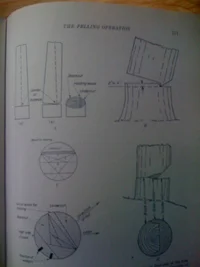
We have saying an inch at the bottom is worth a foot at the top. So we fell as close to ground as possible, a couple of inches or just enough to clear the body of the saw. Wedges, on big stuff I always go for steel as I have found plastic just not up to it when hammered in with a sledge, "sledge n wedge" Many a argument there and supposed to be bad practice. Incidently my fave saw is the 066, and I fit with the shortest guide bare I can get away with often half the dia of the tree, recon it gives me speed, for those time when I have to chase it down, stay with the fall till last minute. Again not in the rule book. Rule books are good and every one has to start some where, I think the hope is the few that stay the course apply there experience and modify technique as and when required. Take the top cut for example, we teach a 45 degree angle but realy this is for felling on flat ground. For felling up hill you could closse it a bit like wise felling down hill you could open it up a bit. It all depends on the tree,site,weather even time of year. It is very rare to see a forest tree dismantled before felling well whole so heavy. Hard wood we measure in Hopus foot, this gives us a solid volume in the stem, its how we get paid, buy volume. A typical Oak harvest may have say 10.000 hopus foot at 25 foot to the ton. with threes averaging 200 hopus foot in the stem so a 8 ton stem, I work on the canopy as the same weight so total tree weight of may be 16 tones, season dependent. Thats a lot of compression on the hinge. Too much hinge and you crack the but too little and you run the risk of loosing control mmmmm rock and a hard place I think. Again it is down to the ability of the faller to read the tree,grain,weather,season and all that stuff you do, almost sublimanly. which is just as well because if you thought about it too much you could talk your self out of doing it. I will walk away from the last tree of the day, make it first for tomorrow. I see no point in pushing my luck yes luck and being greedy. 20 years and I can still get one wrong any one that says otherwise aint right in the head. I should go as it is late over hear I just wanted to say I LOVE FALLING TIMBER.
PS my felling is better than my spelling, honest.

 Like
Like