Spring trimming

...it's possible that when I see it I automatically assume that's the problem. As far as species, I have seen it on saccharum, platanoides and rubrum.

so the question is, do you see it on other bleeding genera than acer? might be worth a look.
 
Good point, Guy. I pruned some River Birch and Elm over the winter, and I noticed that they have begun to bleed recently. I'll keep an eye on them. They are in an area where it will be easy to monitor.

-Tom
 
[ QUOTE ]
"bleeding" doesn't matter imo. But how about all the all the bark splitting open when walking on lmbs? We will NOT trim from Apri to May; this year is even earlier. Don't you guys notice this stuff?

[/ QUOTE ]
Now that you mention it. I've dead wooded some big maples in the spring where we were able to let the wood fall free. Quickly realized any hit on a lower branch caused a surprisingly nasty debarking wound. Granted the wounds were top side and not visible from the ground, I made sure there were no more.

Around here the worst imo is elm then cedar for "bark peel outs" at this time of the year.
 
[ QUOTE ]
...I've dead wooded some big maples in the spring where we were able to let the wood fall free. Quickly realized any hit on a lower branch caused a surprisingly nasty debarking wound. Granted the wounds were top side and not visible from the ground, I made sure there were no more.


[/ QUOTE ]Good idea--top wounds are less noticeable, but far more damaging. reminds me of bombing chunks and gouging buttress roots, bad business any time of year.

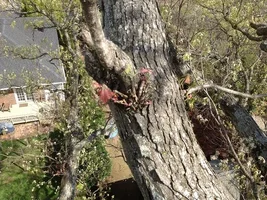
No worries on bark slipping with this veteran oak; bark like armor. Rodents did far more damage than us climbers did.
 

Attachments

  • 316935-891.webp
    316935-891.webp
    148.2 KB · Views: 42
In Arboriculture and Urban Forestry Volume 38, No.1, (the January 2012 edition) is an interesting commentary by Andrew Hirons called 'Straightening Out the Askenasy Curve' I would suggest reading.In it he writes of the research Shigo used to base his no-spring pruning prescription on, and how the species studied (Prunus avium) does indeed show a seasonal variation of non-structural carbohydrates, but perhaps that may be one of the only trees to do so (not exactly, but I'm paraphrasing here, I've got work to do)Very good article, worth a quick read.

Tim
 

New threads New posts

Back
Top Bottom