
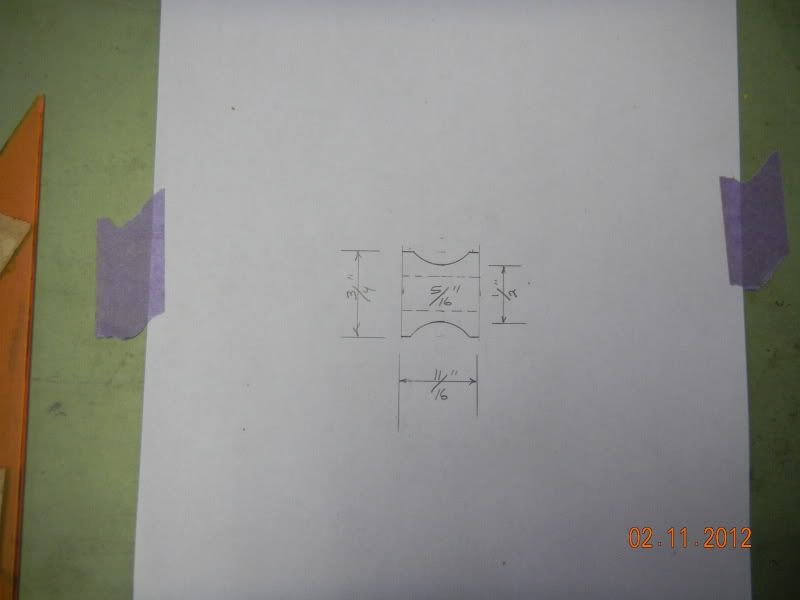
I am thinking of having my machinist make a bushing for my singing tree rope wrench, in either steel or aluminum bronze. It would work with the removable 5/16" quick release pin and would be machined from 3/4" stock in the form of a sheave with 1/2" inner dia. If others are interested in such a bushing, I would ask $10 + shipping per bushing. I would need to make at least 5 in the aluminum bronze in order to break even on material costs alone.

Navigation
Install the app
How to install the app on iOS
Follow along with the video below to see how to install our site as a web app on your home screen.
Note: This feature may not be available in some browsers.
More options
You are using an out of date browser. It may not display this or other websites correctly.
You should upgrade or use an alternative browser.
You should upgrade or use an alternative browser.
special order bushing for rope wrench
- Thread starter surveyor
- Start date

chris_girard
Branched out member
- Location
- Gilmanton, N.H.
I'll take one.

countryboypa31
New member
- Location
- PA
Not sure I understand I'm interested. But not sure about the whole sizing thing.

flyingsquirrel25
Carpal tunnel level member
- Location
- South East, PA
Could the bushing be put on the non removable pin to take up the space? It would seem to have the same effect (taking up the extra space) and you wouldn't have to worry about dropping it. Just a thought.
chris_girard
Branched out member
- Location
- Gilmanton, N.H.
That's was I was wondering as well.
surveyer, could you tell us a little more how it's going to work with the removable pin?
surveyer, could you tell us a little more how it's going to work with the removable pin?

GoodYautja
New member
- Location
- New England
interested... is that going to fit snug on the pin?
The bushing would just slip onto the 5/16" pin and could be placed at either friction point either with a 5/16" bolt or pin. It would be machined like a shallow sheave with 3/4" outside dia. and 1/2" inside diameter.
Chris I will have my machinist make one for you also in steel and PM when I ship it.
Gordon
Chris I will have my machinist make one for you also in steel and PM when I ship it.
Gordon
[ QUOTE ]
The bushing would just slip onto the 5/16" pin and could be placed at either friction point either with a 5/16" bolt or pin. It would be machined like a shallow sheave with 3/4" outside dia. and 1/2" inside diameter.
Chris I will have my machinist make one for you also in steel and PM when I ship it.
Gordon
[/ QUOTE ]
The way you are stating the measurements sound messed up (incorrectly stated).
A bushing with an inside diameter of 1/2" would be sloppy on a 5/16" pin and why a 3/4" outside dia.? I thought the Rope Wrench had a 1/2" diameter at the friction points (pin centers). Sorry in advance if I added any confussion.
Scrat
The bushing would just slip onto the 5/16" pin and could be placed at either friction point either with a 5/16" bolt or pin. It would be machined like a shallow sheave with 3/4" outside dia. and 1/2" inside diameter.
Chris I will have my machinist make one for you also in steel and PM when I ship it.
Gordon
[/ QUOTE ]
The way you are stating the measurements sound messed up (incorrectly stated).
A bushing with an inside diameter of 1/2" would be sloppy on a 5/16" pin and why a 3/4" outside dia.? I thought the Rope Wrench had a 1/2" diameter at the friction points (pin centers). Sorry in advance if I added any confussion.
Scrat
chris_girard
Branched out member
- Location
- Gilmanton, N.H.
Hey Gordon, you're PM box is full.

GoodYautja
New member
- Location
- New England
Still a little confused but let's see:
the new bushing will fit snuggly on the pin (since both are 5/16th) and together they will rotate as rope is run through the RW?
the new bushing will fit snuggly on the pin (since both are 5/16th) and together they will rotate as rope is run through the RW?

- Location
- Retired in Minneapolis
Wow... the RW is already creating a cottage industry of customization!
You might have to get them machined in Detroit though
You might have to get them machined in Detroit though
- Location
- Netherlands
Thing about the rope wrench for as far I have used it now (1 week) is that is gives extra friction so your knot handle likes on a DRT system.
If you converse the point of friction into a lesser friction with bushings etc. it won't work the same and the knot will take extra force/heat. The whole point of the rope wrench will be gone IMO
Or is this just a stupid thought.....
Climb safe
wouter
If you converse the point of friction into a lesser friction with bushings etc. it won't work the same and the knot will take extra force/heat. The whole point of the rope wrench will be gone IMO
Or is this just a stupid thought.....
Climb safe
wouter

- Location
- Oakland, CA
wouter - I think that is a reasonable thought. But i don't notice that having a bushing changes much for me.
THe removable pin itself will spin in place until the wrench is fully engaged into descent, at which point it will "lock" into place. I have a bushing on my removable pin and thought that it spinning as well may be an issue. But I don't notice that it is an issue. I actually can't tell yet if the bushing itself spins when I am into full descent - it is polished smooth and it is difficult to see when above you! In any case, it doesn't seem to affect performance for me, so I haven't tried very hard to figure it out. The other bar of the wrench provides just as much friction as usual, so you are really only potentially reducing friction on half of the wrench's friction parts. The bushing is for folks who want a larger bend radius on the pin (I'm not sure how much that matters, either!)
surveyor - looks like a cool bushing - I'd give it a go.
THe removable pin itself will spin in place until the wrench is fully engaged into descent, at which point it will "lock" into place. I have a bushing on my removable pin and thought that it spinning as well may be an issue. But I don't notice that it is an issue. I actually can't tell yet if the bushing itself spins when I am into full descent - it is polished smooth and it is difficult to see when above you! In any case, it doesn't seem to affect performance for me, so I haven't tried very hard to figure it out. The other bar of the wrench provides just as much friction as usual, so you are really only potentially reducing friction on half of the wrench's friction parts. The bushing is for folks who want a larger bend radius on the pin (I'm not sure how much that matters, either!)
surveyor - looks like a cool bushing - I'd give it a go.
In my experience the upper bushing and or pin will rotate but it does not seem to make that much difference. I would recommend putting a sheave at both friction points, just clamp the lower sheave from turning with a 5/16" bolt and lock nut. Having a lower sheave (held) should increase the friction slightly at that friction point and help preserve the roundness of the rope, however most of the friction will be at the "sides" of the rope facing the pivot points.
Nothing ventured, nothing gained.....
Nothing ventured, nothing gained.....
New threads New posts
-
test2
-
 What's on your mind? TCI Magazine wants to know
- Latest: Tree Care Industry Assoc.
-

-

-

-
-


