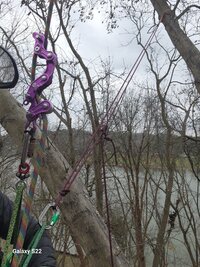
Skinny rope on base anchor leg?

I am going to have to give this careful consideration. I carry a knife but taking it out while aloft is a last resort. I don't want to be paralyzed because I flinched when a wasp landed on me or something else equally ignominious.


I am not sure I read your tone right. Are you suggesting it is either excessive or pointless to use binoculars for this purpose? It was suggested here and elsewhere, e.g. I think in The Tree Climber's Companion, though I would need to check.


@evo That's an interesting drill that I shall try if I can.

@Epiphyte Thank you for sharing insight from a different domain. Speaking of which, can you tell me why canyoneering style horned descenders do not appear to be used by cavers, or are they? Devices like these.
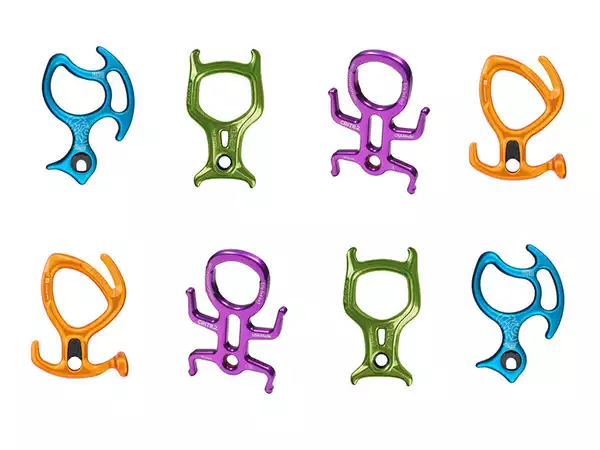
canyoning-descenders-review-comparison-600-d9fbf4dec.webp
Carry a handsaw.. think of it as going on a camping trip and not bringing a can opener. Probably won’t need it (unless you brought canned food), but it’s just a damn good practice.
Wouldn’t need anything more than a folding handsaw, and probably wouldn’t use it. That one time you need it will make hauling it up on all the previous climbs well worthwhile.
 
One other way I find varies my bigshot results a bit is to use various weights of throw bags - I have 'em from 10 oz to 16 oz. The 16's smash their way thru twigs better but aren't really for reaching the heavens, at least with my bigshot elastics. With the potato gun pumped up, long shots are more doable for me with heavier bags if I have the need.
 
My engineer wisecrack was making a funny about the inherent finite risk and uncertainty conundrum about tip integrity - in industrial rope access some engineer's nards are on the line for every designated tip used.
 
My engineer wisecrack was making a funny about the inherent finite risk and uncertainty conundrum about tip integrity - in industrial rope access some engineer's nards are on the line for every designated tip used.
True true, Besides their P.Eng. stamp on a drawing/ doc somewhere there's construction inspection steps and then a PM program for corrosion inspections/ coating integrity, etc. Anything life support in a plant is usually a big deal or should be if it's a well run outfit. Still we had an oil and gas battery out in the sticks that had the production flip from sweet (no H2S) to sour and the tank tops and walkways rotted out in couple of years. Stuff happens even in an engineered world. Same as storm damaged trees I guess. Eyes wide open, every day, all the time.
 
I would strongly recomend learning a canopy anchor that you feel comfortable with and always going up and canopy anchoring WITH the basal achor left intact. I do this often.
Not sure I understand this... Are you saying you start with a basal anchor, climb to your TIP, unweight that main system, set up a canopy anchor at that TIP (say, with a butterfly + quickie) so your basal anchor leg is still present but unweighted, and then move yourself back to the now-canopy-anchored system?

And, what are the reasons you find this valuable?
 
Not sure I understand this... Are you saying you start with a basal anchor, climb to your TIP, unweight that main system, set up a canopy anchor at that TIP (say, with a butterfly + quickie) so your basal anchor leg is still present but unweighted, and then move yourself back to the now-canopy-anchored system?

And, what are the reasons you find this valuable?
I basically do exactly that, but usually there is some extra height to be gained first. I advance into the thinnest stuff that I wanna tie into, and then setup a canopy anchor with as little slack as possible on the down leg. The reason for this is simply redundancy. There are several well discussed benefits to a canopy anchor, but there is no redundancy with them. If your TIP breaks, then what? I don't worry about my rope or steel carabiner, I worry about the branch. I have had a 5" sycamore branch just pop right off before, and if that branch had been my primary rather than secondary tie in, I might not be typing this. By leaving the basal anchor, I get to set up my line with additional branches to catch it and minimize my fall distance. It's the best of both systems!
 
@Matias What method are you using to advance the rope and form the canopy anchor?
I will usually get what I am after with my main lanyard, as I usually shoot my throwline up near the final destination, and so I just need another ten feet or less, and I rock a 20' as my main lanyard. I will sometimes bring another short climb line (50'- 80') in addition, if I am gonna have to do some real climbing to get my high tie, but those cases have been rare for me, like completely deadwooding a big ponderosa or some such job. In most cases though, I can get close enough that it's just a step I take since I usually go straight to the TIP to inspect and adjust. I also frequently unweight my main line, so basal anchors can still saw at a branch, which is not cool on a non removal.

As for my canopy anchor, I use an openable 'Flint locker' style anchor that I made eith a dogbone, a quick link and a steel krab. I used to just use a butterfly and a steelie, but that sucks if you have any redirects.
 
Last edited:
@Matias I asked the wrong question. I mean are you dragging the entire rope up and over the final TIP and connecting the two sides, or pulling a bight over the TIP, or using a sling with openable connector(s), etc.?
 
Playing around with a new 8mm while cabling today. It definitely does work but it sure is fucking murder on the hands pulling in on it
100%. I tied a Blake’s on an old 3/8’s and body thrusted up a sailboat mast once, to replace some rigging. It was fucken awful.
The rhythm was all off too, that boat was rocking!
 
100%. I tied a Blake’s on an old 3/8’s and body thrusted up a sailboat mast once, to replace some rigging. It was fucken awful.
The rhythm was all off too, that boat was rocking!
that sounds awful and awesome at the same time
 

New threads New posts

Kask Stihl NORTHEASTERN Arborists Wesspur TreeStuff.com Teufelberger Westminster X-Rigging Teufelberger
Back
Top Bottom