
Navigation
Install the app
How to install the app on iOS
Follow along with the video below to see how to install our site as a web app on your home screen.
Note: This feature may not be available in some browsers.
More options
You are using an out of date browser. It may not display this or other websites correctly.
You should upgrade or use an alternative browser.
You should upgrade or use an alternative browser.
Professional reference resources
- Thread starter JD3000
- Start date
-
- Tags
- books references scientific


guymayor
Branched out member
- Location
- East US, Earth
Kevin, your second talk was most entertaining, and informative! You were in rare form. 
But my favorite message came during your first talk, when you acknowledged the "smoke and mirrors" inherent in drawing trend lines on graphs. That honesty was refreshing, and mostly absent from the other research-based talks that we arborists are treated to.
It's essential to factor in smoke, mirrors, and statistical slop when judging how much to lean on data, and draw from conclusions.
By amplifying conclusions without analyzing substance, arborists are in danger of devising junque opinions that are based on weak science that reflects little more than data envy. Info obtained directly from the tree itself may be less numerical, but far more valid imo.
But my favorite message came during your first talk, when you acknowledged the "smoke and mirrors" inherent in drawing trend lines on graphs. That honesty was refreshing, and mostly absent from the other research-based talks that we arborists are treated to.
It's essential to factor in smoke, mirrors, and statistical slop when judging how much to lean on data, and draw from conclusions.
By amplifying conclusions without analyzing substance, arborists are in danger of devising junque opinions that are based on weak science that reflects little more than data envy. Info obtained directly from the tree itself may be less numerical, but far more valid imo.
guymayor
Branched out member
- Location
- East US, Earth
Ostry had a real clear perspective on 'decline' here: https://www.ncbi.nlm.nih.gov/pubmed/21171887
Let's put an end to the smoke-and-mirrors approach to tree care!
Many, but not all, forest pathologists use "decline" to describe forest tree diseases of complex etiology.
We contend that this distinction from abiotic or biotic diseases is completely arbitrary, has caused undue confusion, and provides no practical insights for forest managers.
All diseases are complex and can be characterized within the conceptual framework of the disease triangle. Why do we use a simple label ("decline") to describe disease situations of complex abiotic and biotic origin when we need to know which damaging agents are present, whether the environment is conducive for disease progression, and host susceptibility over time to understand the origins and management of disease?
We propose that forest pathologists discontinue the use of "decline" as a distinct category of disease. Furthermore, we suggest that new diseases should be named based on the affected host, characteristic symptom, and, once known, major determinant.
We believe that clearer communication in describing complex diseases is a prerequisite to finding effective management options.
Let's put an end to the smoke-and-mirrors approach to tree care!
Many, but not all, forest pathologists use "decline" to describe forest tree diseases of complex etiology.
We contend that this distinction from abiotic or biotic diseases is completely arbitrary, has caused undue confusion, and provides no practical insights for forest managers.
All diseases are complex and can be characterized within the conceptual framework of the disease triangle. Why do we use a simple label ("decline") to describe disease situations of complex abiotic and biotic origin when we need to know which damaging agents are present, whether the environment is conducive for disease progression, and host susceptibility over time to understand the origins and management of disease?
We propose that forest pathologists discontinue the use of "decline" as a distinct category of disease. Furthermore, we suggest that new diseases should be named based on the affected host, characteristic symptom, and, once known, major determinant.
We believe that clearer communication in describing complex diseases is a prerequisite to finding effective management options.
I had done some reading previously re various "Declines." In more than one instance, some trees were shown to be having issues with species of Ceratocystis and a few borers and bark beetles. Other pathogens and critters too I would think.What has led to to these issues seems to be abiotic problems such as drought, heat, extreme rains, wacky winter temperature extremes and perhaps most importantly, numerous forms of pollution.
So, is Anthropogenic Tree Decline/Complex a more appropriate term for us to be using???
So, is Anthropogenic Tree Decline/Complex a more appropriate term for us to be using???

KTSmith
Branched out member
- Location
- Maine, New Hampshire
Thanks Guy for giving us the abstract to the Ostry and others (2011) paper. I'm not sure if PubMed or Phytopathology allows free access directly, but the Forest Service does! The complete text is here: https://www.nrs.fs.fed.us/pubs/jrnl/2011/nrs_2011_ostry_001.pdf
I was the group's immediate or second-line supervisor during the development of the piece. I'm not claiming anything except I facilitated and provided proper technical review and approval for publication. Probably the biggest insight in the paper is that all tree and forest diseases are complex and most all present some features consistent with somebody's definition of decline.
In the early 20th Century, the term "decline" related to what a grower or farmer would call "unthriftiness" or "low vigor". Later, the term was applied to diseases with unknown causes. Then, as science found new biological causes (say, viruses, mycoplasmas, fastidious bacteria), diseases would gain a new name based as often on appearance as on causal agent. Think "elm yellows" here. As plant pathology got more metabolic and genetic, less emphasis was paid on the disease triangle and more on absolute susceptibility and resistance. Think fusiform rust or cedar-apple rust. Environment has much less of an obvious role here. Virulent pathogen meets susceptible host = disease. Underlying stress has little or nothing to do with it. By mid-century into the 1970s, the catchphrase for plant disease was "gene-for-gene", that disease or lack of disease was the interaction of genetic products that could be reduced conceptually to a one-on-one interaction. Works well for rust, less well for powdery mildew, and not at all for most of what we deal with.
This concept clearly was broken for forest pathology in the 1980s in the face of acid rain and the effects of other environment disturbance. The term "decline" was already in the books for diseases of unknown etiology, but were extended to complex diseases, usually those that required insect or other arthropod vectors. To me with more of an ag background, decline had to mean a decline in yield or ring width, but that's not how the term was used. The water got even muddier with terms used formally as "dieback and decline" diseases.
I ascribe (maybe unfairly) some of the confusion to an overextension of Paul Manion's good work on the decline spiral with various inciting, contributory, predisposing, primary, etc. causes. The plus side was that the environment was back in the picture. The down side was that rather than a nice disease triangle, we have a mess of spaghetti strands that folks wanted to quantify and not just conceptualize. So this marked a big change--some pathologists used "decline" to cover syndromes with known causes but with more than simple gene-for-gene interactions. Other pathologists (including a former supervisor of mine) that specialized in "decline diseases" or worse yet "dieback and decline diseases". No longer useful terms, but still used!
So no, I don't use the not very helpful "Anthropogenic Tree Decline/Complex". If we know the primary problem is flooding or drought or soil compaction or improper planting, I go with that. If "abiotic stress and crown dieback " is the best I can do, I go with that.
I was the group's immediate or second-line supervisor during the development of the piece. I'm not claiming anything except I facilitated and provided proper technical review and approval for publication. Probably the biggest insight in the paper is that all tree and forest diseases are complex and most all present some features consistent with somebody's definition of decline.
In the early 20th Century, the term "decline" related to what a grower or farmer would call "unthriftiness" or "low vigor". Later, the term was applied to diseases with unknown causes. Then, as science found new biological causes (say, viruses, mycoplasmas, fastidious bacteria), diseases would gain a new name based as often on appearance as on causal agent. Think "elm yellows" here. As plant pathology got more metabolic and genetic, less emphasis was paid on the disease triangle and more on absolute susceptibility and resistance. Think fusiform rust or cedar-apple rust. Environment has much less of an obvious role here. Virulent pathogen meets susceptible host = disease. Underlying stress has little or nothing to do with it. By mid-century into the 1970s, the catchphrase for plant disease was "gene-for-gene", that disease or lack of disease was the interaction of genetic products that could be reduced conceptually to a one-on-one interaction. Works well for rust, less well for powdery mildew, and not at all for most of what we deal with.
This concept clearly was broken for forest pathology in the 1980s in the face of acid rain and the effects of other environment disturbance. The term "decline" was already in the books for diseases of unknown etiology, but were extended to complex diseases, usually those that required insect or other arthropod vectors. To me with more of an ag background, decline had to mean a decline in yield or ring width, but that's not how the term was used. The water got even muddier with terms used formally as "dieback and decline" diseases.
I ascribe (maybe unfairly) some of the confusion to an overextension of Paul Manion's good work on the decline spiral with various inciting, contributory, predisposing, primary, etc. causes. The plus side was that the environment was back in the picture. The down side was that rather than a nice disease triangle, we have a mess of spaghetti strands that folks wanted to quantify and not just conceptualize. So this marked a big change--some pathologists used "decline" to cover syndromes with known causes but with more than simple gene-for-gene interactions. Other pathologists (including a former supervisor of mine) that specialized in "decline diseases" or worse yet "dieback and decline diseases". No longer useful terms, but still used!
So no, I don't use the not very helpful "Anthropogenic Tree Decline/Complex". If we know the primary problem is flooding or drought or soil compaction or improper planting, I go with that. If "abiotic stress and crown dieback " is the best I can do, I go with that.
guymayor
Branched out member
- Location
- East US, Earth
Kevin, I also ascribe the confusion to an overextension of Paul Manion's good work on the decline spiral with various inciting, contributory, predisposing, primary, etc. causes. This morphed into the "mortality spiral", conveying inevitability, as if trees never got care.
We're working on a graphic showing the reverse, a "recovery spiral", wherein conditions receive treatment, and pull the tree up to recovery. It's tough pushing a positive concept like that. Bucking the defect-based assessment mindset is not easy.
We're working on a graphic showing the reverse, a "recovery spiral", wherein conditions receive treatment, and pull the tree up to recovery. It's tough pushing a positive concept like that. Bucking the defect-based assessment mindset is not easy.
A little light winter reading material.
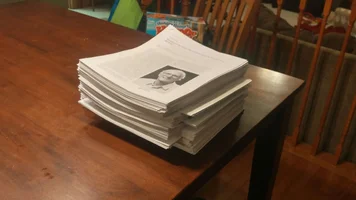
Not including the books and electronic files to also be tackled.
Rayner From problems with roots to the root of the problem: The emergence of an 'inclusional' view of trees and their ecological relationships with fungi
Certainly wasnt what I had expected given the title but an interesting read.
Not including the books and electronic files to also be tackled.
Rayner From problems with roots to the root of the problem: The emergence of an 'inclusional' view of trees and their ecological relationships with fungi
Certainly wasnt what I had expected given the title but an interesting read.
Attachments
KTSmith
Branched out member
- Location
- Maine, New Hampshire
Thanks JD for the reminder of the Rayner 2005 article. A gentle reminder that he uses some terms a bit differently than most US workers do, mostly due to the influence of Alex Shigo here. That's not a criticism at all, clearly, Prof. Rayner has thought about this more than most of us have! And he actually did a lot of the experimental work to boot! In the US anyway, his work with Lynne Boddy was taken as a rejection of Shigo's compartmentalization concept. To me, the problem was simply one of emphasis, not really of concept. Anyone who spent any time with Shigo in the last 20 years of his life heard continuously about beneficial fungi associated with trees. Unfortunately by the mid 1980s, Alex had abandoned the scientific societies and publishing in their journals, and so none of that got out there to the scientist community. So Rayner's presentations on the beneficial associations looked more contrary than they were. I don't think Prof. Rayner lost any sleep over it...but Alex was a bit wounded, in my opinion. I haven't tuned in to Prof. Rayner in some years, but I do drop a line to Lynne when I see her make the international news. Yet another person who actually did the work I dreamed of but never actually accomplished.
Yeah his approach and writing style is a bit different.
Brings to mind the American "mycophobia" that Guy has brought up in the past. I like that he brings up the complex interconnectedness between trees and fungi rather than separating and grouping each organism in it's own free standing structure. It's a pretty cool approach.
At risk of sounding like Mufasa and Simba discussing the Circle of Life...it's certainly a topic that doesn't come up as much here save for mycchorizae and recent publications on endophytes.
There's far too much talk and policy regarding attacking fungal pathogens, removing trees with conks/brackets, and supplying nutrients via high analysis fertilizers rather than trying to replicate a forest floor environment as much as possible. At least amongst many arborists and tree care folks. Buzzers excluded of course!!!
I cant speak to what most professor and research types are bringing up. I still come across many university fact sheets and bulletins with many of the same old recommendations as in the past however.
Baby steps I guess?
Cool paper anyway. Reading more all winter.
Brings to mind the American "mycophobia" that Guy has brought up in the past. I like that he brings up the complex interconnectedness between trees and fungi rather than separating and grouping each organism in it's own free standing structure. It's a pretty cool approach.
At risk of sounding like Mufasa and Simba discussing the Circle of Life...it's certainly a topic that doesn't come up as much here save for mycchorizae and recent publications on endophytes.
There's far too much talk and policy regarding attacking fungal pathogens, removing trees with conks/brackets, and supplying nutrients via high analysis fertilizers rather than trying to replicate a forest floor environment as much as possible. At least amongst many arborists and tree care folks. Buzzers excluded of course!!!
I cant speak to what most professor and research types are bringing up. I still come across many university fact sheets and bulletins with many of the same old recommendations as in the past however.
Baby steps I guess?
Cool paper anyway. Reading more all winter.
Anyone who spent any time with Shigo in the last 20 years of his life heard continuously about beneficial fungi associated with trees.
I certainly remember this and have some of his TCIA articles hidden away somewhere
I haven't tuned in to Prof. Rayner in some years, but I do drop a line to Lynne when I see her make the international news. Yet another person who actually did the work I dreamed of but never actually accomplished.
Lynne is required reading for anybody calling themselves an arborist.
There's far too much talk and policy regarding attacking fungal pathogens, removing trees with conks/brackets, and supplying nutrients via high analysis fertilizers rather than trying to replicate a forest floor environment as much as possible. At least amongst many arborists and tree care folks. Buzzers excluded of course!!!
Yes we here in North America hate trees, cut everything we can and the majority of arborists attack anybody who thinks beyond a rope and chainsaw. The mere suggestion that people should be reading Lynne Boddy and Suzanne Simard sends most arborists into rage of anger.
r.
KTSmith
Branched out member
- Location
- Maine, New Hampshire
New threads New posts
-
test
-
-

-
 Alternatives to standard asphalt around roots
- Started by southsoundtree
- Replies: 18
-
-

-
