Pear Tree Help!!

"So, my first priority would be root collar excavation to find the flare? Then what?"

Then respond to what you see. Quick RCX with shovel can teach you a lot. Trees can start declining 50+ years after construction damage.

A tree's need for leaves is vastly overrated.
 
.... I feel it could be slightly compacted, but composted soil wouldn't do this so quick. More of a slow death.

Royce, compaction is the most common of the health limiters trees face in the urban setting. It is often the cause behind mysterious tree decline, both acute and chronic. Lack of a healthy growing soil will predispose a tree to both abiotic and biotic disorders.

What " roots " product have you been using and how has it been applied? We have seen good response with the high pressure soil injection of products that incorporate humates and other compounds. The high pressure fractures and creates space while the humates and compounds increase biological activites that continue to decompact and improve soil health. If you haven't, you need to do a soil test. Ignore the useless fertilizer recommendations, instead focus on the physical and chemical properties. A soil test may reveal information previously overlooked that could be useful in a treatment plan.
 
"Ignore the useless fertilizer recommendations, instead focus on the physical and chemical properties."

Bingo. Soil structure matters most, and biology is 2nd, but we are guided to fertilize as a default expectation. See the new Soil BMP, it's still fert-first, baby! Misleading biased crap imo.
 
So this may be useless information at this point, but here goes. The spots on the leaves look to me like the Entomosporium leaf spot, which I was first taught to call Fabraea leaf blight. The fungus is related to the causal agent of black spot on roses. Definitive ID is a snap with a microscope, the spores look like little bugs.
http://plantpath.caes.uga.edu/extension/plants/woodyornamentals/PearEntomosporiumLeafSpot.html
http://extension.psu.edu/plants/tree-fruit/diseases/pear-diseases/pear-leaf-spot
Could also be a Mycosphaerella...control measures are similar, see the links.
Should not be a great danger to tree survival. These are primary pathogens, but certainly can be more damaging when a tree is compromised.
Guy is right of course. Leaves are much more expendable than roots! Soil structure/aeration and soil biology are more important than fertilizer chemistry, in most cases. And those organic materials certainly help out with structure and biology. When soil chemistry is the problem, pH is usually the culprit, ahead of absolute deficiencies or toxicities.
 
Man, you guys are great. KTS, thank you that is great information. I am learning a lot here.

DSMc the roots product that was used is a liquid injection that was injected by the previous owner to the root system every spring I believe. The product was PHC for trees Bio Pack 3-0-20

I am going to start to put together a plan for this tree with the initial step as being a soil sample. Then, I am going to do a root collar excavation to determine the level the roots are at. Then, once I receive the soil sample results back, I will amend any elements that may be needed into a de-compaction of the root zone. Then, I will step back and see how the tree responds. If there is a major issue with the leaves and fungus next year, we will inject a fungicide. But, I want to see how the tree responds to the excavation work. Thoughts??
 
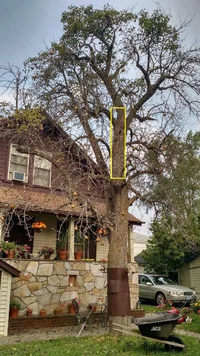
Your pear tree appears to have signs of a lightning strike in the photo. Is that a zipper down the main trunk? Was there a storm just before the decline?
 
"Ignore the useless fertilizer recommendations, instead focus on the physical and chemical properties."

Bingo. Soil structure matters most, and biology is 2nd, but we are guided to fertilize as a default expectation. See the new Soil BMP, it's still fert-first, baby! Misleading biased crap imo.

Don't we have a BMP describing the ill effects of fertilizing construction damaged trees? Usually a death sentence to a stressed tree by inducing canopy growth that the roots cannot support.
 
There was no lighting strike. The tree was never hit by lightning. Lightning never came into contact with this tree.
 
A limb pealed out years ago is what the homeowner told me. I too asked about that same thing. I never was thinking it as a lightning strike though. I have found that same kinda think on other pears in the past as well.
 
Looking at the bottom there are several torsion-crack-looking features. No doubt rot's inside...removing loose dead material will help get eyes and hands on tree response.
 
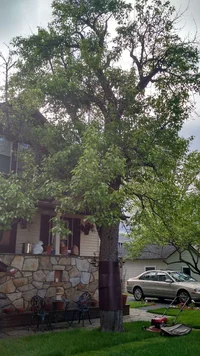
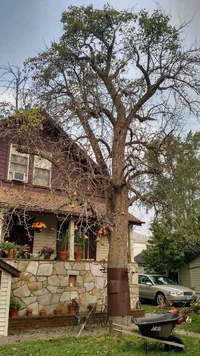
UPDATE: So we did the root collar excavation last fall. This is the tree this year. I am very happy with the outcome. Again for a comparison I have added a few pictures of what it looked like is September of last year. The tree will be deadwood in a few months. I want to monitor it as well. It's been kinda funky weather so I think it will even thicken up more as the season go on.
 

Attachments

  • dittilo pear 2016.webp
    dittilo pear 2016.webp
    644 KB · Views: 23
  • Ditillio Form .webp
    Ditillio Form .webp
    835.8 KB · Views: 20

New threads New posts

Back
Top Bottom