New article up ....

Yes arrogance because I do know

But Yes we are beating a dead horse because arborists will never learn as an industry.
I guess if everyone shared your opinion the world would be a better place…
I suppose it would still be livable.
Which somehow makes me less annoyed.
 
No not really, I just overcame the resistance of the bark of a Quercus suber and made a nice Malbec subservient but that is likely where the dreams of world domination end. I might try again though and add a raw milk stilton and cheddar to the mix this Saturday.
 
Yes arrogance because I do know

But Yes we are beating a dead horse because arborists will never learn as an industry.

Bold statements. It would be nice if you would fill out your profile so everyone could know your qualifications for making such statements.
 
It seems to me that some arborists who take up this technique early in their careers become dependent on it, and may fail to move through the natural skills progression that should happen. I see guys struggle to make effective break/bypass cuts, or who have trouble cutting a clean notch. I see climbers who struggle to gain stable work positioning without using their "spare" hand to hang on. These same climbers seem less likely to use a second point of attachment when cutting. Who needs a positioning lanyard when you can just "hang on"? When it comes to removing trees from a lift, there can become a tendency to rely on the"cut and chuck ", "Death by a thousand cuts " method of removal. Effective and obvious rigging opportunities are often overlooked, and the cutter increases their exposure to saw cuts by taking so many small pieces, not to mention the effects of the inevitable fatigue. It seems somewhat irresponsible to promote this practice on a professional forum. I personally recommend this site to folks getting started in the industry. We have a responsibility to these folks to promote the safest possible practices.
 
Well if you cannot read the manuals and find out where the author lives (and thereby the relavent laws) my qualifications really do not matter.

I wonder if you have read the threads here and on the old web forums (that have been lost) on the topic and see that the debate concerning one-handing never ends. I have seen the debate since my first Husky 334 and have seen dozens of cut arms and hands since then, all because of one handing.

Is that qualification enough for you?
 
Last edited:
I am really quite tired of the argument and I am tired of seeing people cut. This topic is sort of like the roofer who refuses to tie in, all is good until it is not.
 
It seems to me that some arborists who take up this technique early in their careers become dependent on it, and may fail to move through the natural skills progression that should happen. I see guys struggle to make effective break/bypass cuts, or who have trouble cutting a clean notch. I see climbers who struggle to gain stable work positioning without using their "spare" hand to hang on. These same climbers seem less likely to use a second point of attachment when cutting. Who needs a positioning lanyard when you can just "hang on"? When it comes to removing trees from a lift, there can become a tendency to rely on the"cut and chuck ", "Death by a thousand cuts " method of removal. Effective and obvious rigging opportunities are often overlooked, and the cutter increases their exposure to saw cuts by taking so many small pieces, not to mention the effects of the inevitable fatigue. It seems somewhat irresponsible to promote this practice on a professional forum. I personally recommend this site to folks getting started in the industry. We have a responsibility to these folks to promote the safest possible practices.
Great points, I have destroyed my body doing bucket truck work making confetti.
Still, I'm convinced that a categorical ban on
one handing is wrong. This might be the last time I say this before I fall asleep on the subject forever but, one-handing is a skill that can be learned and put in the toolkit or it can avoided. God bless America.
When I was starting out, early in my career. There was a local guy named George who owned a tree service. He only had one hand. Lost it in a Lumbermill accident. Very talented tree man. Would wrap the stump of his arm up in the full wrap handle bar when falling trees. No thumb to wrap there.
Did his work aloft with one hand on the saw obviously.
 
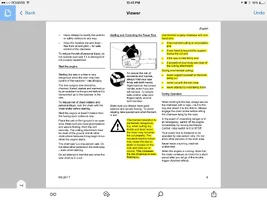
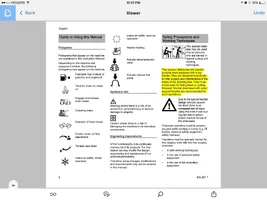
Nobody reads the manual. I was tremendously disappointed when I did. The promotion of one handing isn't isolated to Stihl. I checked the husky manuals as well - same promotion. For those that use top handles on the ground, take not of the "designed for use within the canopy of trees" comment. This could screw you.........

image.webp image.webp
 
Nice to see a measured analysis of the one hand-two hand debate. Technique is shaped by the conditions present and the goals of work. Do everything possible to prevent the saw from turning on you. There are too many variables to use "always and never" language.
 

New threads New posts

Kask Stihl NORTHEASTERN Arborists Wesspur TreeStuff.com Teufelberger Westminster X-Rigging Teufelberger
Back
Top Bottom