Burrapeg
Been here a while
- Location
- Puget Sound
The extra weight of the steel biners is nice too, when tossing the end of the lanyard up out of reach.. . . A steel carabiner is the best choice when using a carabiner.
Follow along with the video below to see how to install our site as a web app on your home screen.
Note: This feature may not be available in some browsers.
The extra weight of the steel biners is nice too, when tossing the end of the lanyard up out of reach.. . . A steel carabiner is the best choice when using a carabiner.


Whether that's sideloading is a matter of debate and depends on the diameter of the trunk or limb. A steel carabiner is the best choice when using a carabiner.
The extra weight of the steel biners is nice too, when tossing the end of the lanyard up out of reach.

Hi hello, sorry to derail. The cinch has changed my life. Been keeping up with the thread as much as possible but it's a frickin novel lol. Just have a couple quick questions. If I just use a carabiner, wrap the lanyard around the trunk and clip it back onto the lanyard rope, the carabiner pressed against the trunk is not considered side loading? Also, this removes you from the circle of death correct?

I often just take another wrap through the carabiner if I'm at a union but want a single line lanyard. If I need to cinch though, I will, and take wraps if it's to skinny.A wrap then cinch is a solid strategy. I do it frequently. When the wood is down in the 2” diameter range I do 3 wraps then cinch.
Bear in mind (mandatory disclaimer) I reserve cinching an alloy carabiner for positioning running a saw or hand saw. Or any other task where I want good stable positioning. If I cut my climbing line the lanyard will keep me in the tree. What more could I ask for?
-AJ


Here's some video taking down a weird arched over black oak, the cinching lanyard is used in all major modes. Long vid as usual but it might give more insight for those curious about how the lanyard functions in real working use.
-AJ
Good comments @Phil ! This is almost as deep a philosophical tree climber question as “One-handing a top handle saw, yes or no?”.
Then there is the question that frequently comes up, “Should new climbers be allowed to see these dark arts?” (apologies to Marten Penrose, he is the only legit practitioner of tree gear dark arts!). I believe that we should not limit our discussions of new gear and technique out of fear of causing an inexperienced climber to do something dumb.
@Phil Correct me if I'm wrong, but I don't think we're talking about side loading a carabiner here. Side loading occurs with forces spreading the carabiner off its major axis. What the cinching lanyard does is use the spine of a carabiner as a spike to secure the bight of rope through the shackle. Right?
I won't get too far off topic with my response and I actually have some stuff to add to the lanyard discussion.
There is a difference between one handing a arborist saw and side loading a crab. A top handle saw is literally designed and balanced to be comfortably operated one handed. That's the whole point of it. The fact it has a specific hook on the back for a lanyard is just smartly added convenience. One handing a saw is still using the saw the way it was designed. It's simply cutting wood. Granted one handing is more prone to lose of control in the event of a kickback, but one handing to me is a technique that can be used when the operator has exhausted other two handed options for a cut. Side loading a carabiner is straight up not using it how it was designed.
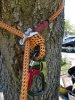
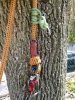
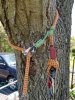
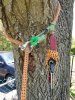
This may already have been asked and answered as I've read most of this thread but not all. Can you do this same thing with a loose ring? Is the main reason to have the ring captured on the double eye to keep it close to where you end up using it and prevent dropping it?A couple days ago working, cinching lanyards at the top. If it was just a carabiner on the end 3 wraps. For the red carabiner lanyard no cinch just a closed loop. The ring performs better on install and removal than the slic pin bow shackle, the round shape is easier to work a bight through. The bow shackle tends to lock the bight towards the narrowing throat of the shackle, it pinches tight so taking it out takes a few milliseconds longer ;-)
-AJ
This Petzl web page shows a carabiner cinched against the trunk...There may be others somewhere else.
This may already have been asked and answered as I've read most of this thread but not all. Can you do this same thing with a loose ring? Is the main reason to have the ring captured on the double eye to keep it close to where you end up using it and prevent dropping it?
Do they have any verbiage on when or this is or is not justified?
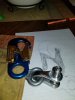
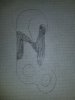
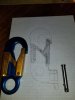 I was thinking just turn the bottom into a built in compact rigging plate. Then I googled rigging plate carabiner and this Grivel Vlad carabiner popped up. Change the gate design to fit our standards this is essentially what I had in mind.
 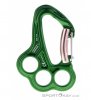 I can see DMM making something like this. I even had a name picked out. Was going to call it the Dragon Snap. They'd be orange and red.