Maintaining Views Through Long Term Maintenance

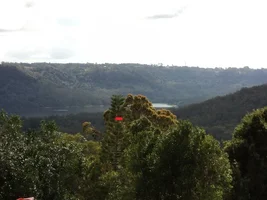
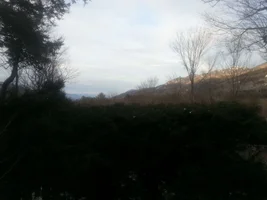
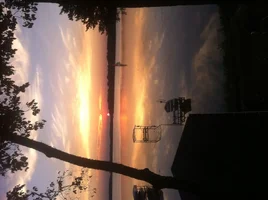
I have the opportunity to meet with a number of potential clients concerning long term view maintenance. The goal is to provide a proactive approach to water and mountain view maintenance while also preserving the trees. I haven't visited the sites yet, but presume it's primarily Douglas-fir, western red cedar, big leaf maple, and poplars–the local native mix–along with small to medium sized ornamentals. The location is a wooded development on a hillside overlooking the water and islands in the Puget Sound region of NW Washington. I'm imagining a combination of thinning out some trees entirely, allowing others to grow to a size where they can be windowed, the creation of some wildlife snags, the veteranization of some trees, and perhaps maintained reduction for others. I will have the option to spread work over several years, and to prescribe long term maintenance. I'll also have the opportunity to talk about trees being a critical part of the view, rather than simply an obstacle, and creating more windowed views rather than panoramas, where appropriate. I'm interested what other arborists have been doing in these types of situations, and the solutions they're using. The trees are not only an aesthetic asset, but also help to maintain the stability of the hillside, so tree retention is a critical goal. On top of that, some of the trees are in or adjacent to wetland areas so that adds a further motivation to maintain the trees in a healthy and aesthetic state.
Anyone have any novel solutions they've used in these types of situations? Would it be feasible to maintain trees, such add Douglas-fir, at a smaller stature by regular pruning and shaping along the lines of bonsai? I'm guessing this could backfire without also pruning the root system back to slow growth (?). I've seen trees (specifically Douglas-fir) that were topped in the past that did seal over, and begin to spread rather than grow vertical, and others that just increased their vertical growth through water sprouts. Has anyone intentionally encouraged and maintained more of an "old growth" or krumholtz structure (larger and fewer limbs, and slowed vertical growth) in a smaller/younger tree?
Thanks for any thoughts or input!

Ryan
 
Good on Scott to step up--he gave a great talk at ISA 2 years ago.
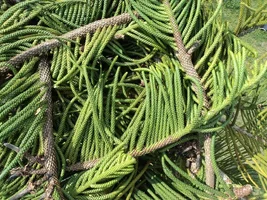
This hoop pine was reduced 8 whorls to get it to round over as they do at maturity.
I took some of the brush and made a nest; friends tell me it's occupied now. :)
A clip from http://www.historictreecare.com/wp-...-and-the-Case-of-the-Vexing-View-1110201.docx (which was too 'controversial' to be a DDendro story:
“How can that poor pine tree be sustainably shortened? Single-stemmed species do not have all those growing points to develop a lower crown. Look at 6.1.7: ‘Topping…shall be considered unacceptable’ How can a central leader be sustainably managed, if it is shortened for view?”

“Oh, I forgot that you were not on that job with the Pinus strobus at the hills back home.” I gently replied, reaching for a refill. “Pruning is not topping, if done to nodes and with regard to health and structure. The answer can be found in larger birds, my physique after a hearty meal, and my headgear” I exclaimed, letting my belt out a notch, donning my akubra hat with the bright green ribbon, and trimming its brim with a firm stroke of my thumb and forefinger.

Codit pushed the cork deep into the bottle and shuffled off with it, muttering “That’s it. I’m going, to enjoy the one night I get to sleep in a bed.”

“Not at all, dear lad” Cal leaped up and started striding like a Western martial artist, the standard in one hand and skewer in the other. “You saw those excurrent Araucaria nearby going decurrent at maturity. Perhaps controlled pruning can even “veteranize” a pine by initiating that process before its time. 4.58: ‘Pruning to enhance a specific view without jeopardizing he health of the tree.’ By carefully shifting apical dominance with the smallest cut possible, the tree will spread more leaders in good health, like Michael here.“

I clasped my hands around my belly and smiled. This chap was a little rough around the edges, but he had potential.

“Big birds and hats—clues to cut the branches off the severed top of the tree, and weave them together in a sort of platform.” Cal continued, slashing his skewer like a sword and a needle, simultaneously slicing and sewing. “The shade and physical obstruction from this ‘cap’ will stop sunscald and sprouting. When the stem is reduced, the auxin hormones enforcing apical dominance will be produced at many reiterations. More growth points are supplied with water and nutrients from the stem tissues, resulting slower growth for each single leader.” hooppine nest smaller.webp
hoop b4.webp
 
Last edited:
Interesting article Guy. I had seen part one on your web site. Questions: did the client mind seeing dead branches in the view? Do you have a current picture of the tree?
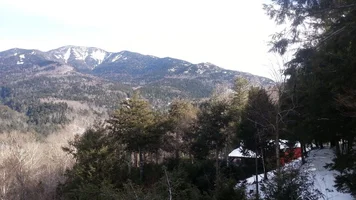
We have done view cutting in the Adirondacks for twenty five years. Often times the outcome is determined by the clients willingness to participate in a regimen over many years, site, species, property lines, etc. I feel like I have developed a relationship with the trees as much or more than the client! I have been saddened by the loss of a few trees that I had been cultivating as "replacements" to storms, or anxious clients.
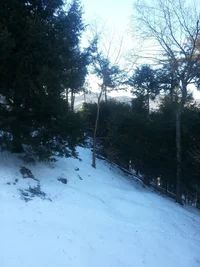
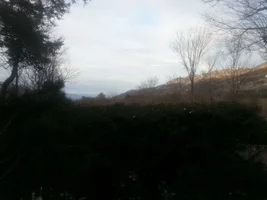
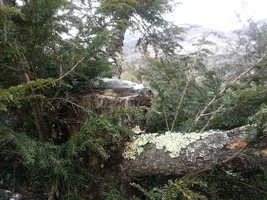
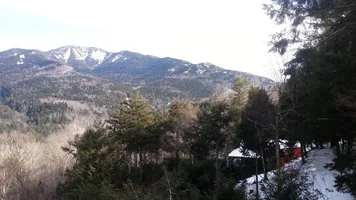
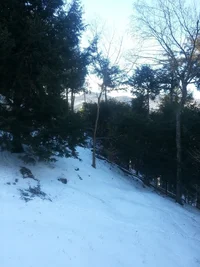
In general, I strongly encourage maintaining species closest to the house that will grow up out of the view and provide depth perspective. Introducing or encouraging lower growing species farther out. I have one view that has been maintained for over forty years. The last twenty have been by my hands(saw!). I do not necessarily like everything about the view, but we work with what we have. There are five large Hemlock (Tsuga canadensis) trees forming a hedge that screens an access road/trail from their deck. They were topped decades ago. Around 20" DBH, they form a massive intertwined crown that covers an area of about 80' by 30' each year after the hummingbirds leave, we prune them to maintain the view to the North toward Keene Valley. At this point we are performing proper reduction, but long ago someone "topped" them. There is decay at some of the old topping sites, and some cracks in the trunks, likely from water getting in and freezing, but overall the trees are relatively healthy and serving an important function. I cringe when I think about losing these trees. They will be difficult to replace and there will be a period when the client will lose privacy. Anyway, I digress.... I just find view cutting so interesting! Here are some pics: 20150117_132517.webp 20150117_134739.webp 20150115_160253.webp 20150117_131703.webp
 

Attachments

  • 20150117_132517.webp
    20150117_132517.webp
    457.3 KB · Views: 5
  • 20150117_134739.webp
    20150117_134739.webp
    421.3 KB · Views: 4
  • 20150115_160253.webp
    20150115_160253.webp
    220 KB · Views: 3
Nice looking work!

The dead branches/nest in the tippytop of the hoop pine should be obscured by the green all around.
Haven't seen it since 2011 but i hope to get back there next winter (their summer).
 
Great to see Scott Baker on here.
I often relate big crown reduction to bonsai. Perhaps most similar to retrenchment as it aims to change habit (cause dwarfing or even smaller leaves) and permanently restrict size. I suggest, for the first app, cutting far lower than the desired height for reductions in this case and I hate to say that. It's hard on the trees aesthetic and structure long term if you need to make cuts over 4-6 inch (at least here in ON it is). So try to pick the abundant species or the structurally flawed for reduction and the less common species for windowing.

It's not quite the same as bonsai and thanks for reminding me that the root balance pruning is not done at all as it is in bonsai. I suspect though if you repetitively reduced to maintain size, eventually the root system would react and slow as well. Actually it would have no choice really. It is a real challenge you have. To balance the objective of the open view with the objective of keeping the trees aesthetically pleasing and not too topped looking. I had a job like this and found it was very frustrating. I also think the patience factor should be reiterated to the client as you may have to do this over time and often. It's good it sounds like the client knows this already. But still I'd give the notion that the first app might be a very small step.
Any way I'm sure Scott will have you in the right direction.


Sent from my iPad using Tapatalk
 
"I have no knowledge of Hoop pine habits!"

Not a big difference from white pine, but the wood is a bit tougher ime. O and a somewhat related story about hoop pines and viewsheds, adapting a fine report by Sean Freeman, from whom I learned a lot: http://www.historictreecare.com/wp-...Dendro-The-Case-of-the-Arrested-Araucaria.pdf

“If you try to teach ballerinas or branches a new dance right away, they might get hurt, or fall down! They can more easily incorporate variations on a familiar theme. Branches develop their dances over decades, so arborists must be cautious choreographers. Despite its emergent status in the canopy and its thick branching habit, the genus Araucaria has resisted cyclones for millennia, so it doesn’t need much structural help from us. Aesthetic goals are met, as views can be dramatically improved when up to a third of the branches are pruned. This is known as vista pruning, or windowing, the tree."
 
Thanks so much for all the fantastic feedback! Really appreciate it, and hope to cross paths with many of you in the near future.
 
I haven't had the chance to work on a long term plan for views but I did get a great photo after a removal over the house and then a little vista pruning for the lake view.image.webp
 
It's Eagle Lake in Racine Co, not nearly as nice as Oconomowoc Lake but sure did make for a nice picture. I've spent many of hours on both of them!
 
Last edited:
These are among my favorite jobs.

White pines, hemlocks and cedars are the most common view obstructions I have had experience with. Mountain and lake views are common in these parts.
The cedars seem to be more of a water front species, from my experience.
I have found they all "window" nicely.

It does suck to deal with poor work done prior,

I find view enhancing/restoration very rewarding, spikeless climbing in beautiful places. Usually minimal clean up. Customers have always been happy. If I did not have so much equipment, I would market/sell them more.
 

New threads New posts

Back
Top Bottom