
It's a crust fungi, probably Xylariaceae
Overall, I'm getting the impression that people jump too often to Kreutzschmaria when they should consider other Xylariaceae as well. Is that the main point? Is it a in-the-field ID, or a lab/molecular ID?

Follow along with the video below to see how to install our site as a web app on your home screen.
Note: This feature may not be available in some browsers.
It's a crust fungi, probably Xylariaceae

Been writing a paper on K. deusta the last couple of weeks. Sure looks like that to me. As colb noted, that is a species in the Xylariaceae, part of the Ascomycetes.
Will be an easy call, yay or nay, with anyone with experience in the group, but those pictures are classic K. deuta.
Oh, in the first batch of photos, the white margin is the actively advancing front. The powdery grey centers are where the imperfect or asexual spores are produced. That contrast draws the eye and is when the fungus is most visible to an outside observer. You will find later in the summer that there will just be thin, dark brown to black, mottled, crispy tissue. In that layer, the flask-shaped sexual fruiting bodies will be produced. At maturity, its easy to miss. But like I say, the immature growth form is what most often provokes concern.
Depending on the setting, this disease can be a legitimate cause for concern.
It seems like there is an all star cast of people on this thread and I am scrambling to learn the name of this new life form eating one of my favorite trees from the inside out.
It sounds like the fruit body is still in an adolescent stage so does that mean spores aren't airborne yet? Can I spray it with something now to prevent the reproductive cycle at least? What could I use?
I just sprayed my deck with boric acid. I wonder if the rot on my deck is k. Deusta too.
I get the impression it is deeply impregnated in the roots and trunk so killing the fruit isn't enough. The packaging from boric acid mention drilling a hole and then pressure treating the structural lumber. Is any form of pressure treating ever applied to a live tree without killing it?
 ag.umass.edu

By no means would I say anytime any wood decay or root rot is present that the tree should be removed. In fact, the vast majority of the time most decay fungi do not elevate the risk of failure. That is why it is important to know what you are dealing with. Kretzschmaria is one of the more aggressive fungi that weaken the wood more than others. It is hard to detect how much strength loss there is. That is why it is the boogeyman as @JD3000 put it.I had a lab confirmed case of K Duesta last year. The labs recommendation is to remove the tree. Anytime a wood decay or root rot fungi is present, that’s the solution. There’s no way to stop it and it’s only a matter of time before too much wood or too many roots are compromised to allow for catastrophic failure. If it was in my yard, I would not climb it. If there are potential targets, I would remove it
Root and Butt Rot caused by Kretzschmaria deusta : Landscape : Center for Agriculture, Food, and the Environment (CAFE) at UMass Amherst
PathogenThe fungal pathogen Kretzschmaria deusta is sometimes known as the burnt crust fungus, brittle cinder fungus, and coal fungus. Older literature refers to the fungus as Ustulina vulgaris (Luley 2022).
Trichoderma can be used in the form of a “cure” against some of the best known decay fungi (e.g. Artist’s bracket, honey fungus, giant polypore, brittle cinder fungus). Over four years Trichoderma is screened for competitiveness against the host pathogen should be applied four times in the vegetation period. For this purpose, a special gel (in which the spores “rest”) is dissolved in water and when activated is then distributed over the root space. Also, an intensive application of the gel can be directly applied to the exposed fruiting bodies.
By no means would I say anytime any wood decay or root rot is present that the tree should be removed. In fact, the vast majority of the time most decay fungi do not elevate the risk of failure. That is why it is important to know what you are dealing with. Kretzschmaria is one of the more aggressive fungi that weaken the wood more than others. It is hard to detect how much strength loss there is. That is why it is the boogeyman as @JD3000 put it.
that makes more sense then! I'd propose that the lab shouldn't be making those recommendations. They should identify. The expert looking at the tree should to weigh all circumstances to offer a risk rating and let the tree owner/manager make the decisions with a full compliment of information.....I was trying to say that the lab always points towards removal when they confirm root rot. .....
that makes more sense then! I'd propose that the lab shouldn't be making those recommendations. They should identify. The expert looking at the tree should to weigh all circumstances to offer a risk rating and let the tree owner/manager make the decisions with a full compliment of information.

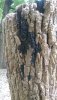
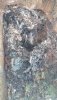
Could be Kretzschmaria, could also be a Hypoxylon or Biscogniauxia or perhaps anotherI recently repurposed a piece of a dead ash for storage of firewood kindling and lo and behold what was growing there.
View attachment 69171
I had a master arborist out here today and after some taps on the trunk with a hammer he isn't worried about the trees vitality or strength. I haven't received his written report but to paraphrase he feels that CODIT has effectively walled of the wound and the k. Deusta has been growing here for perhaps even 50 years.
I have also found a trichoderma product called Tenet WP which, after talking to the manufacturer, should be effective in controlling k. Deusta.
This manufacturer also mentioned another product called nitryx sp containing Paenibacillus polymyxa which is an endophyte. These endophytes can colonize inside the cambium in a symbiotic way, and also show strong antifungal properties in the lab (but this specific usage is not part of the product label).
I have applied the trichoderma per label instructions as well as a direct application of trichoderma in a thick paste directly to the k. Deusta.
After about a week there seems to be strong signs that the trichoderma is colonizing the k deusta fruit bodies with a greenish tinted powdery appearance. There seem to be spider webs on the decay too but I'm not 100% sure whether that could be bacterial or fungal instead. It seems like a few fruit bodies may not have powdery green residue so I can understand why I may need to treat multiple times.
View attachment 69172
I am planning to perform a Nitryx treatment as well as further trichoderma applications and will be monitoring the situation.
@guymayor I did send you an email. If you didn't see it I'd be happy to send another, just pm me.
I recently repurposed a piece of a dead ash for storage of firewood kindling and lo and behold what was growing there.
View attachment 69171
I had a master arborist out here today and after some taps on the trunk with a hammer he isn't worried about the trees vitality or strength. I haven't received his written report but to paraphrase he feels that CODIT has effectively walled of the wound and the k. Deusta has been growing here for perhaps even 50 years.
I have also found a trichoderma product called Tenet WP which, after talking to the manufacturer, should be effective in controlling k. Deusta.
This manufacturer also mentioned another product called nitryx sp containing Paenibacillus polymyxa which is an endophyte. These endophytes can colonize inside the cambium in a symbiotic way, and also show strong antifungal properties in the lab (but this specific usage is not part of the product label).
I have applied the trichoderma per label instructions as well as a direct application of trichoderma in a thick paste directly to the k. Deusta.
After about a week there seems to be strong signs that the trichoderma is colonizing the k deusta fruit bodies with a greenish tinted powdery appearance. There seem to be spider webs on the decay too but I'm not 100% sure whether that could be bacterial or fungal instead. It seems like a few fruit bodies may not have powdery green residue so I can understand why I may need to treat multiple times.
View attachment 69172
I am planning to perform a Nitryx treatment as well as further trichoderma applications and will be monitoring the situation.
@guymayor I did send you an email. If you didn't see it I'd be happy to send another, just pm me.


