knots

Several variations of the bight and loop.
grin.gif


Actually combinations of half hitches, secured clove hitches and running bowlines.
 
A sling with a girth hitch.

Faster in the tree and on the ground.

Set your rigging rope up with an anchor hitch to a steel carabiner, slip a sling, clip, cut, next.

For simple rigging, nothing is quicker.

Northwind
 
[ QUOTE ]
A sling with a girth hitch.

Faster in the tree and on the ground.

Set your rigging rope up with an anchor hitch to a steel carabiner, slip a sling, clip, cut, next.

For simple rigging, nothing is quicker.

Northwind

[/ QUOTE ]
jamminz.gif
jamminz.gif


and if you ve and eye on your rope it's even better !
 
I like the bowline and what northwind said using a sling with a girth hitch is a good idea. I just read about the knotless rigging system in the "The Art and science of practical rigging" book.
 
I use a spliced rope with a steel 'biner for light to medium stuff. I had both ends spliced, which was a mistake, because I still like the old running bowline very much, and the eye gets in the way a bit.

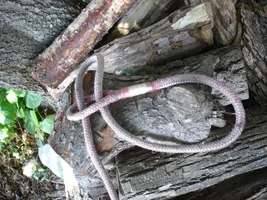
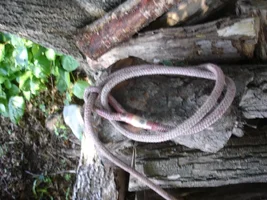
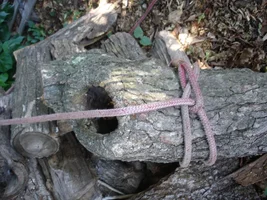
The eye also makes a nice 'closed' clove hitch on its own for slipping over logs to be lowered. Kinda hard to explain, but basically you put the rope back through the splice and slide it down on the wood. I'll post a pic if I get the chance.

-Tom
 
Knotless is a good way to go... I should break down and splice my rigging ropes.

Typically I use a running bowline, adding a marl if the wood is big or slippery. I use a clove on the intermediate pieces when doing multiple limbs but always a RB on the end piece.
 
[ QUOTE ]
Same system as Northwind....
cool.gif
cool.gif
easy, fast, secure

[/ QUOTE ]

and you can remove more than 1 limb at a time. The only way to go on small stuff. I have spliced loops 5' in diameter for the knotless rigging system.
When I have to go with knots, I usually use the marline and a running bow.
 
i like the cow hitch with a better half a lot right now. if the wood i'm dropping is really big i like to add a couple of marls to buffer the load on the hitch. excurrent trees usually get done with some form of a speed line and knot less rigging. big decurrent trees demand double and triple crotch rigging and big ropes. i find a cow hitch is easier to tie and untie in the larger ropes due too less sharp bents and twist in the rope and produces 80% of the ropes rated efficiency, while choking the rope with some form of loop knot or clevis attached to the spliced eye of the rope produces 50% to 65% of the ropes rated efficiency. although a running bowline to tip tie a piece is very awesome. every knot and hitch has its proper place and use.
 
[ QUOTE ]
i find a cow hitch is easier to tie and untie in the larger ropes due too less sharp bents and twist in the rope and produces 80% of the ropes rated efficiency, while choking the rope with some form of loop knot or clevis attached to the spliced eye of the rope produces 50% to 65% of the ropes rated efficiency.

[/ QUOTE ]

How is a cow hitch more efficient than a girth hitch. The rope makes the same bend. Please explain.
 
[ QUOTE ]
Set your rigging rope up with an anchor hitch to a steel carabiner

[/ QUOTE ]

I use slings for everything up to about 12", but every sling has their own biner, which gets clipped to a spliced eye or bowline, depending on which rope I have up in the tree.

After a few bigger pieces, that anchor hitch will tighten up and the carabiner will become a permanent part of the rope. It's a pain to try and untie that hitch after a day of rigging...
 
when "choking" the load is place on a non secured loop usually against a single
part of line the "hitch" is free to abrade itself. the cow hitch is secure from abrading itself from hitch movement. those slings you are girthing are some BIG slings to carry around the tree to reach the wll i'm working with on a 3/4" stable braid and a cow hitch. for smaller speed line work and smaller rigging in general, knotless rigging is the bomb, in my humble opinion. by the way, the rigging manuals i quoted say the same thing i said about the "choker hitch" line and verse: the choker hitch reduces line efficiency by approximately 45%, the cow hitch reduces line efficiency by 20%. if my explanation doesn't sound right, well i'm not a rigging engineer; ask one to explain it to you.
 
[ QUOTE ]
when "choking" the load is place on a non secured loop usually against a single part of line

[/ QUOTE ]

When choking a loop, there are 2 parts of line going thru the bight, not a single line. The bight has twice (2 parts of rope)the diameter of the rope pulling on it, increasing the bend radius to 2 to 1. No way is the strength reduced by 45%, 30% max. (see attachment fo strength loss on bends)
Also when using a fixed loop, the rope on rope abrading will be at different spots on the loop each time it is used. That's the beauty of using a loop, it's choked at a different spot each time it is used.

 

Attachments

that attachment has nothing to do with sling on sling contact. buy the book a rule for riggers. it is geared for the construction industry, but has a lot of information for our industry. i did a little research on endless sling and find conclusive evidence that you are right norm that they retain 80% of line efficiency http://www.liftingtackles.com/round_endless_slings.htm. my reductions where a little high but the loss of efficiency on a wire rope sling in a choked hitch is around 28% to 30% http://www.barnhartcrane.com/pdf/wire_sling_capacity.pdf. while nylon slings used in a choker hitch reduce line efficiency by 22% to 25% http://www.ashleysling.com/ns5.htm. the reduction depends on the type of sling material. while your bowline at best has a 40% reduction http://www.allaboutknots.com/html/8_strength.html ; at worst in a running or choked configuration? well lets use some conservative numbers at a 40% reduction in efficiency on a 1000 pound test line is a 600lbs working load in a straight line pull then reduce it further by choking it on it's self by a reduction of 22% and you come up with a working load limit of 468lbs and a total reduction of 56% in line efficiency. that makes you think about that running bowline. in working application i had to sling two blocks to winch a lead off of a house a couple of months ago the slings were the same material and same length 3/4" tenex i had to use a running bowline on the bottom block to attach it to the tree and a cow hitch on the upper block. the bottom block had consistent loading and rope angles (90 degrees) and the uppers block had a start of 120 degrees with a dynamic finish of 180 degrees. the upper block saw more load and a slightly dynamic finish during the rigging operation while the lower block was held with consistent loading. upon final inspection of the rigging the sling on the bottom block was severely glazed and melted together while the upper sling showed no signs of abuse or miss use and came untied very easily. the same cannot be said of the lower sling. hence my move to the cow hitch as my knot of choice, but like i said before all knots and hitches and sling types and material have their place in a rigging operation.

i edited because the third link did not work.
 
At the risk of boring some of you to death, I am attaching pictures of my 'girth/clove hitch' that I make with my spliced rigging line. I said I would, so here ya go.

-Tom
 

Attachments

  • 231788-DSC03446.webp
    231788-DSC03446.webp
    302.4 KB · Views: 121
I use a running bowline and add a marl when lowering big wood.

When lowering smaller limbs I like the halter hitch. easy to tie and better yet untie for the groundsperson.
 

New threads New posts

Back
Top Bottom