- Location
- Humboldt County,
I would look up Steve Sillet. I think he is still at HSU. He was the subject of a biography called, “the wild trees” which details srt in old growthWill do how can I find a contact for Someone there who I could ask :

Follow along with the video below to see how to install our site as a web app on your home screen.
Note: This feature may not be available in some browsers.
I would look up Steve Sillet. I think he is still at HSU. He was the subject of a biography called, “the wild trees” which details srt in old growthWill do how can I find a contact for Someone there who I could ask :
I would look up Steve Sillet. I think he is still at HSU. He was the subject of a biography called, “the wild trees” which details srt in old growth

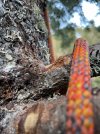
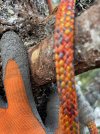

Great documentation of SRT rope effects.Aloha
Many thanks for all the great ideas. This is something that I have been working on myself. Not redwoods (for now), yet very similar trees with branches that pop off like it is part of the trees design. So far I have been using a big shot and shootings multiple times with several bags. I have been using binoculars to check the crotch. And am now using my drone to take video and inspect.
I am waiting on my air drop release kit for my drone, so that I can get higher.
Other than Big Shot and air cannon, the RL Series Line launcher Kit looks interesting. And considering bringing my Swiss Tree Grippers from Hawaii. Find a skinny enough tree, climb up and then shoot to the taller tree.
Quite amazed how just setting the line in place can burn through bark. Pics are from a SRT climb that was backed up by traditional gaffs and flip line. Definitely going to take time to set anchor around main spar from now on.View attachment 80027View attachment 80028
@Mr. Burns could you elaborate a bit more on the specifics that created those bark damaged pictures?
Of all the SRT lines I have set, the only ones that showed branch injury were the ones that had a strong dynamic component. Without the movement, nothing.
@Mr. Burns could you elaborate a bit more on the specifics that created those bark damaged pictures?
Of all the SRT lines I have set, the only ones that showed branch injury were the ones that had a strong dynamic component. Without the movement, nothing.
Aloha
Many thanks for all the great ideas. This is something that I have been working on myself. Not redwoods (for now), yet very similar trees with branches that pop off like it is part of the trees design. So far I have been using a big shot and shootings multiple times with several bags. I have been using binoculars to check the crotch. And am now using my drone to take video and inspect.
I am waiting on my air drop release kit for my drone, so that I can get higher.
Other than Big Shot and air cannon, the RL Series Line launcher Kit looks interesting. And considering bringing my Swiss Tree Grippers from Hawaii. Find a skinny enough tree, climb up and then shoot to the taller tree.
Quite amazed how just setting the line in place can burn through bark. Pics are from a SRT climb that was backed up by traditional gaffs and flip line. Definitely going to take time to set anchor around main spar from now on.View attachment 80027View attachment 80028
Yeah, that was why I questioned the scenario, because I have only seen that much damage with, as I said, a strong dynamic component. Normal SRT ascents do not show that in my climbing experience.I've found that small back and forth rope movements from ascent loading and unloading cycles on a high basal anchored line, no matter how static the line, will cut into the cambium. In the photo it appears that the rope was "polishing" the wood after cutting through the bark.
-AJ
Hello@Mr. Burns could you elaborate a bit more on the specifics that created those bark damaged pictures?
Of all the SRT lines I have set, the only ones that showed branch injury were the ones that had a strong dynamic component. Without the movement, nothing.
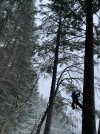
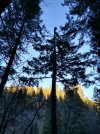

Is it feasible to canopy anchor around the main stem of a Redwood?GeA good line launcher (APTA) and rope walking set up is essential, but NEVER trust redwood limbs with your life if there is a shred of uncertainty. Ever! You will die!!!!

 www.instagram.com


