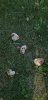
Honey locust fungi

Jehinten

Been here much more than a while
Location
Evansville
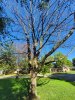
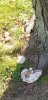
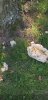
looking for help to identify this fungus. This is on the roots only of a honey locust, nothing on the trunk or limbs. Canopy has 99.5% die back, only a few sparse leaves here and there through the canopy.

A neighboring honey locust, maybe 40' away has zero fungi but over half of that canopy on one side has turned brown, the far side away from the first tree is green. For what its worth the two canopies do touch.

No good pics of the second tree as the sun was washing the camera out.


Edit: location is SW corner of Indiana 20200905_162749.jpg20200905_162804.jpg
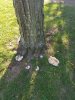

you can see the second honey locust tree in the back, to the left. 20200905_162809.jpg
these 3 pics are just zoomed in from previous pics for convenience Screenshot_20200905-185742_Gallery.jpgScreenshot_20200905-185759_Gallery.jpgScreenshot_20200905-185813_Gallery.jpg
 
Last edited:
there is also a young bald cypress that can be seen in the background of one of the pics that has upper canopy dieback. I do not see any fungi on it either. Not sure if it is related to what is happening to the honey locust.
 
In looking at pics, I'm not 100% sold on those two suggestions. Unfortunately I'm pretty uneducated on this so comparing pictures is the best that I can do myself, and I also understand that the same fungi could look a little different due to environmental conditions. So if your certain it is a specific one, just tell me that I am wrong. I won't mind.
 
What chemicals have been applied to the area?

Could chemicals have sent the badly infected tree over the edge, and impacted the other two.
 
Sorry to need a special invitation! I'd start with a resinous weeper, Ischnoderma resinosum. This one is highly variable as a little guy. I know, some of those are large-ish but they also look like they've been mechanically whacked, so lots of growth response and upward-facing pore surface. I'm also going by position on woody roots as well as the trunk base. If I were to hedge that bet, I'd go with a Ganoderma. In the fullness of the growing season, seeing the kind of bracket that's made would help the ID.

OK, so what? This fungus is not described as a strong....or even a weak pathogen. But it can definitely decay dead portions of a living tree. That's what compartmentalization is all about.

Precise identification of the fungus would be nice, but not needed to know that: 1. The fungus is likely decaying dead portions of the woody buttress root system and 2. The fungus as such is likely not causing the crown dieback and 3. This fungus or another will take advantage of the low-energy situation with the honey locust and play that to it's advantage.

Honey locusts are tough! Is it giving the client what they want? That's really the question, IMHO. Happy Labor Day!
 
Another lush, unnatural monculture of turf on the lawn. That sort of lawn is unattainable without herbicide inputs. Better find a discrete way to get product information from the lawn maintenance or weed & feed contractor so that you can check the labels online to see whether there are any contraindications for application around shade trees. I'd suggest having the property owner call the lawn service and anybody else who puts fertilizer or any other treatments on the site. She can tell them that she's decided to keep a log of work that's been done on the site so that she can have it available for any prospective buyer. (She ought not to say that her trees are dying). and that she would like application dates for the last 6 months, along with the products which were applied.

If the yard person thinks the client presumes they've killed her trees and that they might be on the hook to pay for the damage, they may say they've put down nothing but pure spring water.

Did anybody pressure wash something upwind of the first tree in the past year?
 
What chemicals have been applied to the area?

Could chemicals have sent the badly infected tree over the edge, and impacted the other two.

I've not had much of a chance to talk to the homeowners, just messaging, so I don't know that answer yet. I did however look around and I do not see any signs of new construction or digging that could have stressed the trees.
 
I've not had much of a chance to talk to the homeowners, just messaging, so I don't know that answer yet. I did however look around and I do not see any signs of new construction or digging that could have stressed the trees.
And you may not. Trees which have been injured during a construction event often don't begin to show signs of decline until 7-10 years after the event. If you're able to look at online records for the site and pull the property card, you'll be able to see permits that were pulled on the site.
 
Sorry to need a special invitation!

No need to be sorry. The internet is a big place, its hard to know exactly where in it that you'll be needed. :D


I'd go with a Ganoderma

In googling what I could see, before posting on here I did come up with this possibility, although the images did not match up. With your comment that they look like they've been cut back, that may explain the difference in appearance.


Honey locusts are tough! Is it giving the client what they want? That's really the question, IMHO.


I know the wood is strong, but are you suggesting that it is possibly tough enough to bounce back given proper treatment? Or is the decay to the roots not worth trying to prevent a removal.


Just realized I have not given much to the location of the tree, it is in a front yard near the house and sidewalk. Given its current size and if it were to fall to the north it may hit the house but likely wouldn't cause any serious damage. However if prolonged 5-10 years and the roots are compromised then it would have a higher likelihood of substantial damage. I'm all for treatment and keeping the tree and I think the homeowners would want that, but i wouldn't be comfortable with doing so on a weakened root system. Thoughts on that, is removal the only option or should I get a look at the roots before making that call?
 
Another lush, unnatural monculture of turf on the lawn. That sort of lawn is unattainable without herbicide inputs. Better find a discrete way to get product information from the lawn maintenance or weed & feed contractor so that you can check the labels online to see whether there are any contraindications for application around shade trees. I'd suggest having the property owner call the lawn service and anybody else who puts fertilizer or any other treatments on the site. She can tell them that she's decided to keep a log of work that's been done on the site so that she can have it available for any prospective buyer. (She ought not to say that her trees are dying). and that she would like application dates for the last 6 months, along with the products which were applied.

If the yard person thinks the client presumes they've killed her trees and that they might be on the hook to pay for the damage, they may say they've put down nothing but pure spring water.

Did anybody pressure wash something upwind of the first tree in the past year?


This lawn is far from perfect although the picture of the overall tree does make it look good, however the up close shots of the fungi you can see crabgrass and weeds mixed in the lawn. Nonetheless I will ask the homeowner for more history including lawn treatments, pesticides, and construction.

And you may not. Trees which have been injured during a construction event often don't begin to show signs of decline until 7-10 years after the event. If you're able to look at online records for the site and pull the property card, you'll be able to see permits that were pulled on the site.

Thats a good point on the delayed damage, I did know that, but apparently had forgotten as it didn't come to mind.
 
So I did mention Ganoderma, but as the "hedge bet". I'd still
start with a resinous weeper, Ischnoderma resinosum. I say "start with" because identification is based on what we have handy. If the sample itself were at hand, I'd next try to find reasons why it "isn't" I. resinosum. That might involve a handlens or microscope. So progress is often more efficient through successive disproof. Just like the rest of life!
 
I spoke with the homeowners, they moved in 6/2018 and do their own lawn care. In that time they have not used any chemicals on the lawn or cleaning agents on their home, also no construction that could lead to this.

It is 60-70 feet from the tree to the property line, so unless it was a high wind it seems unlikely that a chemical in the neighbor's property would fly that far. And the ground does not run towards the tree allowing for any chemical runoff to contaminate.


Assuming that a proper ID cannot be determined, is it fairly safe to assume that removal, grind and cleanup grindings would remove the threat to nearby trees? That seems to be the appropriate course of action regardless of the ID unless there is a chance to help the tree recover with the minimal amount of leaf that it put out this year. Does this seem correct?
 
.....
Assuming that a proper ID cannot be determined, is it fairly safe to assume that removal, grind and cleanup grindings would remove the threat to nearby trees? That seems to be the appropriate course of action regardless of the ID unless there is a chance to help the tree recover with the minimal amount of leaf that it put out this year. Does this seem correct?
[/QUOTE]
With almost no leaves, it sounds like removal is the path forward. However, MOST fungi are not pathogenic, so without ID, I would not assume that this is a threat to other trees. Doesn't necessarily change plans, but hopefully not something that continues to generate problems for the owner.
 

New threads New posts

Back
Top Bottom