Historic Elm Removal

tomthetreeman

Participating member
Location
Rhode Island
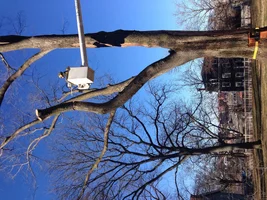
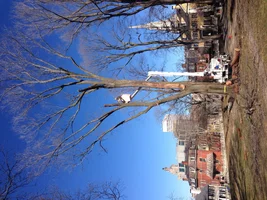
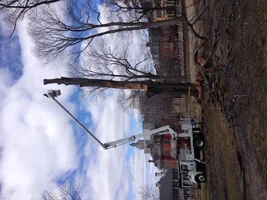
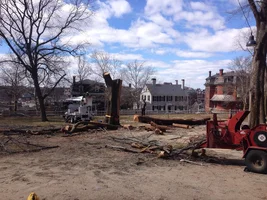
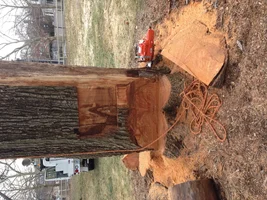
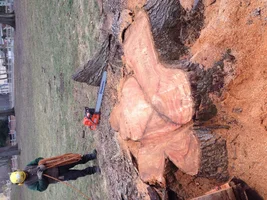
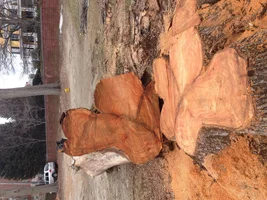
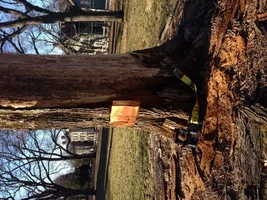
Some photos of one of the John Brown House Elms that we removed on Tuesday. This is the third or fourth to be removed in the last 3-4 years, the second by us. Brown University sent samples to Nick Brazee at UMASS for testing in 2013, and the samples came back negative for DED. It has since been assumed by all parties involved (RI Historical Society, City Forester, Brown University) that the culprit is EPN, and soil aeration, composting and mulching/watering were applied last spring to help improve health in the root zone. It was definitely too little too late, as five trees expired last fall. I sent new samples in this week to see if this particular tree was positive for DED. I am aware of the conditions and parameters required for optimal testing, and we did not have them. Since no one has sought a second test, I decided to take this opportunity to try again. Anyway, it's a bit of a shame. I'm going to recommend treatment for the surviving trees based on what comes back from this test. It looks like spraying for leafhoppers and beetles is helpful in both cases (DED and EPN), so that will be first up.
 

Attachments

  • image.webp
    image.webp
    929.4 KB · Views: 98
  • image.webp
    image.webp
    949.5 KB · Views: 84
  • image.webp
    image.webp
    768 KB · Views: 81
  • image.webp
    image.webp
    524.9 KB · Views: 79
  • image.webp
    image.webp
    827.2 KB · Views: 76
  • image.webp
    image.webp
    816.7 KB · Views: 75
  • image.webp
    image.webp
    914.5 KB · Views: 74
  • image.webp
    image.webp
    813.5 KB · Views: 68
Tom, this article suggests that there is no treatment for Elm Phloem Necrosis (Elm Yellows), and that management is done with prompt removal of diseased trees to prevent spread. The spread seems to be the same as DED, with an insect vector and root grafts.

http://ipm.illinois.edu/diseases/series600/rpd660/

Best of luck there. Another case in devastating loss due to a bit of monoculture.
 
The spread of EPN can be restricted by spraying for leafhoppers... There is no systemic treatment once the tree is infected. I have heard that it is difficult to test for as well, being a phytoplasm, but I do not have firsthand data there.
 
Shame to see them go. That's some pretty wood though, if it can still be used for lumber. I have some American Elm boards that are good looking, strong and very dense.
 
Check with Jeff Dice at Penn State. He is supervisor of landscape and grounds and has been battling EPN for a number of years. He is a good man and very knowledgeable.
 
Check with Jeff Dice at Penn State. He is supervisor of landscape and grounds and has been battling EPN for a number of years. He is a good man and very knowledgeable.
That's a great reference. I hope this goes well. Although the trees were distant from base to base, there is almost complete canopy cover, so I can imagine the root systems could allow the spread of yellows as well.
 
U of I's take on potential control strays into non-scientific areas to justify their opinion that treatments are not justified...who are they to judge relative cost? What data shows extent of phytotoxicity?
EPN sounds like BLS in a way--the drugs are out there to treat it, but gloomy forecasting puts a chill on that effort. So what if it needs followup care--don't all trees?
  1. "Experimental injection of tetracycline and oxytetracycline antibiotics into the trunks of diseased elms has resulted in symptom remission for several months to 3 years. However, tetracycline therapy is not recommended for control due to its high cost, advanced root and phloem degeneration before foliar symptoms appear, lack of lasting symptom remission after discontinuation of therapy (trees are not cured), tetracycline phytotoxicity, and the risk of MLO strains developing resistance to the antibiotics. It is doubtful that the federal EPA will ever clear the use of tetracycline antibiotics as a control measure for elm yellows."
Back to Top
 

New threads New posts

Back
Top Bottom