Herbicide trespass

evo

Been here much more than a while
Location
My Island, WA
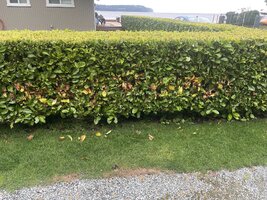
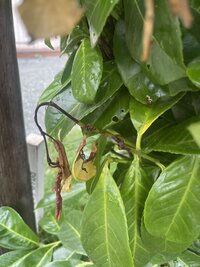
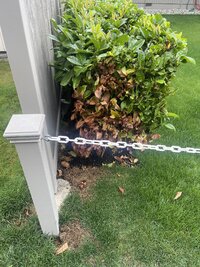
I’m working my second suspected case of herbicide trespass EVER, both have occurred this summer.
Granted this one is a silly English laurel hedge and the damage really isn’t too bad.

I’m trying to understand the lab results, which are clearly positive. Can anyone here help me understand severity or volume?
I’ll have to take another look but it actually seems super heavy 430mg/kg
 
Last edited:
I had one where there is as suspected glyphosate damage from a known spill...but it was over 100' away from where the last dead grass was.

Anyhow...we sent samples to lab. Came back positive with a ppm number of how much chemical (and or metabolites) was found in the plant. I asked "OK, what does that mean?"
Lab: we just report the number, no interpretation
Co-op who spilled: we don't know
Ohio State: strike 3...no help
Regional technical advisor for manufacture: I don't know, I'll ask research
Research: "Those numbers are not insignificant" is all I could get.

So...good luck! Maybe reach out to Extension or an agricultural researcher at a university. That didn't work for me in that case, but I suspect somebody at universities know this stuff! I didn't find anything published at that time.
 
I had one where there is as suspected glyphosate damage from a known spill...but it was over 100' away from where the last dead grass was.

Anyhow...we sent samples to lab. Came back positive with a ppm number of how much chemical (and or metabolites) was found in the plant. I asked "OK, what does that mean?"
Lab: we just report the number, no interpretation
Co-op who spilled: we don't know
Ohio State: strike 3...no help
Regional technical advisor for manufacture: I don't know, I'll ask research
Research: "Those numbers are not insignificant" is all I could get.

So...good luck! Maybe reach out to Extension or an agricultural researcher at a university. That didn't work for me in that case, but I suspect somebody at universities know this stuff! I didn't find anything published at that time.
My test show AMPA, which is the metabolite.
Called the lab, soon as the guy pulled up the results “Ooooh! That’s certainly a-lot!”
He did state the AMPA indicates fairly recent application. So there is something to comparing these two numbers.

It just dawn on me, that this also is within 50-70’ of saltwater shoreline!
Sounds like the neighbor feud is a hot mess.
Embarrassingly upon my site inspection I was fairly dismissive as the damage really didn’t look that bad and I was skeptical of herbicide being the culprit.
Once again foot in mouth issue.
 
If I am reading that right, you submit your findings and bow out of the proceedings. I hate boarder wars with a passion.
Really I can’t see any more of a role for myself. I would rather not cut my teeth as being an expert witness on this one.
Only logical path I can foresee is a plant appraisal to assess damages…. We will see…
 
I’m working my second suspected case of herbicide trespass EVER, both have occurred this summer.
Granted this one is a silly English laurel hedge and the damage really isn’t too bad.

I’m trying to understand the lab results, which are clearly positive. Can anyone here help me understand severity or volume?
I’ll have to take another look but it actually seems super heavy 430mg/kg
I can only add that mg/kg is also ppm. (parts per million) ie. 430 ppm.

I hope this helps a bit evo.
 
  • Like
Reactions: ATH
I had one where there is as suspected glyphosate damage from a known spill...but it was over 100' away from where the last dead grass was.

Anyhow...we sent samples to lab. Came back positive with a ppm number of how much chemical (and or metabolites) was found in the plant. I asked "OK, what does that mean?"
Lab: we just report the number, no interpretation
Co-op who spilled: we don't know
Ohio State: strike 3...no help
Regional technical advisor for manufacture: I don't know, I'll ask research
Research: "Those numbers are not insignificant" is all I could get.

So...good luck! Maybe reach out to Extension or an agricultural researcher at a university. That didn't work for me in that case, but I suspect somebody at universities know this stuff! I didn't find anything published at that time.
Sooo what was the PPM in your situation? It would be interesting to compare…
I can’t see it being too different though, regarding methodology. I cherry picked the worst of the worse affected areas.
The lab recommended at least one pound of material for testing and I struggled to collect that much of symptomatic leaves.
the hedge had a fairly clear stripe down the side of it, so I’m guessing a pump sprayer on a stream setting. Volume is volume and prob no different than a spill..
 
Sooo what was the PPM in your situation? It would be interesting to compare…
I can’t see it being too different though, regarding methodology. I cherry picked the worst of the worse affected areas.
The lab recommended at least one pound of material for testing and I struggled to collect that much of symptomatic leaves.
the hedge had a fairly clear stripe down the side of it, so I’m guessing a pump sprayer on a stream setting. Volume is volume and prob no different than a spill..
I'll look that up later when I'm at desktop...
 
Last edited:
Sooo what was the PPM in your situation? It would be interesting to compare…
I can’t see it being too different though, regarding methodology. I cherry picked the worst of the worse affected areas.
The lab recommended at least one pound of material for testing and I struggled to collect that much of symptomatic leaves.
the hedge had a fairly clear stripe down the side of it, so I’m guessing a pump sprayer on a stream setting. Volume is volume and prob no different than a spill..
There was an arborvitae next to the road at the spill site. dead grass up to it and dieback on the tree (but not adjacent tree.
AMPA (Glyphosate Met.) 0.176 mg/kg and Glyphosate 1.44 mg/kg

The Sycamore was 100'+ from the spill site with no dead grass between the site and the tree. Top half of the tree browned and dropped leaves. We ruled out anthracnose and powdery mildew as the culprits causing that - which are frequent disease issues. It was reported:
Glyphosate 4.73 with no measureable AMPA

So, yeah, if they were telling me that was "not insignificant" your 430mg/kg is big!
 
Wow that is a good point of reference! Granted there are probably quite a few variables, but enlightening non the less!
There was an arborvitae next to the road at the spill site. dead grass up to it and dieback on the tree (but not adjacent tree.
AMPA (Glyphosate Met.) 0.176 mg/kg and Glyphosate 1.44 mg/kg

The Sycamore was 100'+ from the spill site with no dead grass between the site and the tree. Top half of the tree browned and dropped leaves. We ruled out anthracnose and powdery mildew as the culprits causing that - which are frequent disease issues. It was reported:
Glyphosate 4.73 with no measureable AMPA

So, yeah, if they were telling me that was "not insignificant" your 430mg/kg is big!
 
  • Like
Reactions: ATH
Could you look up efficacy vs dosage info the mfr used to make application dosage label recommendations?
 
Could you look up efficacy vs dosage info the mfr used to make application dosage label recommendations?
I’d need to know the manufacturer? I’m pretty sure my role is done (thankfully). The client is the type not to return messages for quite some time, then when they do call, they repeatedly call 3-4 times before I pick up or they finally leave a message.
 
Read some on glyphosate. Multiple "salt" formulations different mfrs. Key point absorbs in leaves then translocates to continue its mayhem. Maybe get few days later pics after initial die off. Also one rainfall its inert - hooey! Half life up to months various data.
 

New threads New posts

Back
Top Bottom