Good source for pruning education?

did you see the above videos?
that's the tip of the iceberg

the US is far and woefully behind in updating pruning standards. if Gilman has any part in that, and one must surmise that he does if he's the name on everyone's lips here, then he's part of the problem IMO.


Last edited:
Well thanks; tons of respect for Ed with young trees (esp. live oaks!) and Jim with planting.
Save the day lol; too often the day is about done when I get to a tree! But we do what we can.

Daniel's skeptical but he'sgot a ton of pruning stuff on his youtube channel; judge for yourself.
 
did you see the above videos?
that's the tip of the iceberg

the US is far and woefully behind in updating pruning standards. if Gilman has any part in that, and one must surmise that he does if he's the name on everyone's lips here, then he's part of the problem IMO.


Listen to your exact wording at 0:58 on the middle video. What you say is exactly what Gilman teaches so where is the negativity towards him coming from? The silver maple in the very first video you posted on this thread seems over pruned in my opinion. Overall reductions cause many unnecessary wounds that other techniques could easily achieve a better result.

I have done work in other country's and they do tend to lean towards different pruning techniques than us. However, once you do full reductions on trees it is then a constant maintenance program. Over mature trees, sure, but then it is more so retrenchment and retainment which is a whole different ball game.

P.S. This is becoming stupid.
 
I appreciate all the links and info everyone has posted. I started watching the Gilman stuff on Educated Climber. Very informative. I’m at first grade level on this journey.

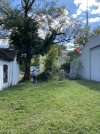
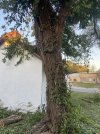
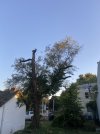
Today a friend and I spent our day off cutting down a Dying Walnut up against a farmers house, then went to start cutting down a tree up against a historic pony express depot in my home town. Far from pruning but all this Info in this thread will keep me busy for quite some time reading into it.

thanks everyone.
 

Attachments

  • B548BB9F-3557-4B1E-81FE-F374FD1CD952.jpeg
    B548BB9F-3557-4B1E-81FE-F374FD1CD952.jpeg
    879.3 KB · Views: 17
  • F21F535B-24B4-4ACB-A55B-0DC1CACBAE03.jpeg
    F21F535B-24B4-4ACB-A55B-0DC1CACBAE03.jpeg
    1.2 MB · Views: 16
  • 3DCFB857-1B6E-49DE-B98E-E2455A8615B1.jpeg
    3DCFB857-1B6E-49DE-B98E-E2455A8615B1.jpeg
    874.2 KB · Views: 13
  • 112A57DF-251A-4FB9-B962-DCE57F35AC6F.jpeg
    112A57DF-251A-4FB9-B962-DCE57F35AC6F.jpeg
    647.5 KB · Views: 17
  • EBCD1B65-B587-466D-888D-9D29E2E366CE.jpeg
    EBCD1B65-B587-466D-888D-9D29E2E366CE.jpeg
    567.7 KB · Views: 8
Listen to your exact wording at 0:58 on the middle video. What you say is exactly what Gilman teaches so where is the negativity towards him coming from? The silver maple in the very first video you posted on this thread seems over pruned in my opinion. Overall reductions cause many unnecessary wounds that other techniques could easily achieve a better result.

I have done work in other country's and they do tend to lean towards different pruning techniques than us. However, once you do full reductions on trees it is then a constant maintenance program. Over mature trees, sure, but then it is more so retrenchment and retainment which is a whole different ball game.

P.S. This is becoming stupid.
you don't seem to get it

either I didn't do a good job of explaining it or you just don't get it.

it's been a while since I studied Gilman...
I read his book and more than read it, I studied it. then studied it again when the second edition came out and I've seen his presentation at the penn del-isa conference.

while I don't disagree with everything he says, I find his overall message to be weak at best and better characterized as misinformed.

whereas I heard Guy give a one hour presentation about pruning after storm damage that forever changed and greatly improved my perspective on pruning. while I still had to extrapolate Guy's teachings from storm damage to regular pruning techniques used on mature hardwoods, Gilman offered no such opportunity. and I would say it's likely that anyone who is suggesting Gilman as a good resource for pruning guidance on mature hardwoods is also misinformed. From your above statement, that would include you.
 
Last edited:
you don't seem to get it

either I didn't do a good job of explaining it or you just don't get it.

it's been a while since I studied Gilman...
I read his book and more than read it, I studied it. then studied it again when the second edition came out and I've seen his presentation at the oenn del usa conference.

while I don't disagree with everything he says, I find his overall message to be weak at best and better characterized as misinformed.

whereas I heard Guy give a one hour presentation about pruning after storm damage that forever changed and greatly improved my perspective on pruning. while I still had to extrapolate Guy's teachings from storm damage to regular pruning techniques used on mature hardwoods, Gilman offered no such opportunity. and I would say it's likely that anyone who is suggesting Gilman as a good resource for pruning guidance on mature hardwoods is also misinformed. From your above statement, that would include you.
Not misinformed at all, I just simply disagree with you. At the end of the day that should be perfectly fine enough.
 
  • Like
Reactions: ATH
For example, your statement that once you do full reductions on trees implies that the videos I showed are full reductions. Those are not full reductions by any stretch. Perhaps that's not clear. Or maybe your criticisms are not well explained. You're not giving much detail.

Does Gilman say not to make live cuts on the main stems of trees? Does Gilman suggest that severe branch reduction is better for a tree's overall longterm health that removing the entire limb? Doers Gilman advocate 2 stage pruning. Does he teach crown cleaning? does he teach crown elevation? Does he explain how older trees, especially of certain species are likely to be severely weakened by a hard pruning that wouldn't be an issue for a young tree? Does he suggest that that one must consider sun exposure on the west side of a tree in an open area so as to not remove limbs that will shade the trunk and root zone from exposure to late-afternoon summer sun?

Would you agree that the ANSI pruning standards SUCK? To the extent they do, what has Gilman done about it?
 
Still, I simply disagree with you. The fact you can't and won't accept that is quite childish. People like you are the issue with the world today. Can't accept any compromise and ego gets in the way.

Regarding full reductions I was referring to other countrys pruning techniques. However, your silver maple video, without a doubt, was an overall reduction. That is plain as day. But, it also was probably warranted. If Gilmans studies/teachings were applied to that tree at a young age. That would not have been needed.

Live cuts on main stems? Sure thing, but when necessary to reduce potential of something worse. Just as in your silver maple video you left a stub right? That is all good under the right circumstance. Gilman fully encourages reduction over removal. Yes Gilman teaches 2 stage pruning. Watch his video on urbanforestry.org and the live oak (if I remember correctly) that Mark Chisolm prunes under Gilmans specs. Has the before, and 7 years later. Havent seen him mention crown cleaning but in my opinion, crown cleaning is a sales pitch anyway, except for hazardous size. Compartmentalization takes care of that. Speaking of cuts along main trunk of tree, Elevation, really? What's that have to do with the health of a tree? Do you not understand trunk taper? Gilman fully teaches young tree pruning for a reason and that is because the negative effects of hard pruning older trees. Also covers how his teachings give future sun protection.

So, it seems like you are misinformed on his teachings. Gilman is a fantastic source for structural pruning. You can't argue with that. Guy is also a fantastic resource for mature tree pruning/management and you can't argue with that.
 
I did look at the first half of the video that Guy posted and saw a bit of Gilman's lecture, which had improved quite a bit since I saw him speak in Lancaster PA some years ago. And I always liked his teaching on aspect ratio. So its a lot more complicated than black and white. Did Gilman ever put out a third edition to the illustrated guide to pruning? If not, perhaps we can agree that the teaching there is dated...

And we still need to work on our definitions. I don't call tucking the sides with reduction cuts on long over-reaching lower laterals for 360 degrees, and leaving the entire top and middle untouched, a "full reduction". Full reduction implies reducing height. That particular job was something I did to keep the customer happy, hitting those trees far harder than I would have liked, only because he was thinking about removing them, and I knew the species and condition could handle that type of pruning. I believe there was a lengthy thread about the video here, when it first came out and I put up another video some years later showing how the trees responded. 5 or 6 years later, which was very well IMO.

Sure I said Gilman was focused on training immature trees. That's never been an issue. The issue IMO was that he never made it clear that he didn't have much to offer on mature trees, even though it was a real hole in his game, and left the student unclear about how the principles on training young trees can be applied to older mature trees. Anything I have ever heard or seen from Gilman, until the latest video that Guy posted missed the mark by a long way on its lack of focus on the structural defects of simply over-reaching long lower limbs on big hardwoods that will eventually outgrow their ability to hold their own weight because they have evolved to reach for the sun in a wooded setting. And even this latest video which I didn't finish only made reference to the above principle without a full. and clear explanation.

I on the other hand have been trying to get this teaching across to arborists for years. It's simply common sense. All you have to do is drive around after a storm and see the long horizontal over-reaching lower limbs on big trees that got ripped apart.

 
NOTE: the below videos are time qued to the referenced portions of Gilman's presentation.

At 1:00:02 he's asked about comparing the ANSI standards to the German pruning standards and he has no reply. Gilman doesn't know what's in the German standards... He's CLUELESS or he's lying.. take your pick


and here when asked about reducing large limbs he claims there isn't enough research. He lacks the practical experience to speak intelligently on the subject. He can't talk about what he has done and seen because he's an academic, not a working arborist. He can only talk about the science, which is extremely limited. I can answer that question with much more certainty as I AM sure Guy could.

Gilman practically ignores the subject because he doesn't know much about it. That lack of knowledge has resulted in the practice of reduction pruning of large laterals being almost completely ignored in the US pruning standards. Which is a shame because reducing large laterals is one of the most valuable techniques for preserving large trees in suburban settings.

That would very quickly sum up my judgment of Gilman's work. If he had more practical experience he would promote reducing large laterals more because he would understand the value of the technique. He doesn't have the experience and can't speak intelligently on the subject.

 
Last edited:
And here in a 43-minute presentation, he spends 98 seconds on reduction pruning of large laterals, giving no practical advice and completely failing to promote the practice. That is a true disservice to the trees as the reduction of laterals is an extremely effective technique in preventing storm damage and thus preserving old mature trees.

He says there are no tables and no guidelines on over-extended branches (and he doesn't even know what that means). And then he continues speaking with no conviction saying "what we THINK is that working the periphery, working the periphery back, prevents a lot of movement in the branch" (which will prevent storm damage in the crown). This talk about working the periphery coupled with a graphic of a large lateral with a few circles drawn at branch unions and no explanation leaves the working arborist wondering... WTF does that mean?

He then wrongly suggests that less bending in the branch puts more strain on the base of the tree, which simply lacks common sense and recognition of the threat of snow and ice loads (complete stupidity). And then goes on to say "we should at least be considering that".

That sums up Gilman on reduction pruning of large laterals... "WE SHOULD AT LEAST BE CONSIDERING THAT"

AM I the only arborist in the world that has the balls to criticize this teaching? cause it seems like everyone else is either too ignorant or too afraid to tell it like it is.

 
Last edited:
"AM I the only arborist in the world that has the balls to criticize this teaching?"

Many have differing opinions from those expressed in current practices. However, you are the only one that will consistently criticize in such a venomous and hateful manner.

What's with that?
 
It's not venomous. ... other than calling the one thing he said "complete stupidity".

Perhaps my overall tone and attitude towards Gilman is harsh. I've been extremely critical of the US pruning standards for years. THEY SUCK, and the ANSI folks are so slow to change. The lack of good teaching and guidelines has done a lot of harm to the trees. HOW LONG do we have to wait for some common-sense changes.

Guy won't come out and say it publicly, but I know he believes, as I do, that it's deliberate. The ANSI committee isn't interested in promoting good pruning for the average Joe. They get their bread buttered by the big boys (Davey, Bartlett, Save-A -Tree) who keep a competitive advantage by withholding information.

IMO the ISA and TCIA and ANSI have purposely acted to keep the average Joe ignorant of good pruning techniques. These institutions have also been woefully lacking in teaching good cutting and rigging techniques for the same reason. That's why if you want to learn how to cut a tree, you have to take your chances on YouTube, becasue the ISA won;t teach you how to use a chainsaw.

The ANSI committee on pruning stopped making their meetings open to the public, just to exclude GUY, who was going to considerable personal expense to go to every meeting.... It's supposed to be a process that is open to input from the community. But when it came down to it, they made sure Guy didn't have a voice and wasn't there to witness what was going on.

So is Gilman really completely ignorant of the German pruning standards? IS THAT BELIEVABLE? How can one of the top US experts on pruning trees be completely ignorant of European standards, such that he has no comment when asked about the differences? Does that make any sense at all? Or can we read between the lines and realize that this is a taboo subject because it could open ANSI, the ISA and TCIA to the criticisms they so rightly deserve.

So while I appreciate Gilman's teachings on young trees and aspect ratios etc. he doesn't get a pass from me. The US pruning standards suck and he's part of the problem.
 
how about we stick to the subject...

do you believe Gilman when he says he doesn't know anything about the German pruning standards and if so what are the implications of such ignorance...

the root of ignorance is to ignore...
the standards have been there for decades and he ignores them... either that or he's lying...

take your pick
 
Last edited:
That is the subject. If one needs shoulder surgery, they go to a specialist that specializes in that area of the body. That's not to say that a neurosurgeon sucks at life because he can't perform shoulder surgery.
Do you suck at driving because you dont(sorry for the assumption) have a drivers license in Australia? Do you suck at speaking because you dont speak ........?

Different countrys have different procedures and techniques in many fields. Seems obvious but obviously not. Gilman lives here so why should he need to study procedures for other areas of the world? Does he own ANSI? NOPE, so why do you seem to hold him responsible for their shortcomings? The US I'd definitely behind in the arb. world but that is a collective issue. Wild that you put so much faith in one person (Gilman) to change that.

P.S. Sounds like you got an undeniable hot crush for Guy.
 
  • Like
Reactions: ATH

New threads New posts

Kask Stihl NORTHEASTERN Arborists Wesspur TreeStuff.com Teufelberger Westminster X-Rigging Teufelberger
Back
Top Bottom