Glyphosate (Round Up): Toxic?

All of that is done but at the end of the day, the multitude of environmental variations and control over the application is well outside of the company's control. I don't think that any company hasn't done it's due diligence in testing but that too is a minimum standard and not entirely exhaustive. Once it's out then the ongoing monitoring and evaluation is a needed component of the product's life.

I'm sure "big M" has spent many, many millions on research to continuing monitoring, law-suits (to produce the real science involved in the issues), and "false theories" that have been proposed.

It doesn't stop with the 1st commercial sale !
 
Sorry Katz, but there is really no proper manner to use Glyphosate. After proper use the product stays in the environment and ends up in the water despite what the big M makes us believe.
There is a difference between Glyphosate (active ingretient) and the brand name product from "The Big M".

Be clear which one you are talking about. The persistence in the environment varies.

We all have opinions and comfort levels.
 
Cut low and tell the owner to regularly cut the sprouts. Why would this be a problem. It never is when I tell my customers I don't use poison.

Some people can't do that. A lot of people can't do it. Not having money for stump removal is common. Not being able to get to your stump is common. Salt, vinegar, baking soda or other concoctions just don't work.

RoundUp kills things well.


love
nick
 
RoundUp kills things well.
we use this-
Triclopyr breaks down in soil with a half-life of between 30 and 90 days. One of the byproducts of breakdown, trichloropyridinol, remains in the soil for up to a year. Triclopyr degrades rapidly in water. It remains active in decaying vegetation for about 3 months.

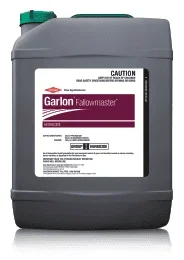
The compound is slightly toxic to ducks (LD50 = 1698 mg/kg) and quail (LD50 = 3000 mg/kg).[2] It has been found non-toxic to bees and very slightly toxic to fishgarlon_fm_drum.webp
Garlon is very effective.
if the stump resists then alternative applications of garlon and roundup will do the trick.
The compound is slightly toxic to ducks - reminds me of a story from my greenskeeper friend about the apprentice who mixed up the ratios incorrectly and went spraying roundup near the golf course dam.
when the ducks started dying they realised there was a problem.:tarjetaroja:
 
we use this-
Triclopyr breaks down in soil with a half-life of between 30 and 90 days. One of the byproducts of breakdown, trichloropyridinol, remains in the soil for up to a year. Triclopyr degrades rapidly in water. It remains active in decaying vegetation for about 3 months.

The compound is slightly toxic to ducks (LD50 = 1698 mg/kg) and quail (LD50 = 3000 mg/kg).[2] It has been found non-toxic to bees and very slightly toxic to fishView attachment 31860
Garlon is very effective.
if the stump resists then alternative applications of garlon and roundup will do the trick.
The compound is slightly toxic to ducks - reminds me of a story from my greenskeeper friend about the apprentice who mixed up the ratios incorrectly and went spraying roundup near the golf course dam.
when the ducks started dying they realised there was a problem.:tarjetaroja:
Thanks for this post .. One thing I notice in people is most don't care about things like tha .. Money blinds morals far too often in so many ways.. What gets me is the if I don't someone else will shit.. :baba:sad truth
 
Some people can't do that. A lot of people can't do it. Not having money for stump removal is common. Not being able to get to your stump is common. Salt, vinegar, baking soda or other concoctions just don't work.

RoundUp kills things well.
Statements like this progress the thinking that organic chemistries don’t work or don’t work as well as synthetic chemistries. Admittedly there are situations where the inorganic or synthetic products do simply outshine the organic ones, usually by limited translocation or longevity sometimes because of cost too. Killing stumps with salt I feel is the latter situation. If one is looking for an organic stump killer salt works well, it does require more labor though. Drill ¾” holes 2”-3” apart around the cambium and fill with salt. Want better results- use a blended salt product like you’d put on sidewalks. Anyone looking to have the organic solution be cheaper (to your wallet) is fooling themselves in the majority of situations. What are the outside “costs” we don’t consider? How much are these cancers, allergies, pulmonary conditions and chronic buildup of these toxins in our environments going to cost the future generations of earth’s inhabitants?

we use this-
Triclopyr breaks down in soil with a half-life of between 30 and 90 days. One of the byproducts of breakdown, trichloropyridinol, remains in the soil for up to a year. Triclopyr degrades rapidly in water. It remains active in decaying vegetation for about 3 months.

The compound is slightly toxic to ducks (LD50 = 1698 mg/kg) and quail (LD50 = 3000 mg/kg).[2] It has been found non-toxic to bees and very slightly toxic to fishView attachment 31860
Garlon is very effective.
if the stump resists then alternative applications of garlon and roundup will do the trick.
The compound is slightly toxic to ducks - reminds me of a story from my greenskeeper friend about the apprentice who mixed up the ratios incorrectly and went spraying roundup near the golf course dam.
when the ducks started dying they realised there was a problem.:tarjetaroja:

Thank you for intelligently looking at our processes and the tools we use to accomplish them. Everyone who does pesticide work should know about LD50: http://whs.rocklinusd.org/documents/Science/Lethal_Dose_Table.pdf
 
Read this. Thoroughly! This explains the discussion why Roundup is toxic and why Monsanto makes us believe it's not.
http://articles.mercola.com/sites/articles/archive/2013/06/09/monsanto-roundup-herbicide.aspx

Thanks Treespotter that's some interesting stuff. I don't think people realize how much Glyphosate is sprayed on the crops we feed to animals and ourselves, sometimes 5-7 courses per growing season. Or how it works on our systems- chronically. I really think the debate should focus on how much we consume instead of how much goes down per acre. Compared to acres on acres of Roundup ready corn our few stumps are miniscule. I also wonder if in the future we’ll consider things toxic to us if they are toxic to the bacteria that live in us. Without that bacteria we just aren’t as healthy. Furthermore the more we realize what healthy soil is, a whole bunch of bacteria and fungi, the less we'll want to kill it.
 

New threads New posts

Back
Top Bottom