Gaffing conifers while pruning

What would you think of a company that represents as an Industry leader with all of the standard certifications and credentials that regularly had their climbers spur up conifers while pruning?

Big Deal or who cares?
 
Not surprised really but no one would make me spur up a tree that is staying. Certs don't mean as much as they should unfortunately.
 
If it isn't going to be removed, it should not be hooked......period. The only exception would be in an emergency situation where life/property are at risk.
 
[ QUOTE ]
If it isn't going to be removed, it should not be hooked......period. The only exception would be in an emergency situation where life/property are at risk.

[/ QUOTE ]

I second that.
 
[ QUOTE ]
What would you think of a company that represents as an Industry leader with all of the standard certifications and credentials that regularly had their climbers spur up conifers while pruning?

Big Deal or who cares?

[/ QUOTE ]
Bid Deal! I think it sucks and we have them here too.
 
It should not be a standard procedure, but spikes have their place when a TIP cannot be safely established. For example, 100+ foot excluded Douglas-fir trees with <3" branches may be spiked if the climber cannot safely secure a line.
 
I cant beleive there is a tree that you cant safely get a line into so you had to spur it. I've never seen one. You could cinch a running bowline onto the tree your describing any day of the week.
 
there has been lots of discussion about srt access into conifers, and several serious injuries when branches have failed. I can get a line into pretty much any tree too, but I might not hang off it. I don't have a problem using spurs to access the odd conifer for pruning when the situation calls for it. Might be a safety issue, might also be a reality check - often have trees to prune for whatever reason, and its obvious they are not going to be around for the long term. What are a few gaff holes in the thick bark when you're talking about a tree that is obviously doomed? i.e. removing deadwood or failed branches that are a symptom of decline that can't be reversed.

Dealing in absolutes like 'never' and 'always' is something a Sith does.

Interesting thread. I'd like to see some data on the effects of gaffs in thick barked conifers.
 
[ QUOTE ]
...often have trees to prune for whatever reason, and its obvious they are not going to be around for the long term. What are a few gaff holes in the thick bark when you're talking about a tree that is obviously doomed? i.e. removing deadwood or failed branches that are a symptom of decline that can't be reversed.

[/ QUOTE ]

That sounds like a heapin helpin o rationalization there...

do you know what phellogen is?
 
I'm not saying its good for the tree - I'm saying there are times when it doesn't matter. No? If you're doing it to everything and think it doesn't hurt the tree you're mistaken, but if you think there aren't times when it doesn't matter, you're Sith-like. Could have any colour helmet.
To answer Zeb's question, I'd say its a big deal if routine spur access was going on, especially where the trees have a lot of value. Even if the tree was in its last year or 2, and it had to be deadwooded.

I'm my neighbourhood, climbers spur everything, conifer or not, and mostly just take them down.

Or we can talk about phellogen?
 
Zeb,
Good on you for pushing the bounds of Douglas-fir rope access, you must be able to charge a lot for that skill. I don't think many people in my area would pay for that service though. I agree with jeff_r when he says that the value of the tree will have an impact on the decision making process and spur-access should never be anything close to routine.

I thought this was a discussion about pruning ethics and not a rope-access pissing contest.
 
This is where the code of ethics pledge comes into play. The company is certified? Does that include a code of ethics agreeent that states they will adhere to a professional standard? Does that standard stipulate restrictive use of spurs? Want to call this company on a policy that flies in the face of what the certification stands for? Here's your chance. You never know, they may even change their ways!
 
We can make it a pissing contest if you want, but like I said, i have yet to meet the tree I am not able to secure a rope in from the ground. The way I got good at doing so was by making the apparently sith like decision not to spur up trees unless I was removing them. I honestly cannot think of any reason, aerial rescue or other that I wouldn't set a line from the ground.

Anything else is justification IMO
 
Let me just clarify. After making the last post, I don't want to come off as extremist here. Jeff, you are an excellent climber and I have a hard time imagining that the scenario you speak of is common. Yes, if the ifs work out just right I suppose there could be a tree that would better be climbed with spurs. But it would be a big bunch of ifs to get me there.

Machupicchu, I feel very strongly that if an arborist is not able to climb trees spurless to prune, then they are needing more training. There are lots of ways to get a line set in the tree you are describing. When I have Douglas-firs with small diameter branches I work a trunk tie, or install my line over several branches, or sometimes even the whole canopy. One time I even climbed the tree 15 feet away and traversed over to rescue a cat stuck in the upper crown. That tree had no branch greater than 1/2 inch diameter! But a 3 inch branch? I would definitely feel comfortable placing the climbing line over such a branch.

Conifers have some difficulties in TIP selection for sure, but we don't do this work because it is easy, but because it is our passion. If you want some tips on setting lines in Doug firs let me know.
 
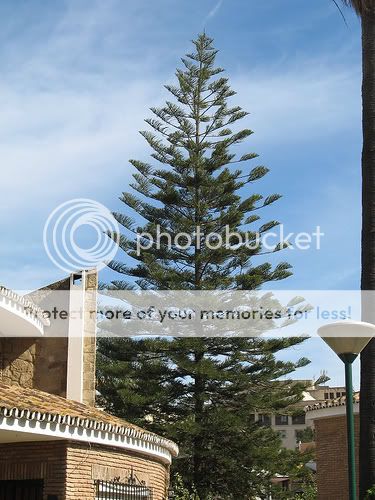
man after seeing this thread, im thinking how many of you practice throwbag techniques enough. we have these pines here in hawaii called norfolk island pines and they have extremely brittle branches no more then an inch or so in diameter. you throw from one side and sail it over 2-3 branches then you throw back over round the other side collecting another 2-3 branches. then tie srt with bowline or double rope it up to the TIP. come on guys, its not that hard. more branches = more support.
norfolk.jpg
 
I see this all the time. Most of the problem is the Arborist is the one selling the work and not doing the work. The company will have low paid climbers and most of them only know how to spur climb.I have stoped and talked to a few guys doing this and aksed why they were spur climbing to prun. There response were there wasn't enough money in the bid to take the time to rope climb the tree's. I know that most of these guy's are working cheep to sell more work and only charge around $100 a tree to prun a 100 foot fir tree so they pick a way to climb that they are fastest at so they can make money. Now this is not right at all and I never spur climb to prun myself. I think that alot of the companys are just looking at the bottom line profit what is the fastest way to get the job done and on to the next one. All of use care for the tree's so we do what is best for the tree customer and make a decent profit while doing it. I cant say that is the case with other companys from what I have seen.
 
[ QUOTE ]
It should not be a standard procedure, but spikes have their place when a TIP cannot be safely established. For example, 100+ foot excluded Douglas-fir trees with <3" branches may be spiked if the climber cannot safely secure a line.

[/ QUOTE ]

Wow. As a fellow arborist practicing in the Willamette Valley, I really can't believe that you would say this. Same as Zeb, I have NEVER seen a doug fir I was not able to efficiently establish a line in. If the branches suck, you can go around a number of them or girth to the trunk. I've gone up safely on the tiniest stubs when the rope was girthed to the trunk with a running bowline.

With all the time I've spent climbing huge and tall forest conifers, I am truly amazed when in 2011 we still have practicing arborists claiming that you need spikes to safely climb a tree. Really? If humans can climb the tallest trees on earth without spikes, then surely you can quit your justifications and leave the spikes in the truck when you're pruning that fir tree in Mrs. Smith's front yard!

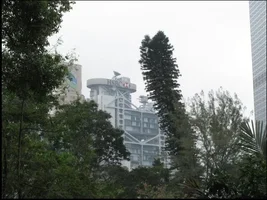
Joshua, You're spot on; I've climbed a bunch of norfolk island pines and couldn't agree more. Although they require a creative approach, they can be quite fun, no? I attached a photo of my favorite, a 150-year-old at Hong Kong Zoological and Botanical Gardens. The tree has no branches for the bottom 45 ft, and only 1" or less above that, with a wicked lean over a cliff. Being at the top of that tree was EPIC to say the least.

 

Attachments

  • 276717-A.heterophylla.webp
    276717-A.heterophylla.webp
    52.8 KB · Views: 148
I might add to the original question. What if you found out that a TCIA accredited company was spiking up trees while pruning?

If you work for or own a TCIA accredited company, please tell me what you think.
 

New threads New posts

Back
Top Bottom