First Timer

Pete's Dr. was in bio-mechanical engineering. The work he was doing was on advanced designs for hip and knee replacements.

Pete didn't have a lot of tree climbing and rigging experience. His knowledge of the science of rigging was high but he didn't have as much of an understanding of the art. It takes lots of flight time to learn the art. Working with another artist helps shorten the learning curve.
 
The trunk split clear through below where Pete was tied in. There were two trunk sections in motion.

The trunk broke at the place where the old lightning wound was located. The pictures that I've seen showed the the trunk fractured horizontally leaving no barber chair.
 
Thanks for the explanation, in hindsight how do you think it could have been handled in order to prevent this specific tragedy?
Did Pete have any other options available other than refusing the job?
Lightning can change the structure and properties of any tree and it would be easy to get caught in a bad way.
 
A pole saw could have been used to skin off more of the limbs above where he made the final cut. If he did that the top would still have been small enough to make a snap cut and pitch it down without rigging.

Another option would have been to set the cuts up like he did. Tie a pullover rope to the spar. Rig the lowering system just like he did. Open face, plunge cut and bring the cut up to the hinge then back to leave a strap. A handsaw could have been use to nick the bark below the back cut. Downclimb the tree and put on some mechanical advantage to rip the top off the spar.

Setting up a pulley at the rigging point and using a lowering device might have worked. But, that would have required the groundie to have a very high level of understanding of a dynamic lower.

I think the best way would have been to use two ropes and a triggered hinge break. Everyone would have been well clear of the drop zone.
 
Tom;
You've been doing tree work for a few years now, any close calls due to structural failure?
Anyone else?
I had a conifer that was bored to a point where it wasn't very safe but it held together until it hit the ground then it split and fractured between the holes.
I pulled the top out of that one from the ground.
 
[ QUOTE ]
Mark, awhile back I remember reading that Dr. John Ball gave some info on relatively high numbers of 40+ yr. old very experienced climbers who were fatally injured on the job....is that something you can present on TB (or maybe you already have and I missed it)?

[/ QUOTE ]

Dr. John has agreed to write an article for us here, but I haven't got it yet. However, one thing I know that he has said in the past is that the majority of deaths are older workers and they are being killed by younger workers! STAND CLEAR!!!!
 
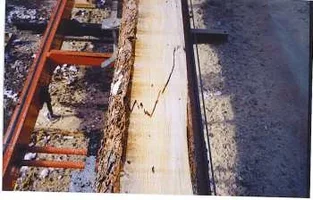
That's the trunk section Mark.
I brought it home and put it on the mill, sometimes you never know just how bad they are!
The tree hammer tested hollow and the bark was coming off it.
I was told it had just died within the last six months.
It fractured from worm hole to worm hole through the entire tree.
 
There have been a few trees that I knew were a bit dicey. I worked very carefully. Then, when the pieces are on the ground I've gotten a real case of the willies.

When I approach these situations the main thing that I remember is to keep things static. Dynamic loads are not good. Since the tree isn't falling apart in front of me then it should stay together as long as I don't move it too much. Of course there are lots of safety precautions being taken along the way.
 

New threads New posts

Back
Top Bottom