First Timer

I met a few MN guys in nashville, wish I could've met you. I'm not suggesting that you measure the decay for nothing, unless it's for a friend. A physical probe will tell you a lot; a mallet can help too. did you see Ellison demo it yesterday?
 
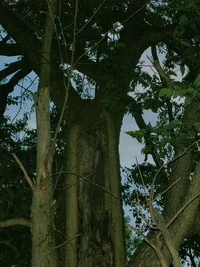
I am going Sunday to climb the tree to take a closer look at the trees decay.

I did not make it to watch the outdoor portion of Wednesdays talk on determining decay amounts. But I have used a mallet before.

Thanks for all of the great advice, and I will keep you posted.
 
Not knowing the extent of those cracks, you may want to strap those areas before climbing it or at least just ahead of your progress while climbing.
Just one little suggestion.
 
I think he means to wrap a strap around them so they don't break under your weight. I've strapped cracked trunks before, but that hackberry looks pretty solid.

But based on my accident record, I should not be dishing out safety advice. /forum/images/graemlins/blush.gif

Thanks for letting us know how your decay detection work goes.
 
Guymayor's correct.
Simply apply the ratchetable type trucker's hauling straps, for example, to any area aroung the trunk to secure it from possibly failing, even if there's the slightest doubt.
Remember that even Dr. Peter Donzelli, who wrote the Arbormaster book, Practical Rigging, died in an very unfortunate accident where a tree failed beneath him.
 
Thanks for the clarification Mark. I simply wanted to encourage not taking any risk if not necessary or especially if we knew of a safer technique to recommend.
Again thanks.
 
Please don't take my post as a disagreement Charlie. I do agree, just don't know if everyone out there understands what truly happened with Pete's horrible accident. That's all. Binders are a great tool to help keep some trees together during their removal. I use them frequently. I don't mean to be aggressive, but Pete was a friend and there's a lot to what happened to him. Sorry.
 
Not at all. I understand completely. It's good that we all know more of his situation that only you can disclose.
Thanks. Sincerely, eventhough indirectly I wanted to honor Pete by encouraging safety, for which among many other things, I'm sure he worked so hard to help all of his fellow arborists with. God Bless You Peter.
 
Sorry it took me awhile to tell you all what my final decision is. I am sure you are all waiting!

After futher inspection I have decided to recomend removal of the tree. The wound shown in the picture is where an old co-dominant stem had broken off a few years ago. As you can see it is starting to seal itself, but there is decay advancing down the main stem. This wound covers nearly 50% of the stem, which is quite a bit. Also you can see in the picture that there is two codominant stems directly above the large wound.

I hate to see the tree go, but I would hate more for the tree to fail and fall onto their new garage.

Thanks everyone for the help.
 

Attachments

  • 30360-FSCN0155.webp
    30360-FSCN0155.webp
    96.7 KB · Views: 55
No I am not going to do the removal. I do not have enough experience to remove a tree this large by myself. Plus there are utility lines running very close to the tree, and I would prefer to stay away from them.
 
[ QUOTE ]
After futher inspection I have decided to recomend removal of the tree. ...there is decay advancing down the main stem.

[/ QUOTE ]how deep? how wide? What were your measurements that you made during your inspection, and what strength loss formula did you use? These decisions are best made with hard data and some use of formulas.[ QUOTE ]
This wound covers nearly 50% of the stem, which is quite a bit.

[/ QUOTE ]how near to 50%? 10 inches out of 25 circumference? The callus tissue, which may be 40% stronger than regular wood, is growing over that wound. [ QUOTE ]
Also you can see in the picture that there is two codominant stems directly above the large wound.

[/ QUOTE ]Codominance can be mitigated by subordination, mutual reduction, cabling or bracing. With that in mind, it does not seem to aggravate the primary defect of decay.
 
Mark,

I was reading this old post...For the sake of learning (ala Awakenings), can you tell me what happened to Peter Donzelli?

I tried to Search TB but didn't have any luck.
 
Pete is with me every day. Hanging on the left side of my monitor is one of the 4" tall action figures that he made into a model of himself :)

Pete was working with a small tree company that was hired to take down a damaged white pine. The tree had been hit by lighning several years previous. Then, it go hit again so the owners decided to have it removed.

Pete had made his way up the trunk, skinning off the limbs as he went. Just a matter of cut and drop the limbs and stubs. No rigging. He had worked his way above the original wound on the trunk and was above it continueing to skin the limbs. When he got as far as he could climb he had reached up to take off as many limbs as possible. Then he set a rope in the very top of the pine. The place where he made his top cut was about 10" diameter. He had made a perfect face cut, then set his lowering point. For some reason he opted to butt-hitch the top off the spar and used a spiralling wrap for friction, no pulleys or friction devices. Then he made a plunge cut and left a small strap on the back. Pete used his handsaw to release the strap.

The top fell forward. As it did, the butt pushed the top of the spar back towards Pete who was attached with his lanyard and climbing rope to the spar. His climbing gear was clear of the running rope. The spar flexed back, away from the original lightning wound. When the top of the tree was stopped by the rigging rope the spar was pulled forward. The tree failed below where Pete was tied in, near the original wound.

The top, Pete and the next section of trunk fell together. The top cut was made at about 60' I think.

Having spent many great hours with Pete, I feel blessed and punished. Not having him here to participate is a real loss.

 
That is a shame, and awful to think of.

I take it he had alot of experience?

What was his doctorate in?

Mark, awhile back I remember reading that Dr. John Ball gave some info on relatively high numbers of 40+ yr. old very experienced climbers who were fatally injured on the job....is that something you can present on TB (or maybe you already have and I missed it)?
 

New threads New posts

Back
Top Bottom