I doubt if this is the right place to post this. But it relates to the carabiner discussion. Please forgive me in advance Bix. I don't mean to hijack or steer your thread.
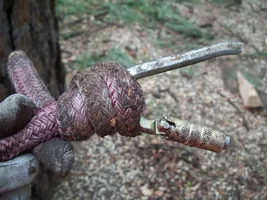
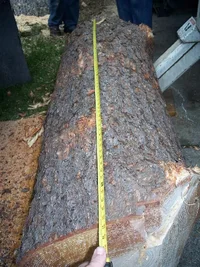
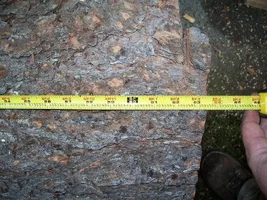
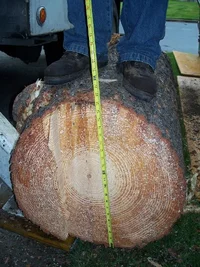
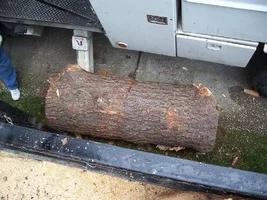
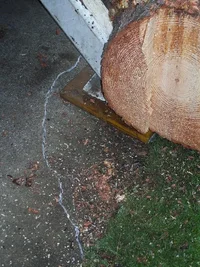
I have experience using a carabiner instead of a bowline while negative blocking. I can't say what will happen in every situation or with every piece of hardware, but I did have a carabiner break. It was a 50 KN steel carabiner tied with a scaffold hitch onto 5/8" stable braid. We were rigging down the spar of a ponderosa pine. I was running the rope on the ground and my coworker was rigging and cutting from the bucket parked in the customer's driveway. After post-accident analysis, we determined there were a number of things that contributed to the failure (there usually is I guess). The rope was getting progressively pitchier and pitchier. This, I could tell, was affecting the way the rope ran around the bollard of the port-o-wrap. I believe we were using two wraps and it was becoming impossible to get the piece to run without shock loading the system. Even when barely holding onto the rope. and one wrap was fast enough to be dangerous to try to control. The decision was made to start cutting a little larger pieces to get the rope to run more (sounds stupid now, after the fact, I know). It worked well for a couple pieces, then it didn't work so well. the carabiner failed. Here is a picture of the carabiner. It should be noted that my coworker was only wrapping and clipping the rigged piece once around ie. no marl or half hitch which (from the way I understand it) is supposed to spread the shock load over two bends in the rope instead of only where the carabiner is clipped. I'm not sure it would have solved our problem. We had some other things going on, but it couldn't have hurt.
The conclusion is that, for wood that size, we should have been using a bowline and not a carabiner coupled with a marl or half hitch. And, when it became apparent that our pitchy rope was causing shock loading problems, we should have swapped it out for a different rope or even just swapping ends of the same rope might have taken care of it. Also, we should not have decided to rig larger pieces. When encountering difficulty, it seems the answer is almost never "go bigger". Oh well, hindsight is........