
Navigation
Install the app
How to install the app on iOS
Follow along with the video below to see how to install our site as a web app on your home screen.
Note: This feature may not be available in some browsers.
More options
You are using an out of date browser. It may not display this or other websites correctly.
You should upgrade or use an alternative browser.
You should upgrade or use an alternative browser.
Dead (and Undead) Wood
- Thread starter tom_otto
- Start date


guymayor
Branched out member
- Location
- East US, Earth
Daniel come up in April and put your time where your common sense is. Show us how to design the experiment!
And see some surprising results.
4” was a maximum; few were that big.
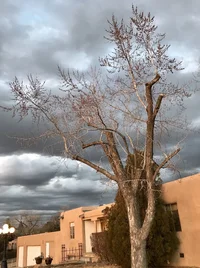
The attached Siberian elm probably had over 50% removed. Based just on the looks of an after shot, that was too much.
But this thread was about dead wood, so Daniel if you want to show some of your work and start a new thread please do.
And see some surprising results.
4” was a maximum; few were that big.
The attached Siberian elm probably had over 50% removed. Based just on the looks of an after shot, that was too much.
But this thread was about dead wood, so Daniel if you want to show some of your work and start a new thread please do.
Attachments

Daniel
Carpal tunnel level member
- Location
- Suburban Philadelphia (Wayne)
I don't need or particularly care for participating or designing an experiment. I know how to prune trees. I don't need to prove it to a group of scientists. I just explained how to do it. To me it's common sense. I don't need to experiment, when an explanation will do. If an explanation isn't good enough for them or anyone reading this thread, then we are working on different levels. I don't have any interest in meeting them at their level.
If the scientists asked in a respectful way, I would be inclined to help, but they're not going to do that. So I 'll just keep calling it like I see it.
If the scientists asked in a respectful way, I would be inclined to help, but they're not going to do that. So I 'll just keep calling it like I see it.
Daniel
Carpal tunnel level member
- Location
- Suburban Philadelphia (Wayne)
Right Daniel, there's nothing you can learn from the principles of physics and engineering as well as plant biology.
That's the height of absurdity and pure folly.
I'm out.
I already understand the principles of physics involved in falling and rigging trees, and plant biology to the extent that it effects the way trees should be pruned. I understand them and their practical application better than ANY scientist... In other words there is no scientist in the world that can go out an perform at a level anywhere close... That may sound egotistical, but lets look carefully at the statement.... DO you think any scientist that studies a given sport can perform better than the sport's top athletes... It's not even close.. And there is nothing egotistical about it.. It's just common sense...
Its not that I haven't learned anything from science (that would be absurd.... you've mis-interpreted my statements). It's that I already know what I need to know. (for the most part). So the scientists have been fumbling around for decades and still haven't figured out how to prune a tree.... I HAVE... It's pretty simple actually... no live cuts on the main stem(s), or if the client insists only smaller cuts on the main stem(s), absolutely no live cuts over 4", even if you have to leave a stub, leave most epicormic shoots (sprouts), they are especially important to leave if they are near an existing wound, and if the client insists, then rather than remove all sprouts, just thin and shape, with the long term goal of having the sprouts develop into small limbs. It's also possible to leave a few stub on an initial heavy prune with the goal of letting those stub fill up with sprouts, rather than the trunk. Then 1-3 years later, the tree will have normalized its growth, the stubs that are loaded with sprouts can be removed with a clean target cut (or close to a target cut), without worrying about the tree filling up with new sprouts (this is especially helpful on ornamental fruit trees that require sever reduction in size). That is the best way to prevent an ornamental tree from filling up with sprouts after a hard prune.
and reduce mature hardwoods by making smaller cuts at the branch tips, especially on long, heavy over -extended laterals. If the limbs are over-extended heavily, or have structural defects they can be reduced as needed, up to 90% (leaving only a stub) on any individual limb, with the goal of minimizing overall loss of leaves, so that you can hit several lateral branches very hard, if needed, but then go light on the rest of the tree. In general leave the center of the tree and the uprights alone NO "CLEANING". Unless there are structural defects, let the tree grow up, just bring in the sides. If a tree has structural defects, it may be necessary to make large reduction cuts on the uprights, but in general try to avoid it, especially on certain species. When pruning to reduce stress on structural compromised trees, take the weight from the most leveraged place possible, which are the branch tips, especially the tops. Depending on the degree of the structural issue, and the risk of damage should the tree fail, you may need to go very heavy on the reduction cuts. Knowing how sensitive the species is is important, so you don't kill the tree. There are many species that can handle the European style 20' reductions, but many can't. So only take off as much as the tree can handle. No formula, just experience and instincts..
And NO ELEVATION except as absolutely required for human needs, The goal is to keep shade on the trunk and roots. So it is especially important to leave shade on the western and southwestern sides of the tree. if there are no other trees shading the trunk and roots, its very important to keep as much shade on the root and trunk as possible, with certain species being more sensitive than others.
And NO target cuts on anything big (roughly 3" or more), unless the target is perfectly clear. Always leave a stub long enough to be absolutely certain the branch protection zone is not violated. And if you know you'll be back to prune the tree again in the next few years, you can leave a sizable stub, 6 or 8 long, or even longer. If the stub sprouts, it can be pruned to train the new growth. if not, finish the cut once the limb is visibly dead and easily distinguished from the live collar on the trunk.
When making small cuts on the branch tips, 1" and under, target pruning really makes no difference. It's just quicker and easier to make the cuts some distance away from the branch union, and leave a small stub. this will have zero effect on the tree's health.
That's a quick primer... there is a little more to it, but those are the basics

Redtree
Participating member
- Location
- Mt. Albert
ok I'm for science and common sense. I think everyone is. but is there a possibility that in assessing trees in particular that there is some science work to do, in order better direct practitioners? could it be that science hasn't yet invested enough interest in the field because trees aren't a priority. they are actually pretty safe overall so more attention is given to things like car crash tests and medical advancement? When I look at some of the extraordinary technology out there, I see our field in the dark ages, relatively speaking. Or perhaps I'm just not looking closely enough at the work of a particular scientist?
Sent from my SM-G930W8 using Tapatalk
Sent from my SM-G930W8 using Tapatalk

Redtree
Participating member
- Location
- Mt. Albert
yes I think we know that too. but it got taken to a different place, not totally derailed. The question of science and how we don't have good science to show if deadwooding actually helps the tree. we also need better science on reduction. but yes we should get it back on track.
Sent from my SM-G930W8 using Tapatalk
Sent from my SM-G930W8 using Tapatalk
Daniel
Carpal tunnel level member
- Location
- Suburban Philadelphia (Wayne)
Free your mind Bro..Has your great awareness and understanding failed to notice this is a thread about dead-wood?
Its a free country

RopeShield
Carpal tunnel level member
- Location
- Ontario, Canada
The science says wood/deadwood is a wick. It absorbs or draws up moisture and it's solutes. It is easy to see removing dw is beneficial to the health of the tree by decreasing the area of water loss.
Why is this still being argued?
Why is this still being argued?
RopeShield
Carpal tunnel level member
- Location
- Ontario, Canada
for your edification.
May help you understand what is happening when climbing and rigging in wet trees or dry trees or dead trees and live trees.
https://www.woodproducts.fi/content/moisture-properties-wood
May help you understand what is happening when climbing and rigging in wet trees or dry trees or dead trees and live trees.
https://www.woodproducts.fi/content/moisture-properties-wood

treehumper
Carpal tunnel level member
- Location
- Ridgefield, NJ
Daniel, you keep proving the point that one doesn't trump the other. "Its not that I haven't learned anything from science (that would be absurd.... you've mis-interpreted my statements). It's that I already know what I need to know. (for the most part). " This is not, I repeat, not, an either or. Scientist aren't there to do, their job is to solve the why. They'll need to defend their findings against others who have a different theory. Look at RopeShield's link and you'll see the difference. You talk in generalities and vague terms, while the scientist needs to be able to put numbers to it in support of their contentions. In turns, it's stumbling towards the light for sure.
What you may be taking as disrespect for your experience is the need for them to quantify results. They hear your observations but are not offered any supporting evidence that's portable. Your experience lacks the documentation. What you've been doing is a long term experiment without the collecting data that could then be defined as theory. Instead you go from observation to conclusion and the only rationale is "trust me I've been doing this for years".
The sports analogy is laughable. The top athlete's have been improving on performance if you look at the continuing betterment of world records due to scientific observation, quantification and conclusions. Is that simply because the top athletes ate more Wheaties, ran more, pumped more iron, born with better genes? The scientist may not have the physical make up to take full advantage of the science. What they can do is replicate the results limited by the variables inherent in the external conditions. Thus we see that great athlete triumph in one set of conditions and yet be defeated in another. Just look at training centers of today, they are not the local Planet Fitness.
As Isaac Newton said, "If I have seen further than others, it is by standing upon the shoulders of giants."
Respect the giants....
What you may be taking as disrespect for your experience is the need for them to quantify results. They hear your observations but are not offered any supporting evidence that's portable. Your experience lacks the documentation. What you've been doing is a long term experiment without the collecting data that could then be defined as theory. Instead you go from observation to conclusion and the only rationale is "trust me I've been doing this for years".
The sports analogy is laughable. The top athlete's have been improving on performance if you look at the continuing betterment of world records due to scientific observation, quantification and conclusions. Is that simply because the top athletes ate more Wheaties, ran more, pumped more iron, born with better genes? The scientist may not have the physical make up to take full advantage of the science. What they can do is replicate the results limited by the variables inherent in the external conditions. Thus we see that great athlete triumph in one set of conditions and yet be defeated in another. Just look at training centers of today, they are not the local Planet Fitness.
As Isaac Newton said, "If I have seen further than others, it is by standing upon the shoulders of giants."
Respect the giants....
guymayor
Branched out member
- Location
- East US, Earth
I don't need or particularly care for participating or designing an experiment. I know how to prune trees. I don't need to prove it to a group of scientists. I just explained how to do it. To me it's common sense. I don't need to experiment, when an explanation will do. If an explanation isn't good enough for them or anyone reading this thread, then we are working on different levels. I don't have any interest in meeting them at their level.
If the scientists asked in a respectful way, I would be inclined to help, but they're not going to do that. So I 'll just keep calling it like I see it.
Daniel these are my research projects so I am the scientist and I asked you respectfully. Got a banana in your ear? Or too busy worshiping Murphyism to hear?
Your explanation was not good enough. No explanation is! I agree with most of your primer, for trees in your region. But there is a lot about other trees that you lack knowledge about--like all of us!
I predict the pin oaks that got 20' off the top are responding sustainably. Come see for yourself!
Redtree
Participating member
- Location
- Mt. Albert
I tried to share a web article but keep getting sent to chatroom. anyway if you Google 'the economist how science goes wrong' you'll find how science may be able to improve in our field as well as others. I love science myself and I feel that it could be doing better for me. who's fault is that? I'll start with mine. I could be communicating better as Guy once tried to push me years ago when I missed chance to get an article in after my team presentation at isa. it is not what science can do for you but what you can do for science. as arborists, perhaps we need to start asking better questions.
Sent from my SM-G930W8 using Tapatalk
Sent from my SM-G930W8 using Tapatalk
RopeShield
Carpal tunnel level member
- Location
- Ontario, Canada
Natural transition from live wood to Dead wood occurs because of a defeciency or disorder or injury.
Light, water, H2O, nutrients, chemical, mechanical, what am I missing.
Removal of the deadwood is removal of a part of the tree that is no longer a positive contributor. Meaning it cannot produce photosynthates and other biochems and potentially transport any stored biochemicals.
The cycle ofnurtrient transport is interupted but the movement of H2O and some solutes will continue.
Therefore it is more important to remove deadwood if health is a more serious concern.
Dw can always be placed in a crotch or secured into a tree if that is a concern.
Leave a whole tree, or just parts by tieing it or bracing it back.
Light, water, H2O, nutrients, chemical, mechanical, what am I missing.
Removal of the deadwood is removal of a part of the tree that is no longer a positive contributor. Meaning it cannot produce photosynthates and other biochems and potentially transport any stored biochemicals.
The cycle ofnurtrient transport is interupted but the movement of H2O and some solutes will continue.
Therefore it is more important to remove deadwood if health is a more serious concern.
Dw can always be placed in a crotch or secured into a tree if that is a concern.
Leave a whole tree, or just parts by tieing it or bracing it back.
treehumper
Carpal tunnel level member
- Location
- Ridgefield, NJ
As I learn more I realize that what I'm actually learning is better questions to ask.it is not what science can do for you but what you can do for science. as arborists, perhaps we need to start asking better questions.
treehumper
Carpal tunnel level member
- Location
- Ridgefield, NJ
Here's the article: http://www.chem.ucla.edu/dept/Faculty/merchant/pdf/How_Science_Goes_Wrong.pdf
It points to the usual suspects that undermine most anything. That being, as something proves successful more people rush to get a piece of it, whether its the career, or fame, wealth and success. Financial backers see the opportunity to generate huge wealth with the right find, publishers see ever increasing revenues from eyeballs drawn to their articles (the publish or perish mantra also applies to the publishers), then the vicious cycle begins with every more noise in the system.
As competition grows it becomes harder to be seen in the crowd, investors start to become savvy about just how they can make money without actually having to produce anything. The story is just as, if not more valuable than the results. That's a problem seen in the stock market. All investors need is a good story to move the stock. They will play the uptick and get out before the buzz dies and the stock drops. Money is made and on to the next. That's a game that becomes very lucrative and this article suggest is happening in the realm of scientific research.
It's not a condemnation of science but the industry behind it. Think of it in terms of riding one of those false positives. It may be the sexiest story out of the whole lot and gets the most press. Those with skin in the game reap the rewards and time there departure with the ultimate failure of the research to replicate the initial results.
Science in its purest form is a search in the vast darkness with a match.
It points to the usual suspects that undermine most anything. That being, as something proves successful more people rush to get a piece of it, whether its the career, or fame, wealth and success. Financial backers see the opportunity to generate huge wealth with the right find, publishers see ever increasing revenues from eyeballs drawn to their articles (the publish or perish mantra also applies to the publishers), then the vicious cycle begins with every more noise in the system.
As competition grows it becomes harder to be seen in the crowd, investors start to become savvy about just how they can make money without actually having to produce anything. The story is just as, if not more valuable than the results. That's a problem seen in the stock market. All investors need is a good story to move the stock. They will play the uptick and get out before the buzz dies and the stock drops. Money is made and on to the next. That's a game that becomes very lucrative and this article suggest is happening in the realm of scientific research.
It's not a condemnation of science but the industry behind it. Think of it in terms of riding one of those false positives. It may be the sexiest story out of the whole lot and gets the most press. Those with skin in the game reap the rewards and time there departure with the ultimate failure of the research to replicate the initial results.
Science in its purest form is a search in the vast darkness with a match.
Last edited:
Transition from active sapwood to ripe/heartwood also. Ray parenchyma may go deeper than we give them credit for however.what am I missing.
If that xylem has been plugged with gums, resins, tyloses, and/or other various secondary metabolites, how much water or air movement is actually going into deadwood from living sapwood? I dont know but I suspect very little. Or do you mean when it's spongy when decayed?The science says wood/deadwood is a wick. It absorbs or draws up moisture and it's solutes. It is easy to see removing dw is beneficial to the health of the tree by decreasing the area of water loss.
Why is this still being argued?


