Climbing above decay

Neill

Carpal tunnel level member
Location
Michigan
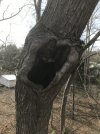
I could use some opinions on climbing this tree. It’s a mature red maple (about 38 dbh, maybe 75 feet to the tips) with lots of the typical tear outs and damage. The worst spot is about 30 feet up.
I’ve climbed this tree a few times but inspected this decay pocket again yesterday and came down afterwards- feeling uncomfortable to go on. I had load tested it and was tied in well above this decay. I want to slowly reduce this lead with plans to eventually either remove the tree or begin retrenchment pruning. The lead also has about 20 feet of lean
My question is- would you climb and work above this? Or does anyone have any suggestions on how to get comfortable in a situation like this? - there is not a good alternate tie in unfortunately.

E43B0281-E9E7-4B5D-A67F-4D63A9A5F4DE.jpeg6DB59FB5-27D3-48A8-8FB2-1A78B32FE35B.jpegEDF668F7-AB79-44C4-AC5D-AA5BA88207BE.jpegD12D9BC8-E92C-4E78-A6AC-6D1C25D0FFB2.jpeg
 
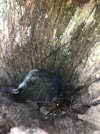
Looks like silver? They always have bananas huge hollows in them whenever I see them. Cute critter alert!! Have found they are more solid than other species with similar decay. Typical risk mitigation would be having a second tip in the other side of the tree (even though it looks like it will be flat or below your work area), avoiding rigging, or rigging into adjacent tree, and taking things small.

And how it feels when you’re in it on rope- the kind of bounce it has- that gives you a lot of information. Trust your instincts. It may be too dangerous to climb, obviously no one on this forum can tell you definitively what the risk level is for sure.
 
Learning and being comfortable in trees like that comes in increments...think 1, 2,3...not orders of magnitude...think 10, 20, 30. Having a mentor with the knowledge and decades of experience is key.

Dr, Pete Donzelli was killed working in a tree with decay.

Using a crane, lift or even scaffolding might be the solution rather than climbing. It looks like doing any rigging on itself is out of the question.

Theres no shame if you choose not to do the job. You might hire a sub company for the takedown portion and your company does the cleanup. Be there on removal day for the education.

Are there any other trees around to use as basis for a zipline or high line system so that the tree isnt loaded.
 
Would anchoring your rope to the straighter lead and redirecting on the leaner (to get most of the force on the leaner to be compressive) be possible? Or even basal anchor, over the straighter lead, then over the leaner?

That could make the resultant force vector more favorable, but if I didn't feel that was adequate, I'd punt and go to Plan B.
 
Another suggestion is to put your rigging line through multiple pulleys spaced similar to the eyelets on a fishing pole. This allows you to dispersed the bending force on the trunk.
Beat me to it. I have tied leads together to help feel comfortable above rot. Just taut, like a temp cable. It’s lacking leaf load so that’s good, but also means more diligence needed to spot dieback etc. I think about my weight vs a crown of leaves during a rain storm to chill out. Srt redirects abound in that tree.
 
I could use some opinions on climbing this tree. It’s a mature red maple (about 38 dbh, maybe 75 feet to the tips) with lots of the typical tear outs and damage. The worst spot is about 30 feet up.
I’ve climbed this tree a few times but inspected this decay pocket again yesterday and came down afterwards- feeling uncomfortable to go on. I had load tested it and was tied in well above this decay. I want to slowly reduce this lead with plans to eventually either remove the tree or begin retrenchment pruning. The lead also has about 20 feet of lean
My question is- would you climb and work above this? Or does anyone have any suggestions on how to get comfortable in a situation like this? - there is not a good alternate tie in unfortunately.
View attachment 79497View attachment 79498View attachment 79499View attachment 79500
Looks really doable, from the photos, and not familiar with the species in the least.

Three options I see,
1) two climbing systems, one in each lead. When I do this with sketchy stuff, I attach both systems to one ring on my bridge. If something were to fail, the climber wouldn’t be in a pinch point, or the saddle wouldn’t be pulled apart. You’d be stuck.
2) a floating anchor/tip between the two leads
3) tip in the back lead, and swing over the the nasty one. On super sketchy stuff I go with a shortish rope laynard and a loose Prussik. I take the stopper knot out of the tail, and tie it just so I can lean into it with some minor creep.
Rather take a huge swing risking that, vs being compressed or going down with the ship.
 
And how it feels when you’re in it on rope- the kind of bounce it has- that gives you a lot of information
It felt solid enough the other day. I think part of my discomfort came from the idea of moving further into the lean. It gave me pause and I think I’m glad I decided to regroup and post this to help think about another way. The decay pocket I photographed has literally 0 heartwood. The photos make it look better somehow!
 
Rather take a huge swing risking that, vs being compressed or going down with the ship.
I think you bring up some excellent points. Having a rope well-attached (e.g. choked) to a questionable TIP and yourself could lead to some bad outcomes in the event of a failure. Worth thinking about all the possibilities. I can envision scenarios where rigging that appears to provide additional safety/redundancy could result in increased injury potential should a failure occur.
 
Learning and being comfortable in trees like that comes in increments...think 1, 2,3...not orders of magnitude...think 10, 20, 30

Dr, Pete Donzelli was killed working in a tree with decay.
This does feel closer to a 10,20,30 type scenario for me.

I did some light reading on dr. Donzelli, thank you for bringing his career to my attention. Truly a situation I do not want to repeat.
 
Another suggestion is to put your rigging line through multiple pulleys spaced similar to the eyelets on a fishing pole. This allows you to dispersed the bending force on the trunk.
I’ve yet to try that one but would like to at some point.
 
Beat me to it. I have tied leads together to help feel comfortable above rot. Just taut, like a temp cable. It’s lacking leaf load so that’s good, but also means more diligence needed to spot dieback etc. I think about my weight vs a crown of leaves during a rain storm to chill out. Srt redirects abound in that tree.
The leaves being off is definitely a good thing. it’s got a full canopy for sure- very little dead wood. I’m glad you commented on that. Tying the two leads to together in some fashion is a helpful suggestion
 
Looks really doable, from the photos, and not familiar with the species in the least.

Three options I see,
1) two climbing systems, one in each lead. When I do this with sketchy stuff, I attach both systems to one ring on my bridge. If something were to fail, the climber wouldn’t be in a pinch point, or the saddle wouldn’t be pulled apart. You’d be stuck.
2) a floating anchor/tip between the two leads
3) tip in the back lead, and swing over the the nasty one. On super sketchy stuff I go with a shortish rope laynard and a loose Prussik. I take the stopper knot out of the tail, and tie it just so I can lean into it with some minor creep.
Rather take a huge swing risking that, vs being compressed or going down with the ship.
I don’t want to go down with ship for sure. Thanks for the lanyard suggestion that is something I’ve wondered about before- a breakaway / emergency type system
 
Would anchoring your rope to the straighter lead and redirecting on the leaner (to get most of the force on the leaner to be compressive) be possible? Or even basal anchor, over the straighter lead, then over the leaner?

That could make the resultant force vector more favorable, but if I didn't feel that was adequate, I'd punt and go to Plan B.
Maybe, but the entire tree is uniformly full of defect- the other side is full of regrowth on top of old tear outs.
 
I've used 2×4"s, lag bolts and ratchet straps to strengthen a trunk that had been used as a back stop for target practice. Decay had set in, but there was decent would wood around the perimeter. The added boards gave the compromised wound area rigidity and me pease of mind.
 
Another suggestion is to put your rigging line through multiple pulleys spaced similar to the eyelets on a fishing pole. This allows you to dispersed the bending force on the trunk.
I may be speaking out of my backside since I've never used the fishing pole technique, but my understanding is the chief benefit is that the tension in one leg of rope (of the 2 legs of rope in the distal pulley) is directed along the branch or trunk, putting it in compression. Then, only the leg of rope with the load attached exerts a bending force.

I guess I'm thinking the fishing pole technique converts some bending force into compressive force (via redirects), rather than dispersing the bending force. In what I've seen online, in many cases the intermediate pulleys are more for the convenience of rigging down subsequent pieces, as the pulleys which don't provide much change of direction aren't doing much.

@evo has me thinking about failure scenarios with a fishing pole arrangement - additional chunks of wood falling that are attached to your rigging line with a pulley and sling.
 
I may be speaking out of my backside since I've never used the fishing pole technique, but my understanding is the chief benefit is that the tension in one leg of rope (of the 2 legs of rope in the distal pulley) is directed along the branch or trunk, putting it in compression. Then, only the leg of rope with the load attached exerts a bending force.

I guess I'm thinking the fishing pole technique converts some bending force into compressive force (via redirects), rather than dispersing the bending force. In what I've seen online, in many cases the intermediate pulleys are more for the convenience of rigging down subsequent pieces, as the pulleys which don't provide much change of direction aren't doing much.

@evo has me thinking about failure scenarios with a fishing pole arrangement - additional chunks of wood falling that are attached to your rigging line with a pulley and sling.
I would say that pulleys along the spine in these setups actually do more than you’d think. Single x rings do even more, and are greatly preferred.

The fishing pole technique in rigging is in my opinion a standard to bring to almost any removal. This job one would assuredly call for its use, if absolutely required to rig out of the tree. Think about bombing or rigging into another tree.
 

New threads New posts

Back
Top Bottom