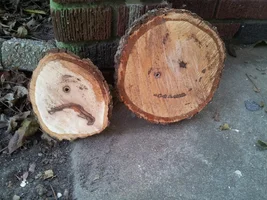
I thought it would be funny if Guy was teaching one of his classes, explaining how trunk tissue can be dissected, and that we can visually inspect clues that the tree is under stress.
Then he could hold up these slices and say,
"As you can see here, this tissue is happy. However, this tissue is not feeling well."
Doesn't look that happy; it's got a black eye! But with wounds that large, no tissue would be all that ecstatic.
What would the odds on those wounds closing be?
Re pruning classes, a hefty price tag on the pruning workshop at Expo; last year's talk might have perked up some interest--response growth?. Anybody see that? 9:00 am - 4:30 pm A-Z Pruning $260 TCIA Member $195
Anyway Guy, I thought it would be a good idea that could loosen everybody up at one of your classes.
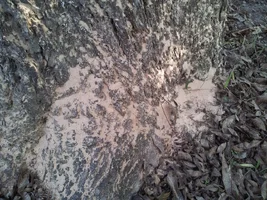
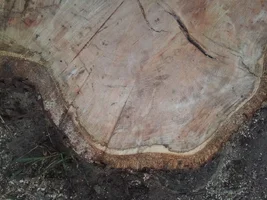
I have seen lots of these in the past while doing tree work, but this is the first time I brought them home for the kids to see. This pecan is loaded with borers. Piles of frass at the base. All kinds of crazy black streaks in the tissue.
I believe there were a few limbs that broke, nothing major, but less than half the crown is showing obvious signs of stress. Landlord put 2 and 2 together, saw the broken branches, the frass at the base, and a nice shroom at the root flare and called us. Easy permit to get on that one.
None that attack live wood; most are scavengers on dead wood. Borers and fungi and signs of stress (?) in the crown may or may not be reasons for removal; they might be localized, reversible, or outgrown by the tree in time.
But if the owner didn't want it, then you got some good firewood anyway.
That fine frass is from 'powderpost beetles', Lyctinae sp., very thorough scavengers so yes some other cause had that one cooked and served to the bugs to finish off; good call.
Thanks Guy. The beetles we saw looked similar but had a forked or "bifurcated" tail (there's a $2 word for ya) like an earwig. Could those have helped?