Base Tie Rescue System/Kit

bonner1040

Branched out member
Location
Boston
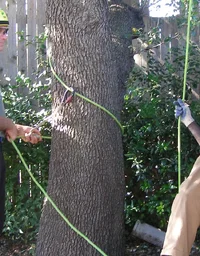
Here is video detailing and demonstrating a safe, simple, compact, and affordable rescue system.

http://www.youtube.com/watch?v=byhVP7f6CwI


This system can be used to lower an injured climber in the event of an emergency. With proper setup it can be used for both SRT and DRT climbing systems.

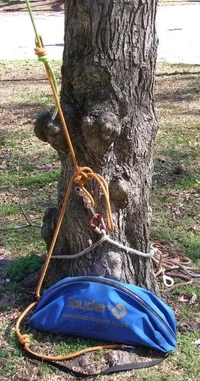
The lightweight components in this system make for a compact, easily stow-able package that is quick to deploy while still being appropriately rated for the application. Using appropriate components you can utilize this technique with equipment you already have but may find that 12-14mm ropes do not create as streamlined of a kit.

Complete Kits available soon.

100' or 200' of 10mm Teufelberger Sirius Reep Schnur with a sewn eye on one end
https://www.treestuff.com/store/catalog.asp?item=2071


1x Climbing Technology Rescue 8
https://www.treestuff.com/store/catalog.asp?item=1351

1x small Weaver Rope Bag

2x Climbing Technology Oval Carabiner
https://www.treestuff.com/store/catalog.asp?category_id=130&item=1977

1x Phoenix "Red & White" Hand Pruner
https://www.treestuff.com/store/catalog.asp?category_id=48&item=2035

1x Weaver Pruner Holster
https://www.treestuff.com/store/catalog.asp?category_id=48&item=1234


(Availiable with Petzl Rig Self Braking Descender or Petzl GriGri2 substituted for Rescue 8
https://www.treestuff.com/store/catalog.asp?item=1549
https://www.treestuff.com/store/catalog.asp?item=1730
 
Nick
only issue I see is that climbers are lanyarded in when using a chainsaw and a lot of the time when using even a handsaw so you won't be able to lower them with your system. don't get me wrong it would be a good idea to put the butterflies in and if a climber was lets say limbwalking or took a big swing and slipped and was injured or knocked unconscious well then your system would be the fastest available. I think it has good merrit and could be worked into a more complete system. Kudos

Todd
 
Thanks Todd,

You are absolutely right, like any safety protocol, this concept will not protect from or apply to every hazard we face. For SRT climbing, integrating the additional setup takes almost no time and the additional margin of safety is a great value proposition. For a DRT system, used when appropriate, it can still make an effective tool for giving some piece of of mind to a climber who may not have the most experienced crew members.

While chainsaw injuries are predominantly while lanyarded in, I would think that a large amount of injuries involving an unconscious climber happen during ascent or as a result of a fall or swing. In certain situations with chainsaw injuries it makes sense that the climber may be able to unclip a lanyard but not lower themselves. Of course if a climber is pinned between a rigged load and the tree you may not be able to execute a ground run rescue either.

Just like a hammer wont drive a screw, and a screwdriver wont pound a nail, the base tie rescue has its place and specific application. It sure would be a shame to need it and not have it setup though.

Thanks for the feedback!
 
What is the real benefit of using a all these additional components in a base tie rescue system compared to a long or second rope tied to the climbline, then some trunk wraps, and some knots which can be untied under load (tensionless anchor)? Any knots will pass on a trunk wrap, there is likely already a climbline available and bagged up, its multipurpose (can climb on it).
 
Nick
Agreed, and I believe its benefits out weigh any disadvantages. prolly should throw in a laminated card with the simple instructions depicted in pictures and a "CUT HERE" ribbon to tie on the climbers line and just preset on the rope at the beginning of the climb.

Todd

really just a colored ribbon that its identity would be understood once the card was read ;-)
 
Sean,

Compared to using trunk wraps, an extra line, or a lot of other options this is quicker and more streamlined. Installing 2 alpine butterfly knots takes 30 seconds and you are ready to go up the tree. Using dedicated hardware ensures that the equipment will be ready when you need it and located where you left it.

My kit stays in my climbing bag all the time, if a crew member needed to rescue me my bag sits close to the tree I am working in. Comparing 200' of Reep Schnur to 200' of any standard line you will see a huge difference in size and bulk.

The TreeStuff system really shines because the setup doesn't require any additional components or hardware. Setting up a more complex system on 2 or 3 trees every day, over the course of a year, is a huge time sink for what is hopefully an eventuality that never comes to pass. Its also less expensive and will last a very a long time.
 
I do think this kit is useful and has its place.

My standard basal anchor is a 20' rope with a steel ring. I pass the rope around the tree, and a bight through the ring. I tie an alpine butterfly. After my SRT rope is set, I attach the long rope to a rescue 8 which is attached to the butterfly with a biner, the rope is lock tied. This is comparably simple in gear and setup time, this is how I was taught to SRT. A prussic could easily be added to make the system whistle test proof.

The main advantage I see in this kit is the known extra length of rope it has. My SRT rope is 300' so I know I can go to a minimum of 100' and still be ground rescuable, though I am aware that many people wouldn't want to bother with a 300' rope.
 
Cutting rope, anytime, really concerns me.

Given the tension, anxiety and urgency of a rescue situation I feel there is too high a chance of something going wrong.

Balancing the expediency of cutting the rope compared to having one of many other solutions doesn't make sense to me.

If your goal of having less rope and gear involved is the key then you haven't succeeded. Many more components and more training required to make this system work.

Using a trunk wrap with a belay/anchor includes no more components. There's no confusion for the rescuer either since the climber's rope always has a brake on it.

Using an F8 without a backup doesn't pass the Whistle Test.

My vote is two thumbs down.
 
I just use a basal tie off with a rig , it seems really safe and simple to me. No cutting and I have employees that are trained on how to lower me if that is needed.
 
My goal in finding a setup was least amount of setup. Having the kit poses no additional required steps. Tying the butterfly knots is as simple as it gets. Given the amount of actual base tie rescues performed compared to the amount of time setting up components for each climb its a big time loss.

In the unlikely event that I need a base rescue, cutting the rope with a set of hand pruners is the least of my concerns. Where I work we dont have a revolving door of unqualified people. The steps in the process are not unfamiliar to a professional arborist. No working arb that has seen the video has expressed to me that they were unclear on how to do it if necessary.

I am not abreast of current whistle test guidelines but a soft locked figure 8 with a trained & competent hand on the brake line more than passes the 'use it to save my life' test.

This isnt meant as a mandate of how anyone should work, or what to do. This is what I do when I work and it makes me feel better.

This isnt a good setup for a beginner climber, a rec climber, or someone with a high chance of 'needing' rescue. This is for experienced climbers who dont expect to need a rescue and would otherwise not use a lower-able system because of the time and effort involved in setup.

The rig, figure 8, and other lowering devices etc all perform the same task, each with their own strengths and weaknesses. IMO additional hardware either limits the length of lowering, requires additional ropes to be carried to the tree, puts additional weight on the downhill side of your rope, and ultimately is just more link that isnt necessary.

Ultimately my recommendation would be to do whatever makes the user most comfortable.
 
The whistle test is nothing new. I came across it many years ago while I was learning about SRT.

During that time I read a LOT of books and information from rope rescue. My basic principles came from what this group of climbers had been doing for many years. There has been a LOT more training and thought given to rope rescue outside arborculture than inside.

Here's the run down on the Whistle Test.

When a rescue team is working together, or even a solo rescue, but this isn't likely, the raising or lowering system is setup under the eye of the trainer. At any time during testing the trainer may blow a whistle. That's the signal for the rescuers to let go...NOW! Since the rescue systems are setup with prusiks, many times doubles, or some other hands off belay system the test is to see how much slop or play has been introduced into the rescue system. The standard may be as little as 6" of slip or drop before the participants are failed.

In the case of doing a lower/belay with an F8, even a double wrap on a rescue 8, the victim will fall...likely to the ground...fail.

With a trunk wrap I never need more rope added to my system. If for some reason I'm going to need more than 200' of rope in the tree I'll tie two ropes together and have the union knot above the trunk wraps. With some easy planning I can assure that the knot won't jam on a limb or stub. I can't even recall ever needing more than 200' of rope above my trunk wrap.
 

Attachments

  • 367485-CRTrunkwrapbelay1.webp
    367485-CRTrunkwrapbelay1.webp
    191.6 KB · Views: 57
Two ropes.

NOTE...at the time I was using a rack for the belay. This is a great tool but has a few limitations that a trunk wrap solves better.

This pic was taken a few years ago.
 

Attachments

  • 367487-Anchorw-tworopescs.webp
    367487-Anchorw-tworopescs.webp
    85.6 KB · Views: 62
Correct my if I'm wrong Tom, but that second picture as opposed to the first does not pass the whistle test, although with a prussic tied above the rack it would.
 
Son Shine,

Like I said, that pic illustrates tying two ropes together and is NOT what I've used for a base anchor for a few years.

That said...the reason that I liked using the small rack was that it had a LOT of friction in it. If the victim was lowered slowly all of the way to the ground rope would have to be pushed into the rack to allow the lower. BUT!!! If the victim were allowed to come down fast the friction decreases and would take a bit, not much, more belay load to slow or stop them.

When I first bought the rack I used it as a rapel device. If I pushed the bars together and didn't accelerate my descent I could ALMOST let go of the rope and do a nice smooth, slow rapel. But, if I accelerated the rapel I'd need to grab a bit tighter.

The rack is a much better rapel/belay device than F8s. In the whole scheme of belay/rap devices F8s are at the lowest end of the spectrum for the amount of friction they develop. there are much better options to use than F8s.
 
[ QUOTE ]
SonshineTreeCare
...The main advantage I see in this kit is the known extra length of rope it has.....

[/ QUOTE ]

[ QUOTE ]
Crazy_Jimmy I just use a basal tie off with a rig , it seems really safe and simple to me. No cutting and I have employees that are trained on how to lower me if that is needed.

[/ QUOTE ]

Great set-up but cutting that rope I'm sure makes everyone nervous. I am reminded of a machinist that cut his fingers off in a press, a fellow worker ran up and asked, "what happened?", the man put his other fingers in the press and showed him. We do stupid things under stress. I have done a lot of emergency training in my life and these kinds of reactions need to be heavily dependent on muscle memory. If this system is used I would recommend getting a hank of rope and having each person cut the correct rope many many times, then doing it over again after a period of time and cutting the correct length of rope many many times again. x more.


Tell me if I'm wrong.

Objectives to a good rescue set-up.
--Known extra length of rope
--Whistle test
--no flop
--simple to use.

The Rig seems ideal for a rescue basal anchor, simple to use and passes the whistle test.
The basal anchor with a Rig and that extra known hank of rope attached with a union knot like the double fishermans seems pretty good.
Add a butterfly and biner below the Rig for security.
Now for the flop, just attach something like a 2 or 3mm bungee cord above the Rig with a tree wrap, then attach it to the climb line with a prusik. It is weak enough that if forgotten during a rescue it will just break off the line but keep flop out of the system.

I know this is above my pay grade but thought I would throw it out there for thought.
 
A friend of mine took an industrial rope access rescue class...towers, tall buildings, iron work sort of thing.

When the class started the instructors took care of all of the paper work, registration, intros etc.

The first part of the classroom session started with the instructor asking the students who carried knives. Almost everyone of course. Then they had to put ALL of their knives in an envelope which was sealed and put away until the end of the day. They did get the knives back of course.

On the very last lesson of the last day of class they got to the 'cut rope' lesson. Scissors, shears, blade hooks, etc. were used...but never knives. Way too risky.
 

New threads New posts

Back
Top Bottom