












Navigation
Install the app
How to install the app on iOS
Follow along with the video below to see how to install our site as a web app on your home screen.
Note: This feature may not be available in some browsers.
More options
You are using an out of date browser. It may not display this or other websites correctly.
You should upgrade or use an alternative browser.
You should upgrade or use an alternative browser.
alternating between SRT and DdRT
- Thread starter snunyabizness
- Start date



data farm 26
Been here a while
- Location
- Casablanca
Boat anchor  love it
love itsnunyabizness
New member
- Location
- portland, oregon
Your first statement on DdRT being "much" easier on the body and improving longevity, has been proven wrong in studies by Brian Kane and anecdotally by me. It is why all other rope access disciplines use SRT systems. Also, doing "big steps" repeatedly on long climbs is going to eventually cause problems.
you are correct. thanks for mentioning that.
It's a good study but with limitations even mentioned in the report. It is debatable what favors longevity. Tree work is unique from other disciplines. Every tree is different. Some senior climbers I admire make a good case for DdRT and legit demonstrate it. Others I equally look up to swear by SRT too though. They all prove that I can do this for many years to come. I know how my own body feels, but my personal style is a mix. I would be considered an older climber.
It makes sense to pick and choose. For some things like ascending, SRT is non-negotiable and obviously easier on the body then. A long day removal on spurs though, I want the double rope on my pulley. I mix it up and hopefully benefiting from both sides in that sense. I get sore, but I have no general "pain". Everyone's bodies are unique and pain is personal.

while its easier to hold your weight with rings at the anchorpoint, it takes more energy to pull yourself in. with a device that gobbels up the slack like a zig zag you dont need to hold yourself too much.
i only use a ring cambium saver (for srt) and natural crotch ddrt (removals and positioning aid in broad prunes)
i only use a ring cambium saver (for srt) and natural crotch ddrt (removals and positioning aid in broad prunes)
Those Kiwi Klimbers look sexy AF!Just hangs here. Very unused, had a couple. This is like a boat anchor in my life. I SRT everything. Could use it as a canopy anchor, but never do.....View attachment 86169
They really are Erik. A big improvement over the OG. My OG delaminated after 7 years. Got my monies worth. These were Dale's back up pair he sold me. They were new though....as he did not have a production going. Doubt I will ever own another pair. Not sure what is going on with the biz these days, but one cannot get them anymore unfortunately. Great concept.Those Kiwi Klimbers look sexy AF!
I am in the process of gearing up for the final run of my climbing career and keeping the weight down on gear is very important as I get older. Getting ready to pull the trigger on some carbon fibers ( distel, gecko?). Sure which Dale was still making the Kiwi's..
Those new Distel CF are pretty much identical except pads. Very very nice I think.I am in the process of gearing up for the final run of my climbing career and keeping the weight down on gear is very important as I get older. Getting ready to pull the trigger on some carbon fibers ( distel, gecko?). Sure which Dale was still making the Kiwi's..
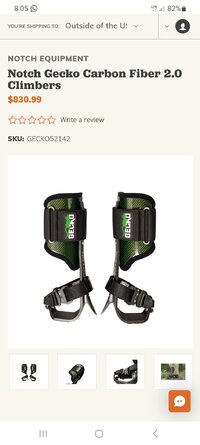
I think these stirrups seem a tad straight, I prefer them with more bend. Gives more comfort, you would understand this way more than I.....am I correct. Spurs are not my strong suit. I just get on with it. The straight geckos were painful.....these KKs and OGs were so comfy.

Treestuff has a 25% off deal right now so I could pick up the Gecko Carbon 2.0's for $620.These are also an option. Look top notch excuse the pun....View attachment 86180
One of the best work photos I have seen here at the buzz!This pic reminds me of why spurs should be light and comfy. What an awful but necessary position....for that cut. 880 with 5ft bar....egad.....crane pick of gigantic proportions.View attachment 86181
I think you should. They really look nice. pads are beefy...Get the ascender if you fancy it...Treestuff has a 25% off deal right now so I could pick up the Gecko Carbon 2.0's for $620.
Thanks Erik. That was a meal of a tree....I enjoyed the challenge. Here are a closeup of the KKs. Solid craftsmanship.One of the best work photos I have seen here at the buzz!
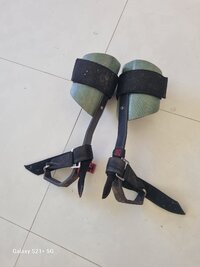
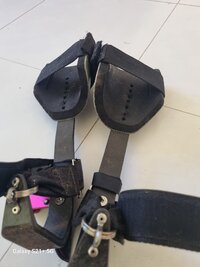

...
It's a good study but with limitations even mentioned in the report. It is debatable what favors longevity. Tree work is unique from other disciplines. Every tree is different. Some senior climbers I admire make a good case for DdRT and legit demonstrate it. Others I equally look up to swear by SRT too though. They all prove that I can do this for many years to come. I know how my own body feels, but my personal style is a mix. I would be considered an older climber.
It makes sense to pick and choose. For some things like ascending, SRT is non-negotiable and obviously easier on the body then. A long day removal on spurs though, I want the double rope on my pulley. I mix it up and hopefully benefiting from both sides in that sense. I get sore, but I have no general "pain". Everyone's bodies are unique and pain is personal.
I think many climbers that argue the benefits of DdRT, confuse capability with energy expenditure. That DdRT is an extremely capable tree climbing system should not even be questioned. It has been 'getting it done' and done well for decades. All of today's tool refinements make it even better. As you also stated, how a climber moves within a tree makes system choices more personal.
For me, those are completely different topics from energy expenditure and climber longevity.
Because biology most often follows a bell curve, an individual's personal outcome becomes an unreliable metric in the equation. We have all witnessed the individuals that live a destructive lifestyle while seemingly in perfect health. Conversely, those that have made an effort to do better, falter at a young age. Most people fall somewhere it between.
Energy efficiency is defined as accomplishing a given task with the least amount of energy expended. This is where SRT shines. The same metrics that make tree entry easy with SRT remain when it is used throughout the climb on those short but frequently needed elevation gains. Energy expenditure is accumulative. If a climber can work within the parameters of SRT and not try to 'muscle through' the short sections, the reduced overall energy input and benefits will become obvious.
Remember, I am talking energy, not necessarily capability. That is also debatable but not this debate.
Last edited:
This is so well said. At 55, I do not want to see DdRT.... I have mastered SRT in my humble opinion and I truly feel that after long climbs I have not really used much energy. Being honest here. In use my tools....This is my opinion only and not written in stone....this debate is like the one handing a chainsaw debate it just goes on and on.....Many never master SRT and just revert back.... Some are just really great at both and use the method they feel best suits the situation. Some are just young and very strong and fit.... different animal there....the older we get it becomes a fight for energy conservation and maintaining our fitness and muscle mass which is no easy feat....just my 2 cents....I really believe SRT saves so much energy in nearly all my days climbing....I think many climbers that argue the benefits of DdRT, confuse capability with energy expenditure. That DdRT is an extremely capable tree climbing system should not even be questioned. It has been 'getting it done' and done well for decades. All of today's tool refinements make it even better. As you also stated, how a climber moves within a tree makes system choices more personal.
For me, those are completely different topics from energy expenditure and climber longevity.
Because biology most often follows a bell curve, an individual's personal outcome becomes an unreliable metric in the equation. We have all witnessed the individuals that live a destructive lifestyle while seemingly in perfect health. Conversely, those that have made an effort to do better, falter at a young age. Most people fall somewhere it between.
Energy efficiency is defined as accomplishing a given task with the least amount of energy expended. This is where SRT shines. The same metrics that make tree entry easy with SRT remain when it is used throughout the climb on those short but frequently needed elevation gains. Energy expenditure is accumulative. If a climber can work within the parameters of SRT and not try to 'muscle through' the short sections, the reduced overall energy input and benefits will become obvious.
Remember, I am talking energy, not necessarily capability.
snunyabizness
New member
- Location
- portland, oregon
fucking awesome!This pic reminds me of why spurs should be light and comfy. What an awful but necessary position....for that cut. 880 with 5ft bar....egad.....crane pick of gigantic proportions.View attachment 86181




















