Blue 32!

For a real kicker, the petzl splice is only rated at 18 kn. The logic is that a splice should only have to retain the same amount of strength as a knot, since we terminate with one or the other. Many ropes test knotted strength. Petzl decided that their splice only needed to exceed that to be acceptable. Honestly, their logic checks in my book.
 
I

Love 10mm AP on 11mm static lines. What a flier.
wait, are you talkin bout Armor-Prus, or was that a typo for Ocean Poly? I am trying a piece of armor-prus right now, and am not diggin it so far. I can get the hitch to grab ok at first, and then after an hour or less, it starts to slip bad. I think I need an extra wrap with it, but I have been on a super short cord kick.
 
You know what, you are right. I just opened my Z to verify.

"8.2.4 Arborist climbing lines used for moving rope systems shall have a minimum diameter of 1/2 inch (12.7 mm) and be constructed from a synthetic fiber, with a minimum breaking strength of 5,400 pounds (24.02 kilonewtons [kN]) without terminations when new. Maximum working elongation shall not exceed 7 percent at a load of 540 pounds (2.402 kN). Arborist climbing lines shall be identified by the manufacturer as suitable for tree climbing.

EXCEPTION
In arboricultural operations not subject to regulations that supersede Z133, a line of not less than 7/16 inch (11 mm) diameter may be used, provided the employer can demonstrate it does not create a safety hazard for the arborist and the arborist has been instructed in its use. The line selected shall meet or exceed the standards for arborist climbing lines and shall be identified by the manufacturer as suitable for tree climbing."
A gentleman and a scholar!
 
wait, are you talkin bout Armor-Prus, or was that a typo for Ocean Poly? I am trying a piece of armor-prus right now, and am not diggin it so far. I can get the hitch to grab ok at first, and then after an hour or less, it starts to slip bad. I think I need an extra wrap with it, but I have been on a super short cord kick.
Yes AP. Get a 28" er.....4 wrap micho, which turns into a 3.5. It will rip. I am 172 without gear.
 
Yes AP. Get a 28" er.....4 wrap micho, which turns into a 3.5. It will rip. I am 172 without gear.
I weigh about the same now, and I have been trying to use a 26", which is what I had been making my 10mm beelines with, but with handspliced eyes. I will give the AP another go on your recomendation for sure.
 
For a real kicker, the petzl splice is only rated at 18 kn. The logic is that a splice should only have to retain the same amount of strength as a knot, since we terminate with one or the other. Many ropes test knotted strength. Petzl decided that their splice only needed to exceed that to be acceptable. Honestly, their logic checks in my book.
i‘m pretty sure that a splice only needs to have 15kn mbs in europe for certification. need to check…

i prefer full strength splices for sure
 
For a real kicker, the petzl splice is only rated at 18 kn. The logic is that a splice should only have to retain the same amount of strength as a knot, since we terminate with one or the other. Many ropes test knotted strength. Petzl decided that their splice only needed to exceed that to be acceptable. Honestly, their logic checks in my book.
Yup… but it does kinda make sense. In a moving rope configuration the termination sees only 50% of the load.
Yet there are many other configurations where this wouldn’t be legit.

The 5,400 comes from a two person load with a safety factor of 10:1 or max load of 540 which I can only assume is suppose to account for some dynamics or x2 fully outfitted firefighters?

For me only a 10:1 safety factor = ~2,000 lbs (soaking wet and 40-50lbs of gear/saws etc). Or about 8.8kn
A 5400 rope gives me a real world safety factor of ~27:1
 
Yup… but it does kinda make sense. In a moving rope configuration the termination sees only 50% of the load.
Yet there are many other configurations where this wouldn’t be legit.

The 5,400 comes from a two person load with a safety factor of 10:1 or max load of 540 which I can only assume is suppose to account for some dynamics or x2 fully outfitted firefighters?

For me only a 10:1 safety factor = ~2,000 lbs (soaking wet and 40-50lbs of gear/saws etc). Or about 8.8kn
A 5400 rope gives me a real world safety factor of ~27:1
At Petzl’s Utah location, they hang their srs lines in the building by the splice. It pushed my comfort zone, but they’re right- tie a knot to hang the line and it’ll likely be weaker. Before that I told people it was only good for mrs, but that’s not accurate according to them.
 
Yup… but it does kinda make sense. In a moving rope configuration the termination sees only 50% of the load.
Yet there are many other configurations where this wouldn’t be legit.

The 5,400 comes from a two person load with a safety factor of 10:1 or max load of 540 which I can only assume is suppose to account for some dynamics or x2 fully outfitted firefighters?

For me only a 10:1 safety factor = ~2,000 lbs (soaking wet and 40-50lbs of gear/saws etc). Or about 8.8kn
A 5400 rope gives me a real world safety factor of ~27:1
just a note on the Safe Working Load Limit, that is the maximum load you should see during regular operations. The 10:1 swll comes more from being easy to divide by 10. Some rope manufactures will publish a 5:1 or even a 15:1 SWLL.

Just on ascent we can see 1.3-1.5x body weight on a choked union, and it can be significantly higher, 2.4-5x body weight, if we are in a base tie scenario. None of these numbers have any real dynamic loads associated with them, just a 1 foot fall can generate up to 5kn-10kn of force depending on rope and anchor assembly. so somewhere between 1000 and 2200 lbs of force.
These numbers are based on Dr. Kane's research on TIP loading.

So, your 27:1 safety factor depends on you only gently hanging and not moving on the rope.
 
I have often wondered what kind of hazard they worry a slimmer line would create? What are the special instructions for slimmer ropes that the climber is supposed to recieve? I am especially keen to know, since I taught myself how to climb on an 11mm rope...
I think this came from the original writing of the ANSI standards 1971 when we didn't have as much sophistication in rope technology in our industry. They later added the 11mm exception in the early 2000s. While the rule currently isn't great, it is hard to make a specific enough standard that applies to our industry at large.

I could see the hazards of smaller diameter ropes being something like:
  • reduced abrasion resistance
  • reduced cutting resistance
  • increased likelihood of repetitive motion injury
  • climbing tools compatibility concerns
is the hazard big? probably not.

 
just a note on the Safe Working Load Limit, that is the maximum load you should see during regular operations. The 10:1 swll comes more from being easy to divide by 10. Some rope manufactures will publish a 5:1 or even a 15:1 SWLL.

Just on ascent we can see 1.3-1.5x body weight on a choked union, and it can be significantly higher, 2.4-5x body weight, if we are in a base tie scenario. None of these numbers have any real dynamic loads associated with them, just a 1 foot fall can generate up to 5kn-10kn of force depending on rope and anchor assembly. so somewhere between 1000 and 2200 lbs of force.
These numbers are based on Dr. Kane's research on TIP loading.

So, your 27:1 safety factor depends on you only gently hanging and not moving on the rope.
Good points but I think there is a little more to that.
In your example of a base tie, those are the forces measured at the TIP? So theoretically a hard fall would be generating about 50% of those numbers..
I’m not arguing that 5,400 lbs is too much or not enough.
SWL
WLL
ABS
MBS (min)
MBS(max)
all vary in definition which is up to the manufacturer.
Doesn’t the Z specifically state MBS of 5,400?

I totally respect you Logan, and if anyone here knows of a climbing line strength failure it would be you.
It’s really good to see you posting here again.
 
I think this came from the original writing of the ANSI standards 1971 when we didn't have as much sophistication in rope technology in our industry. They later added the 11mm exception in the early 2000s. While the rule currently isn't great, it is hard to make a specific enough standard that applies to our industry at large.

I could see the hazards of smaller diameter ropes being something like:
  • reduced abrasion resistance
  • reduced cutting resistance
  • increased likelihood of repetitive motion injury
  • climbing tools compatibility concerns
is the hazard big? probably not.
Agree with all but climbing tool compatibility. I prefer a full half inch line but typically climb with 11.5ish specifically due to most modern climbing gear being incompatible with 12-13mm ropes
 
Agree with all but climbing tool compatibility. I prefer a full half inch line but typically climb with 11.5ish specifically due to most modern climbing gear being incompatible with 12-13mm ropes
Yeah, thats why i listed it last. and it is a consideration for all ropes regardless of size.
 
  • Like
Reactions: evo
Good points but I think there is a little more to that.
In your example of a base tie, those are the forces measured at the TIP? So theoretically a hard fall would be generating about 50% of those numbers..
I’m not arguing that 5,400 lbs is too much or not enough.
SWL
WLL
ABS
MBS (min)
MBS(max)
all vary in definition which is up to the manufacturer.
Doesn’t the Z specifically state MBS of 5,400?

I totally respect you Logan, and if anyone here knows of a climbing line strength failure it would be you.
It’s really good to see you posting here again.
Yeah, measured from TIP. in a hard fall, it would be generation 200% in a base tie scenario. The numbers get messy really fast. and thats assuming no other factors like friction, tree structure, dynamic properties.

Those terms do vary somewhat between manufactures, but not a ton.

SWLL and WLL are the same thing, just one is wearing high vis.

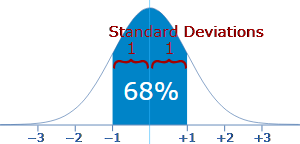
ABS/ Mean Breaking Strength is a really interesting in how they come up with those stats. Usually they use a negative standard deviation to come up with those breaking numbers, but I don't know the specific deviation that they use. So the rope manufactures are already erring on the side of caution when they say what the MBS of the rope is.
1736191522843.png

Min and Max breaking strength are typically not published numbers because they can vary a lot, and on their own they don't mean a whole lot.

The z does specifically state a breaking strength of 5,400lbs. but they dont describe how to get there and thats not what the standard is for.

Yeah, I love talking about rope.
 
Some of this discussion of rope sizes for me at least also gets back to a question of durability. E.g. 8.5 mm (or less these days) dynamic may be peachy in a gym for top rope or even for the crag but do you really want something that size for a work situation or for draggin' around a glacier with sharp abrasive glacial till everywhere or . . . ?
This gets back to fireside chats over the years about what seems safer in case of sharp stuff or rockfall or the ever present ice shards that can slice thru Goretex or noses like butter (so why not a rope)? More strands and more size = betterer?
I kind of land on these days, if we really don't need a rope smaller diam for some functional reason like luggin it miles, then I'd rather have something beefier within reason for the gear I use. Esp for work stuff or caving. My two cents again this lunchtime tho.
 
Some of this discussion of rope sizes for me at least also gets back to a question of durability. E.g. 8.5 mm (or less these days) dynamic may be peachy in a gym for top rope or even for the crag but do you really want something that size for a work situation or for draggin' around a glacier with sharp abrasive glacial till everywhere or . . . ?
This gets back to fireside chats over the years about what seems safer in case of sharp stuff or rockfall or the ever present ice shards that can slice thru Goretex or noses like butter (so why not a rope)? More strands and more size = betterer?
I kind of land on these days, if we really don't need a rope smaller diam for some functional reason like luggin it miles, then I'd rather have something beefier within reason for the gear I use. Esp for work stuff or caving. My two cents again this lunchtime tho.
We don't experience edges like they do in other rope disciplines, luckily trees grow relatively roundish.

Edelrid has done some really interesting work on edge protection/ cut resistance. check out their series about it: https://edelrid.com/us-en/knowledge/knowledge-base/cut-resistance-of-ropes
 
I hypothesize that rope wear occurs as a percentage loss and still also relative to too many other factors to assume that for all uses cases fatter ropes last longer. I would really like to see some empirical data for that one.
 
It seems like its not a straight relationship like that, while in the same rope it does change like that but some ropes offer higher abrasion resistance through innovative constructions and materials in really small packages.
 

New threads New posts

Kask Stihl NORTHEASTERN Arborists Wesspur TreeStuff.com Teufelberger Westminster X-Rigging Teufelberger
Back
Top Bottom