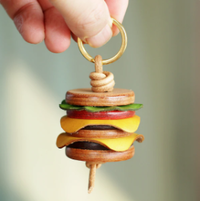
Graeme and Tony are of the mind that breaking away a saw is a no-no and it seems the compromise ground for design is high breakaway force 300 to 500 lbs which still much under loads the 23 kN (or 17 kn saddle) so it would fire off in a really serious scenario but generally act non-breakaway. The various arguments apply saw coming back at you body injury etc that's a non-hard yes no situation/opinion.
For consideration - after a bungee absorbs 12.6" and is tensioned to 60 lbs with a 10 lb weight what happens next? Slingshot your (running?) saw back at you! Yikes. You need damped energy absorption like the thread tear-out in the Two Full Burger

lanyard.
The two-keyrings parallel has the merit of no cordage cycles/wear degradation over time.
The force spike lessening from a soft anchor is substantial. I was duplicating spar -ve rig catching and the slippage of a fresh cow hitch at the rig tip cut the catch force spike in half. For your design it means that a static fuse will catch more practical dropped weight than one might expect.
I'm in the lower breakaway camp because if you're releasing a climber-body-snatcher sized piece and fubar occurs the piece is bigger and has more swat capability than the saw - if someone is in the drop zone in the first place. I know - luck is good and rigged piece not dropping anything while your saw goes down is a counter argument.
Bungee is pure elastomer until the casing travel runs out and then it's a hard stop spike like rope in parallel with the elastomer. There's a bit of fiber/motion/skid damping in there too and a bit of hysteresis and definite temperature dependence in the elastomer spring rate. (firing a big shot on a cold day)
As I think about it the only real saw snatcher I ever had was a dead poplar leader chunk maybe 18" dia IIRC long time ago! and my small caritool caught the MS260 20"bar on a non absorbing "rigid" saw lanyard. I remember the yank on my saddle. I wear saddle suspenders too but they attach center rear saddle which probably helped.