Getting back from a limb walk.

If you present a formula that represents what you are talking about, I will gladly concede. I did not post that link.
 
http://dmmprofessional.com/articles/2013/07/26/resistance-is-futile/

This link. Look at figures 6 and 13 and the text explaining them. It is what we are talking about.

I do not disagree with the experts. I agree 100% with the systems they describe. Unfortunately, the ones you keep focusing on are not graphing what we are talking about.

This is an excerpt from the link.
Screen Shot 2016-09-25 at 5.11.26 PM.webp

Screen Shot 2016-09-25 at 5.16.17 PM.webp

 
Last edited:
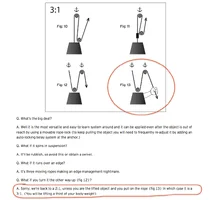
Let's say you weigh 180 lbs. You're tied on the end of a rope. The rope goes through a pulley suspended from a limb and back down to the ground. Someone else would have to pull at least 180 lbs to lift you off the ground. Each leg of the rope has 180 lbs of tension on it. (And like a basal anchor, the limb is feeling 360 lbs from the combo.)

Now, you grab the tail yourself. How much force do you have to exert to lift yourself? Just 90 lbs, because now each leg of the line is supporting half of your weight. That's how you get yourself off the ground climbing DdRT. The force has to be referenced to the climber.

In the haul back system with the extra pulley, you have three legs supporting your weight and you only have to pull a third of your weight to lift yourself.
This!!! Clarified it for me,also raises the 1/2 equation theory,so now im a little confused again [emoji30]
 
Oh man poor Drew just wants to get back in from a limbwalk...down here we havd some crazy mushroom trees....long limbs low TIP's...I have always sucked it up and go out and come back balancing the shit out of it...get used to it...I am no superduper climber but get shit done....no mechanical advantage here....I setup a lot of redirects to save the long limbwalk though...pros of SRT
I tried this the first few times and it works well enough if the limb is horizontal, but I've been down a few droopy stems that sweep down the farther they extend, getting back up the limb when it's like that makes me look like a horse on rollerskates trying to get out of a bathtub.
 
Levi, do you agree that the two legs share the load in a DdRT scenario and you have seen the charts that show this? Do you agree in an SRT basal anchor scenario each leg of rope sees the loads full weight and you have seen the charts that show this? Now when you anchor the load side of the line to, lets say, your dorsal attachment. Now try climbing the other leg of line in front of you. The line you are climbing is moving downward toward the ground when you climb up, and as you climb up you feel this tugging sensation on your dorsal anchor...that end is being pulled up as the side you are climbing is going down. So for every 2 feet of rope you climb up that leg you are only traveling 1 foot up in height. This is in contrast to the hauler on the ground pulling the rope and for every foot of line pulled through the load is raised 1 foot. I feel like you understand this, but as everyone reiterates this exact circumstance you ask for a drawing with the physics involved written down on each leg, but it is easy to see from simply cross referencing the charts we are all familiar with when it comes to load sharing with the legs in a DdRT system and the opposite with regards to an SRT basal anchor set up. Again, I am sorry for beating a dead horse, but this should be understood...the exact mechanical advantage this climber receives can be argued, but there is a mechanical advantage non the less. Do you agree with that at least?
 
I tried this the first few times and it works well enough if the limb is horizontal, but I've been down a few droopy stems that sweep down the farther they extend, getting back up the limb when it's like that makes me look like a horse on rollerskates trying to get out of a bathtub.
I know exactly what you are talking about. That is when I would try the pendulum technique of working the tree in columns. If you know what I mean...like what I said earlier if you can find it hidden in all the tangential material this thread has accumulated...I'm sorry.
 
Last edited:
Using a few of the diagrams from that DMM article, here are some numbers, using a 180 lb climber, to demonstrate the forces involved. All the verticle forces must balance.

First case, where a 180 lb climber on one end of a line requires 180 lbs on the other side to balance the load. The combined forces on each side sum to exert a total of 360 lbs on the anchor pulley.

2eefd98b84e9746b8483cccdb3100710.jpg


Next case, where the tail of the line is connected to the load (climber). Now each side only has to support half of the total load, or 90 lbs each, placing a 180lb load on the anchor to balance your 180 lb body. So if YOU are the load, you only need to exert a little more than 90 lbs to lift yourself.

27160bdd3672dd630d6aadbc4342caaf.jpg


Case 3 - I am standing on a limb next to your canopy anchor. I have to exert only 90 lbs to hold you. The canopy anchor is pulling the other 90 lbs.

4dbc47fc925c3eb730312719fbf36d49.jpg


Now it gets complicated. We anchor a second pulley above. It's a combination of the first and third case. The climber's weight is divided and supported by 90 lbs on each leg from the pulley at the load. The 90 lbs on the leg going to the higher pulley must be counteracted by 90 lbs on the tail leading to the ground. A groundie could lift you by exerting just over 90 lbs.

29301e3e9fa059c7c6b8f783dba1eaa6.jpg


Finally, the combination of case two and three. Take the tail and connect it to the load. Now three legs are available to support your weight - 60 lbs each. It takes only a force of 60 lbs to lift yourself.


51410c825bb7ee431b35386376361b4a.jpg
 
Hey I was just looking for that! And the search lead me back here, small wwworld. I was practicing that today but only used three wraps which was not enough to hold the biner in place, but with five... brilliant. - Thanks
 
I tried this the first few times and it works well enough if the limb is horizontal, but I've been down a few droopy stems that sweep down the farther they extend, getting back up the limb when it's like that makes me look like a horse on rollerskates trying to get out of a bathtub.

Ah the sloper....if I can a redirect is in order....if not suck it up....eventually it gets more graceful...ha ha
 
Using a few of the diagrams from that DMM article, here are some numbers, using a 180 lb climber, to demonstrate the forces involved. All the verticle forces must balance.

First case, where a 180 lb climber on one end of a line requires 180 lbs on the other side to balance the load. The combined forces on each side sum to exert a total of 360 lbs on the anchor pulley.

2eefd98b84e9746b8483cccdb3100710.jpg


Next case, where the tail of the line is connected to the load (climber). Now each side only has to support half of the total load, or 90 lbs each, placing a 180lb load on the anchor to balance your 180 lb body. So if YOU are the load, you only need to exert a little more than 90 lbs to lift yourself.

27160bdd3672dd630d6aadbc4342caaf.jpg


Case 3 - I am standing on a limb next to your canopy anchor. I have to exert only 90 lbs to hold you. The canopy anchor is pulling the other 90 lbs.

4dbc47fc925c3eb730312719fbf36d49.jpg


Now it gets complicated. We anchor a second pulley above. It's a combination of the first and third case. The climber's weight is divided and supported by 90 lbs on each leg from the pulley at the load. The 90 lbs on the leg going to the higher pulley must be counteracted by 90 lbs on the tail leading to the ground. A groundie could lift you by exerting just over 90 lbs.

29301e3e9fa059c7c6b8f783dba1eaa6.jpg


Finally, the combination of case two and three. Take the tail and connect it to the load. Now three legs are available to support your weight - 60 lbs each. It takes only a force of 60 lbs to lift yourself.

51410c825bb7ee431b35386376361b4a.jpg

Absolutely outstanding post, Teubor! Thanks for taking the time, and going to all that trouble to post this.

Tim
 
@Levi.CO will you be in Denver for the ISA conference coming up October 12?
I would be happy to spend whatever time you like in understanding this MA conjecture.
I'm going to be there speaking and would love to meet any Buzzers that may attend.

Richard
 

New threads New posts

Kask Stihl NORTHEASTERN Arborists Wesspur TreeStuff.com Teufelberger Westminster X-Rigging Teufelberger
Back
Top Bottom