How do we guild our craft?

Stickers and patches. That'll show em! Seriously. I have looked for ages for a distance learning program for arboriculture. Sure would be nice to have a program I could participate in without having to live someplace really cool lke portland. I did the program at Rutgers but that was for my own learning early on. That was quite a few years ago too.
Yes most super fly stickers and patches!
Ahem, notice I have not mentioned any powers that be...offering such things.

Schools just don't prepare us for what we (can) do. Education is great for a foundation of understanding, but the hands on trial by fire action is where it's at....and we can't learn it in a few weeks, months.
 
Frash, can I ask how old you are? With your post about hiring "experienced" workers who talk big, you sound like you have been around the block once or twice. In my experience, it seems that real quality craftsmanship has just about disappeared off the face of America. It seems to me most people are only interested in price and short-term looks, as in "all show, and no go."

I remember 40-50 years ago, complaining about cheaply made products that would break or fall apart quickly, or service people that would be in a rush. Compared to now, those were the good ol' days! What happened?
I'm 40. I have a bachelors of environmental science. After grad and working for fema (ice storm '98) I worked for Bombardier Mass transit for 9 years. Last three years there, I started tree work part time. Did lots of stuff there from welding, electrical, hydraulic, pneumatic, mechanical. As the youngest supervisor (only one hand chosen by the gm, after I cut my dread off that were to my ass) ) I trained 40 folks off the street to be the first team in the history there to attain zero defects with no over time and we helped out with all the other shifts work too. At that time me and my crew was responsible for $10million wip and $2.5million per day out put. I tried and made a difference, but only made the other supervisors and their managers look bad and after the gm left, they all turned on me. The qa/test dept took me in and harbored where, I ran the most successful trouble shooting team there till I left, never looking back. Thankful for the experience. I helped build over 1500 NYC subways. All the Acela high speed locomotives and over a 1000 metro cars. Not only did I learn to turn a wrench, I learned to respectfully deal with all kindsa folks in order to achieve a goal.
 
....Had a few guys from there looking for intern positions for the summer...at this point i'm not interested in short term turn over/coaching.....

And this is the problem. You are correct, no school can teach what we do. So if we are " not interested " in passing on our knowledge, where are well-trained new workers going to come from?
 
Last edited:
Last edited:
Every one of the files within or tied to the above links (especially the expansive sub links in the AUS standards) are saved within my Dropbox.

I set up an account with the AUS page to have me emailed when updates occur - very handy of them to provide this option.

Word 2013 will convert PDF to DOC for those wishing to augment their internal competency framework.

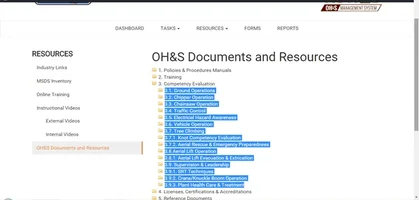
Oh - TCIA also has a fantastic layout of competency benchmarks. We bastardized their training manual titles into this list for development of our training program. The biggest fault with TCIA - creation of internal competency evaluations via electronic document resources. Our entire OHS Program is Cloud based, and TCIA's focus on paper is not helpful for us.
  • 3.1. Ground Operations
    3.2. Chipper Operation
    3.3. Chainsaw Operation
    3.4. Traffic Control
    3.5. Electrical Hazard Awareness
    3.6. Vehicle Operation
    3.7. Tree Climbing
    3.7.1. Knot Competency Evaluation
    3.7.2. Aerial Rescue & Emergency Preparedness
    3.8 Aerial Lift Operation
    3.8.1. Aerial Lift Evacuation & Extrication
    3.9. Supervision & Leadership
    3.9.1. SRT Techniques
    3.9.2. Crane/Knuckle Boom Operation
    3.9.3. Plant Health Care & Treatment
upload_2015-12-15_22-29-50.webp
 
Last edited:
I haven't read all the posts yet but thought this might create insight or perspective.
I agree frashdog and also feel there is a gap here. Like we could be better informed. Better united, but without a union. A few organizations exist here, but I don't think they fit what you describe.
I looked up the Wikipedia reference that frashdog initially posted. Guild: ' an association of artisans or merchants who control the practice of their craft.... It is quite interesting when you click on those two words, merchant and artisan. There is no way out of it, we are both. But some of us are more merchant and simply supply the demand of the clients and finish the deal.
Some of us are more artisan, especially I suspect, on treebuzz. The more artisan we are the more passionate and caring we are likely to be towards trees. Instead of just practicing PR with people.
Others are more of an artisan. Look at the pics for the artisan definition. They are using their hands. They are using tools to create things that less experienced people could not do with the same tools.
Some Arborists actually limit their climbing to a handsaw and chainsaw. Where is the artisan in that? They say 'I can climb to everything I need to cut'. Well I'm 150 lbs and climbing 15 years. I use my handsaw a lot. But many trees deserve the details and sensitivity that can only be applied with a rope pruner 8'-15' longer. I can't blame these hand saw Heros, they have no guild to guide them. And it's a popular misconception.
We have arboriculture Canada training which does have a pruning course available but most of the training is too expensive, and geared to production arboriculture, not conservation arboriculture. We need removal and raising and deadwooding and line clearing. But none of this is tree CARE. None of this is ARTISAN.
thanks for getting my head spinning again frashdog
And don't let a client treat you like a retailer. Removal is not always on the shelf. Shearing to the property line has better options, even for the client, long term. Present yourself as a professional and demand respect. If your new, know when to recommend a second opinion from a pro. It could save a tree, and your reputation.
Are we glorified lumberjacks or glorified gardeners? I'm both but not so proud when I cut a nice one. Removing the earths garden, one tree at a time.


Sent from my iPhone using Tapatalk
 
Ontario has a voluntary apprenticeship program. I went through it after working in the industry for 5 yrs. It's a good start and a model for others to look at. The class time was spent at Humber College. The industry itself has to establish this as the formal path into the industry instead of the current method which seems like not much more than, check for a pulse and chase 'em up a tree!
http://www.collegeoftrades.ca/wp-content/uploads/TS-Arborist_444A_EN.pdf
I'm a good example of why apprenticeship programs and schooling are an absolute crock of bullshit. "Required grade 12 education". Piss right off with that. I dropped out of highschool in grade 10 and have never looked back. Didn't need any useless public school paperwork and some numbers someone gave me after banging my head on a desk for all those years to get into the trade or teach myself how to do it safely. There should be no education requirement for skilled trades. FULL STOP. If you exhibit the required intellect and comprehension of techniques taught, you can do the job. If you lack common sense and have a poor sense of objective hazards and work ethic, you're cut. Simple as that. Don't shut the door on people before they get a chance to show you what they're worth.
 
Best way to get into the industry (If you desire to be a climber) Is to go be a groundsman, for a few years. In that time teach yourself all the knots, make an effort to understand all of the physics involved in rigging.. study what the climber does, then study what he does WRONG, or inefficiently. Read books on your own. Keep your ears open to anyone who's been in the trade a long time, because they didn't get there on pure luck. Watch videos. STUDY STUDY STUDY!

You don't need to sit in class to have someones sterilized and biased version of how the industry works shoved down your throat. Form your own unique style, and opinion. Oh, and most important of all.. if you're just getting into climbing.. do it LOW AND SLOW.
 
"The more artisan we are the more passionate and caring we are likely to be towards trees. They are using their hands. They are using tools to create things that less experienced people could not do with the same tools.
Some Arborists actually limit their climbing to a handsaw and chainsaw. Where is the artisan in that? They say 'I can climb to everything I need to cut'. ... many trees deserve the details and sensitivity that can only be applied with a rope pruner 8'-15' longer. I can't blame these hand saw Heros, they have no guild to guide them. And it's a popular misconception."

Sure is. I just had to redo a tree that was declared "Done" by one of these self-limited bigots. Not fun dealing with the denial.

" We need removal and raising and deadwooding and line clearing. But none of this is tree CARE. None of this is ARTISAN." True, the management of size and shape, with preservation as the goal, is marginalized--we make "heading cuts" to do this work, after all! Clearly unsavory--just look at the A300 standard, which is always korrekt. Uh huh.

"Removal is not always on the shelf." Trees are not disposable. Do other trades advocate or even suggest the removal of the assets that make their craft valuable?
Ryan I'm sorry to hear you still sometimes have to cut a nice one to eat.
 
I'm a good example of why apprenticeship programs and schooling are an absolute crock of bullshit. "Required grade 12 education". Piss right off with that. I dropped out of highschool in grade 10 and have never looked back. Didn't need any useless public school paperwork and some numbers someone gave me after banging my head on a desk for all those years to get into the trade or teach myself how to do it safely. There should be no education requirement for skilled trades. FULL STOP. If you exhibit the required intellect and comprehension of techniques taught, you can do the job. If you lack common sense and have a poor sense of objective hazards and work ethic, you're cut. Simple as that. Don't shut the door on people before they get a chance to show you what they're worth.

The Ontario Apprenticeship is specifically designed to not require participation or attendance at a TDA (Humber/Fleming). The delineation of learning outcomes and performance benchmarks which can be assessed by a multitude of techniques is what makes it an apprenticeship.

Dont slough it off. Complete the apprenticeship without college assistance - province will give you $1000. Complete the apprenticeship with school - $2000. I convinced a 20 year veteran, ISA CA to let me sponsor him as an apprentice. He did one exemption test and wrote the CofQ exam - $1000 cheque 3 months later.
 
and re voc ed, "VETree is an acronym for 'Vocational Education and Training on Veteran Trees', a European project set up to create a European wide quality training programme in veteran tree management. The training programme will include both basic and advanced training material, online training tools and mentoring, video,"

This program is ready to be fully implemented in the US.
 
The Ontario Apprenticeship is specifically designed to not require participation or attendance at a TDA (Humber/Fleming). The delineation of learning outcomes and performance benchmarks which can be assessed by a multitude of techniques is what makes it an apprenticeship.

Dont slough it off. Complete the apprenticeship without college assistance - province will give you $1000. Complete the apprenticeship with school - $2000. I convinced a 20 year veteran, ISA CA to let me sponsor him as an apprentice. He did one exemption test and wrote the CofQ exam - $1000 cheque 3 months later.

"Academic Standard  The Industry Committee has identified the minimum academic standard for entry to this program as completion of Grade 12 or ministry-approved equivalent."
 
And this is the problem. You are correct, no school can teach what we do. So if we are " not interested " in passing on our knowledge, were are well trained new workers going to come from?
That sir is the question.

I'm dreaming and scheming.

To start, not for profit possibly. I'm on the board of one that is three years old and starting to get serious. They have huge grant potential.
We would not only be about our craft, but also about our subjects.

Gotta be down with all the other organizations, in some way shape or form. We are forging ahead in a direction not taken yet, so we need support/resources. From labor department to ISA, (local chapters) TCIA, treesaregood, boces trade schools, colleges...oh treestuff. Imagine the buying power of a guild!
 
"The more artisan we are the more passionate and caring we are likely to be towards trees. They are using their hands. They are using tools to create things that less experienced people could not do with the same tools.
Some Arborists actually limit their climbing to a handsaw and chainsaw. Where is the artisan in that? They say 'I can climb to everything I need to cut'. ... many trees deserve the details and sensitivity that can only be applied with a rope pruner 8'-15' longer. I can't blame these hand saw Heros, they have no guild to guide them. And it's a popular misconception."

Sure is. I just had to redo a tree that was declared "Done" by one of these self-limited bigots. Not fun dealing with the denial.

" We need removal and raising and deadwooding and line clearing. But none of this is tree CARE. None of this is ARTISAN." True, the management of size and shape, with preservation as the goal, is marginalized--we make "heading cuts" to do this work, after all! Clearly unsavory--just look at the A300 standard, which is always korrekt. Uh huh.

"Removal is not always on the shelf." Trees are not disposable. Do other trades advocate or even suggest the removal of the assets that make their craft valuable?
Ryan I'm sorry to hear you still sometimes have to cut a nice one to eat.
I understand your stance on this issue. Do you really believe there is no "art" involved with removing trees? Are you advocating a guild and training program that does not have removals as a large part of the training process? That strikes me as extremely unrealistic. Removing trees in one of the major things that makes our craft valuable. We need to also look at what is valuable to the client, Im going to guess that removals are on that list. I completely agree with the pole pruner statement. Hate it when people claim they don't need them.
 
Guy I think I got this
Sherwood7, good question.

First, I said something earlier and forgot a detail. Now I look ignorant. Regarding removals, raising, deadwooding, line clearing. I said this is not tree care and yet I practice it half the time, as people/client care. This doesn't benefit the tree, but if it's done on time (before the limb to be cut grows to 3 or 4 inches) and carefully, then at least it won't damage the tree significantly. Significantly, as in decay that leads to a shorter life AND long term risk. And I also spend a great amount of time educating clients that trees are alive and 6-12 inch cuts hurt them. Honestly, people don't know. And they have trouble trusting the alternative or accepting a few more leaves over their precious roof. A roof that is PRESERVED by the shade of leaves. Who knew, you can sell it cause it's true. Advocate for gutter guards while your at it. The canopy is the best shelter we ever get. Unless you spent your life inside.

And Guy, good point about cutting a nice one. As you know I don't need it to eat and that's not quite what I said. But the essence of what you said is right. Why do I 'need to? I need to, so I don't refuse a legal request...necessarily. Of course I quote high on ignorant removals and I often try talk people into the pruning option that is better, and most often, for the client too. This has lost me a lot of business and I don't care. It has also gained me a reputation as a conservation arborist. And guy you are right, I need to work on not cutting good ones even more. But the lack of laws, public awareness, and the numerous lumberjacks that agree with ignorant removals, for the sake of the easy buck (no pun intended) or because they don't know better.
sets up a scarey playing field for the preservation arborist.
Here's a few examples of what I mean.
Recently I quoted on a reduction of Linden over a driveway, requested as a removal. Not tree CARE in that it benefits the tree, but care in that it saves the tree. No by laws in place so I quoted the removal high. Educated the client and even sent them to a nearby site where I made clients and their neighbours happy by reducing a Linden over the driveway. Another company cut the tree and now I look bad to them because of my high price. I don't care though and from now on I think I might say with a smile that I cannot quote on removals like this.
c7c92c9ce90a9a6a62e560bc3aa11989.jpg

8bdd4aac689665245a247686645979f5.jpg


Side note, or not? I literally just got a text from a friend who gets me a lot of work. "I have a client in...that wants a price on 2 removals". If I say no, then someone else will see them and say "sure, $2000" laughing all the way ha ha ha. I'd probably spend more time convincing them out of it, than I spent on this post. I've done it many times. Plus maybe I won't need to, because the location has a by law.

Another tree, sadly that I did cut, was for the sake of a tennis court. No by laws in place. Client is a personal friend. I did brush it off for almost a year and then the third time I was asked, I decided to save a friend and my reputation. Treat it like a vasectomy. some doctors require an educational visit and commitment before the date and on the date. Luckily the court is going in, because I'd hate to cut it for nothing. A beautiful fully crowned sugar though. These hands are guilty of murder, what can I say?

I don't recommend removal unless it's absolutely necessary.
This is where reduction Comes in. Borderline trees can be mitigated but remember to recommend annual assessment to observe advancements in decay. Sonic Tomography is somewhat useless initially, at least as a conclusive tool. It is a benchmark. An ST image produced years later, however, can be compared to the benchmark. Decay advancement vs wound wood advancement. This is not conclusive either but will certainly be in the perspective tool box,


Sent from my iPhone using Tapatalk

 
"Academic Standard  The Industry Committee has identified the minimum academic standard for entry to this program as completion of Grade 12 or ministry-approved equivalent."

Huh! - well then!

There's gotta be a work around. I can think of 2 apprentices from the 2006-2007 era who were without Grade 12.
 

New threads New posts

Back
Top Bottom