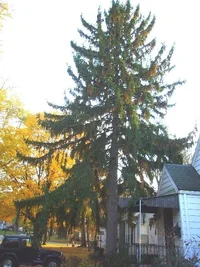
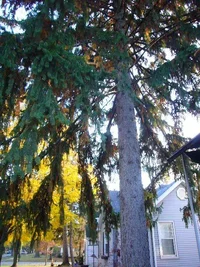
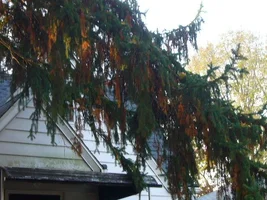
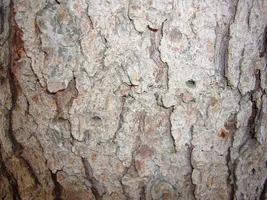
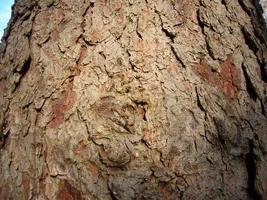
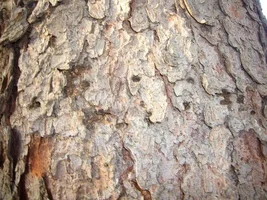
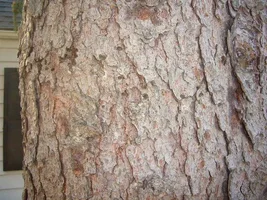
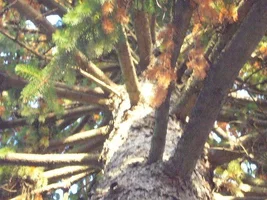
Worried about spruce tree. Dying?

Of course you want to say that nothing is wrong, this is just something having to do with the season.... but its getting to the point where I may have to admit I'm in denial.
I've seen this happen about five years ago, possibly not this bad. I do not know what the cause was then, or what resolved it. Is it drought stress? Because I don't think its been particularly dry.
Lately it has just started getting chilly in the Midwest, lows in the 30s but nothing drastic.
It seems urgent action is needed. But, the wrong remedy could be fatal, sometimes its best to leave things alone.

Anyone have any thoughts? This tree would be an utter disaster to die, both in cost of removal and homeowner value.
Not to mention, just plain tragic. :(
 

Attachments

  • spruce1.webp
    spruce1.webp
    87 KB · Views: 39
  • spruce2.webp
    spruce2.webp
    122.9 KB · Views: 37
  • spruce3.webp
    spruce3.webp
    82.1 KB · Views: 37
Last edited:
I think you could turn that tree around with a big bed expansion and perhaps some drainage/aeration improvement but you should get a phc arborist to look closely for needlecast diseases, stem cankers, and a few other problems.

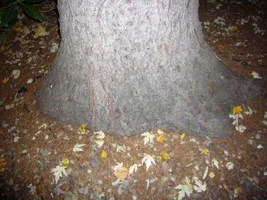
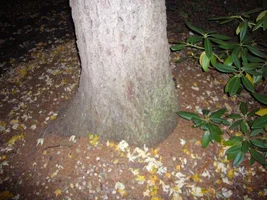
Got a picture of the root flare?

Look into history of care, especially turf apps with herbicides as well.
 
What is the root flare and how do I get a pic.
As far as history of care, its in my front yard and I've been here 17 years. Neither I nor my neighbors have applied any herbicides or sprays, other than occasionally weed killer for driveway cracks (and I don't think I used any this year).
The tree does however sit where its roots are under both the driveway, the walkway and near the house. Arguably, there isn't a lot of area under the tree that isn't covered by concrete. So, thoughts of drought stress come to mind. However, the tree has been in its location at least 20+ years, so one would think it would have accomodated for that with its root system by now.
But you hit the nail with the drainage comment. If its drought stress, add water. If its a drainage issue, then one would think a heavy watering would kill it. Therein lies the eternal problem I have with plants.
 
Yep that's a root flair. Looks good.

Some of what you are seeing is seasonal needle drop which is normal but entire secondary and tertiary branches shouldn't be showing that dieback.

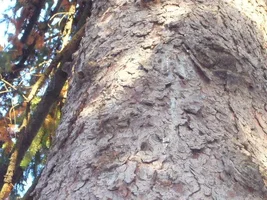
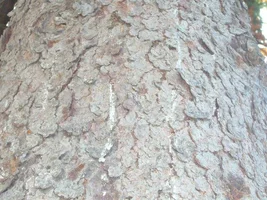
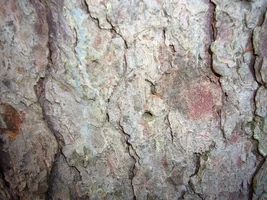
Tomorrow when it's light, take pics if any areas on the trunk that may be oozing or look like the bark has split or erupted.

In the meantime, search spruce cytospora/valsa canker as well as conifer bark beetles. Pitch mass borer damage can be mistaken for cytospora/valsa also. Needlecast diseases need magnification to be really diagnosed.

In any event, addressing the stresses that have led to the tree declining a bit is usually far more important than the bugs n crud on the tree.
 
Last edited:
OK some more pics of the browning Spruce tree.
There are some holes. But they are just in a few places, and now that I see them, I remember these, at least a few of them. Some are at least 3-4 years old. This is about all of them on a 100 ft tree, so most of the tree is holeless.
There is a small amount of sap but this is not all over the tree, you wouldn't notice unless you searched.
 

Attachments

  • P1140001.webp
    P1140001.webp
    110.9 KB · Views: 15
  • P1130999.webp
    P1130999.webp
    105.7 KB · Views: 13
  • P1130998.webp
    P1130998.webp
    108.5 KB · Views: 14
  • P1130997.webp
    P1130997.webp
    112.9 KB · Views: 13
  • P1130996.webp
    P1130996.webp
    125.4 KB · Views: 13
  • P1130993.webp
    P1130993.webp
    115.4 KB · Views: 12
  • P1130992.webp
    P1130992.webp
    116.5 KB · Views: 12
  • P1140002.webp
    P1140002.webp
    87 KB · Views: 16
Seeing some sapsucker damage, a bird.

Tree should respond well to some soil work but I would still recommend having someone look at it.
 
@JD3000, not understanding what you mean by soil work.
The last time this happened, I gave it several very deep waterings. It seems to have worked.
However, I don't really know if that is the problem now, or if it was before.
How to tell if it is dry weather?
I can give it a lot of water, but if it is an aeration problem then I assume that would be the last thing it needed.
 
If you're not getting around an inch of rain a week it's dry, especially for a spruce. Fall in the Midwest is a dry time for evergreens that need the moisture to survive winter especially if it was a dry summer. Test soil and foliage to see deficiencies. Light airspading to remove turf and certainly any landscape rock then create mulch area as large as possible to combat the lack of root zone. I live in what looks like a similar area (even have my jeep in the driveway) and I have as much or more mulch as I do turf. My neighbors look at me funny when I'm watering my mulch midsummer instead of my brownish turf but my trees (corner lot with boulevard trees) always look better and have less damage every year.
 
Bingo. Drainage and aeration may or may not need to be improved by other means but a large mulch bed will improve soil structure as well as water and nutrient holding capacity with time.

I too am the weird neighbor who is shrinking his lawn to plant a bunch of weird stuff and get mulch to tree drip lines.
 
Can we get a confirmation then that what this tree needs right now in its emergency state, is a good deep watering?
And any harm risked by it being done.
As I said, that's what I did last time several years ago, but it was guesswork.
It appears to be worsening with the browning, so as I said, action looks to be needed asap.
 
I've never in my entire life gotten a confirmation on whether or not to water a dying tree or plant, so I didn't expect to break my run here lol.
To hell with it, the tree is getting watered at least I'm doing something. I'll update in a few weeks on whether or not the chainsaws will be needed.

As far as the black, that is the remnants of where a previous owner put some plastic down under the rocks by the house. Its an odd configuration as I said, the tree is surrounded by concrete driveway and walk, and some landscaping. However, its 100 feet tall and has been there at least 20 years, so we have to assume its roots are far larger than this area, and have found out how to make it work. Until now.

There is not a lot I can do about the concrete immediately surrounding the tree, I have to have a driveway and porch.
The argument for killing by watering would be that there is too much covered ground around the tree, and a good watering would suffocate the roots.
The other argument is its not getting enough water, hence the browning. Which way?
Faced with imminent tree death, I put a blindfold on and threw the dart, it landed on 'needs water'. So heeere it goes.
 
Last edited:
Jeff, one thing I do here is water our spruce/ pines "from the bottom up" using a root feeder poked a foot or two down - doesn't have to be fancier than something like a Ross one from Home Depot or whatever. Poke holes in a pattern around the mulched area. This really has the effect of un-compacting the soil - after one or two goes it even feels softer to walk on. Lots of air is pulled in as the water drains downwards. It does take time but if the soil is compacted its maybe a cheap way to get the roots some air.
 
Can we get a confirmation then that what this tree needs right now in its emergency state, is a good deep watering?
And any harm risked by it being done.
As I said, that's what I did last time several years ago, but it was guesswork.
It appears to be worsening with the browning, so as I said, action looks to be needed asap.
No we can't. Were doing this from phone pictures, not a site visit. If you're in Springfield Ohio, you probably have a heavy poor draining clay that may or may not need a heavy watering. This stuff isnt easy, that's why we continue our educations and inspect trees in person.
Have someone look at it as your're not getting a free consult and treatment
 
Last edited:
Back
Top Bottom